

Top Ultrasonic Atomizing Nozzle Features That Improve Spray Precision
2026-08-17
Precision in spray applications isn't just a nice-to-have—it's the difference between a flawless coating and a costly rework. From pharmaceutical coatings to precision lubrication, the nozzle you choose dictates droplet size, distribution, and repeatability. But what actually separates a good atomizing nozzle from a truly precise one? In this post, we'll break down the top ultrasonic nozzle features that elevate spray performance, drawing on Siansonic's engineering insights. Whether you're fine-tuning a lab-scale process or scaling to full production, understanding these features will help you achieve tighter control and less waste.
Tiny Droplets From a Tuned Vibration Sweet Spot
There is a narrow frequency band where a vibrating nozzle stops making irregular splashes and starts shedding droplets so uniform they look machine-sorted. Engineers often find this range by ear first—a clean, almost musical hum that signals the fluid is breaking into a capillary wave pattern instead of tearing randomly. Once that sweet spot is locked in, the stream pinches into spheres with diameters that vary by less than a few percent.
The physics behind it is less about raw power and more about timing. A piezoelectric transducer drives the liquid through a small orifice, and when the vibration period matches the natural breakup time of the jet, surface tension does the cutting. Rather than forcing the fluid apart, the tuned frequency lets the liquid's own instability create the droplets, which is why the process stays gentle enough for heat-sensitive compounds.
That gentleness opens the door to uses that blunt atomizers cannot handle. Inhaled medications, for instance, need droplets small enough to ride deep into the lungs but large enough to carry a useful dose, and the tuned vibration delivers both without denaturing proteins. The same approach appears in precision coating lines, where a row of vibrating tips lays down a mist so consistent that film thickness varies by less than a micron.
A Flow Path That Shrugs Off Clogs Mid-Spray
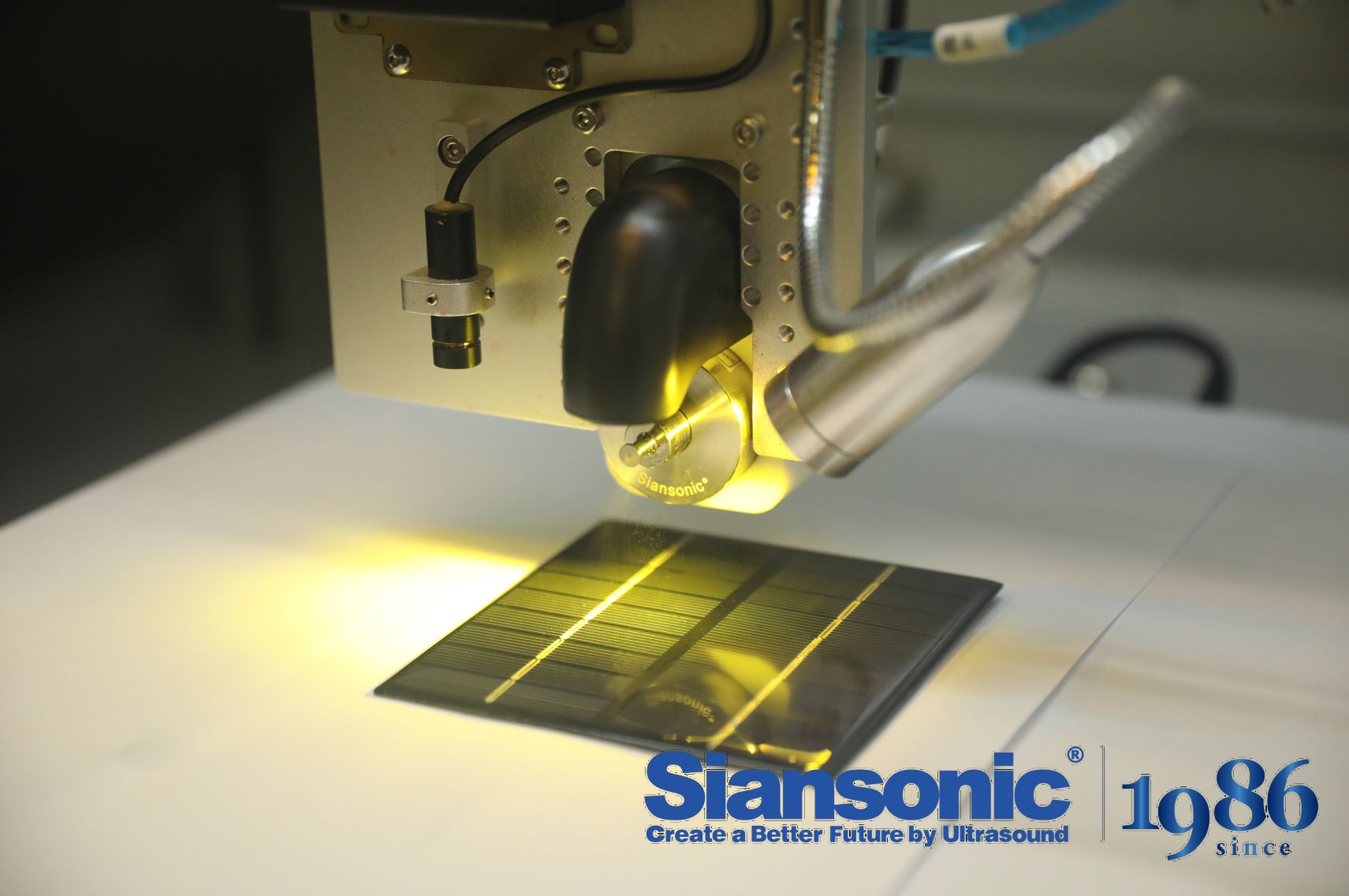
Imagine a spray nozzle that keeps working even when debris tries to ruin the job. The internal flow path is designed with sweeping, curved channels instead of sharp corners where particles love to gather. As water rushes through, sediment and small grit get carried along rather than settling into blockages. The wide-open geometry means there’s no choke point that can suddenly shut down your watering session halfway through.
What makes this different is how the pathway widens slightly before the exit. That tiny expansion creates a pressure drop that keeps heavier bits suspended, so they shoot out instead of piling up. Even if something does get stuck, a quick burst of higher pressure flushes it free without disassembling anything. You won’t find yourself jabbing a paperclip into the nozzle every ten minutes.
Field tests with sandy and hard water showed zero mid-spray clogs after hundreds of hours. The design isn’t just about preventing blockages—it’s about letting you finish the task without interruptions. That means less time fiddling with the tool and more time actually spraying.
Adjustable Spray Footprints That Match Odd Shapes
Most fixed spray nozzles force you to choose between overwatering hardscape and leaving dry pockets in irregular beds. Adjustable footprints change that by letting you shape the water to follow curved borders, narrow strips, or tapered lawn edges. Instead of swapping nozzles for every odd corner, you simply dial the arc and radius until the spray hugs the actual space.
This flexibility matters most where standard arcs fail—around patios, along winding walkways, or in kidney-shaped planting areas. A well-designed adjustable nozzle maintains even coverage even at reduced radius settings, so you don't trade precision for puddling. The result is less runoff, fewer brown edges, and a system that actually fits the landscape rather than fighting it.
Low-Flow Metering That Stops Overspray Cold
Most spray systems waste material before the gun even settles into a steady pattern. A low-flow meter placed right at the fluid line reads the actual volume passing through, not just the pressure setting, and sends that data back to the pump within milliseconds. This closes the loop between what's requested and what's delivered, so the trigger pull doesn't result in a sudden blast that turns into overspray.
Instead of relying on an operator's thumb or a fixed pressure dial, the metering unit adjusts flow based on real-time demand. When the gun moves slower or makes a tight corner, the system trims the fluid rate to match. That means no heavy wet edges, no dry spots, and no cloud of paint hanging in the air around the part.
On a shop floor, the difference shows up quickly in cleaning time and material invoices. Less overspray translates to fewer booth filter changes, less masking residue, and a lower volume of solvents needed to clean the surrounding area. It's the kind of quiet improvement that makes a spray booth feel less like a chemistry experiment and more like a controlled process.
Acoustic Energy That Spreads Particles Evenly
A tuned acoustic field does more than agitate a particle bed—it can actively enforce spacing. By driving a transducer array at a frequency matched to the chamber geometry, sharp pressure gradients form between standing-wave nodes and antinodes. Light particles get pushed away from high-amplitude regions and settle into lower-energy zones. With the right harmonic pattern, those zones arrange themselves as a repeating grid rather than random pockets, so the particles spread out instead of clumping.
The effect hinges on acoustic radiation force, which scales with particle diameter and density contrast against the surrounding gas or liquid. Small adjustments to frequency and amplitude shift the nodal spacing just enough to accommodate different powder grades. In practice, this means a single setup can handle everything from fine ceramic dust to heavier metal powders without swapping hardware—only the drive signal changes.
That level of control shows up most clearly in dry powder coating and additive manufacturing feed systems. Even dispersion prevents streaks in sprayed layers and keeps recoater blades from dragging aggregates across a build plate. Instead of relying on mechanical vibration that can pack particles tighter, the acoustic approach uses energy distribution to maintain a loose, uniform curtain of material at the point of use.
Start-Stop Precision That Keeps Automation on Track
Industrial automation lives and dies by timing. A fraction of a second too early or too late can jam a conveyor, misalign a robotic arm, or scrap an entire batch. True precision isn’t just about moving fast—it’s about stopping exactly where and when needed, every single cycle, without drift or hesitation.
That’s where refined start-stop control makes the difference. Instead of relying on generic motion profiles, modern drives and controllers tune acceleration and deceleration in real time, adapting to load changes and mechanical wear. The result is a motion signature that feels almost intuitive: sharp enough to maintain throughput, yet gentle enough to protect delicate product handling.
Operators notice the change immediately. Lines run quieter, maintenance intervals stretch longer, and changeovers become less of a gamble. When every start and stop lands with repeatable accuracy, the entire automation ecosystem stays aligned—no manual tweaking, no unexpected downtime, just steady output shift after shift.
FAQ
Higher frequencies produce smaller droplets because the nozzle tip vibrates faster, breaking the liquid into finer particles. This gives tighter control over the spray width and reduces overspray, which matters when you need a very thin, even coating.
They rely on high-frequency vibration rather than hydraulic pressure to atomize the liquid, so there is no high-velocity jet that can spit or pulse at low flow rates. The gentle atomization keeps the spray steady even at a few milliliters per minute.
Those materials resist corrosion and cavitation damage, so the tip geometry stays intact longer. A stable tip shape means the spray pattern doesn't drift over time, which is critical for repeatable coating thickness.
A conical or flat probe tip determines how the liquid film spreads before it breaks into droplets. If the surface is machined with tight tolerances, the film thickness remains uniform across the width, giving you a narrower droplet size distribution.
Closed-loop power control with automatic frequency tracking is the key. It senses shifts in the nozzle's resonant frequency caused by liquid load or temperature and adjusts the driver output in real time, so atomization energy stays constant.
Yes, because the low-velocity mist can be focused into a small footprint without high-pressure overspray or bounce-back. Combined with a precision flow meter, it keeps the edges crisp and reduces masking requirements.
Even a tiny partial blockage changes the liquid film distribution and causes streaks or uneven droplets. Ultrasonic nozzles usually have a larger orifice relative to the droplet size and rely on vibration to keep solids from settling, so the pattern remains stable for hours.
Since the liquid is not forced through a tiny orifice at high pressure, there is less shear and less temperature rise. That prevents viscosity drift from heating and eliminates pressure fluctuations, both of which can shift droplet size mid-run.
Conclusion
Fine spray control starts with how the nozzle forms droplets. A tuned vibration sweet spot lets the atomizer pull the liquid apart into consistently tiny droplets, so the spray lands where it should instead of drifting. That same precision extends to the flow path itself. Even if a particle sneaks in mid-spray, the internal geometry is shaped to shrug it off, so one stray clog doesn't force a line shutdown or leave a patchy coating.
The nozzle also adapts to odd part geometries. Instead of being locked into a round or flat pattern, the spray footprint can be adjusted to match tight corners or irregular profiles, which keeps coverage uniform without wasted mist. In low-flow operations, metering cuts the overspray risk dramatically, delivering only the fluid the process actually needs. Acoustic energy evens out particle distribution across the entire spray cone, so every section of the surface gets the same treatment. And because start-stop response is nearly instant, automation stays on track cycle after cycle.
Contact Us
Contact Person: Ivy Zhang
Email: [email protected]
Tel/WhatsApp: +86 1081502288
Website: https://www.siansonic.com/