

Top Dredger Manufacturer Unveils Next-Gen Vessel Designs for Sustainable Marine Projects
2026-05-23
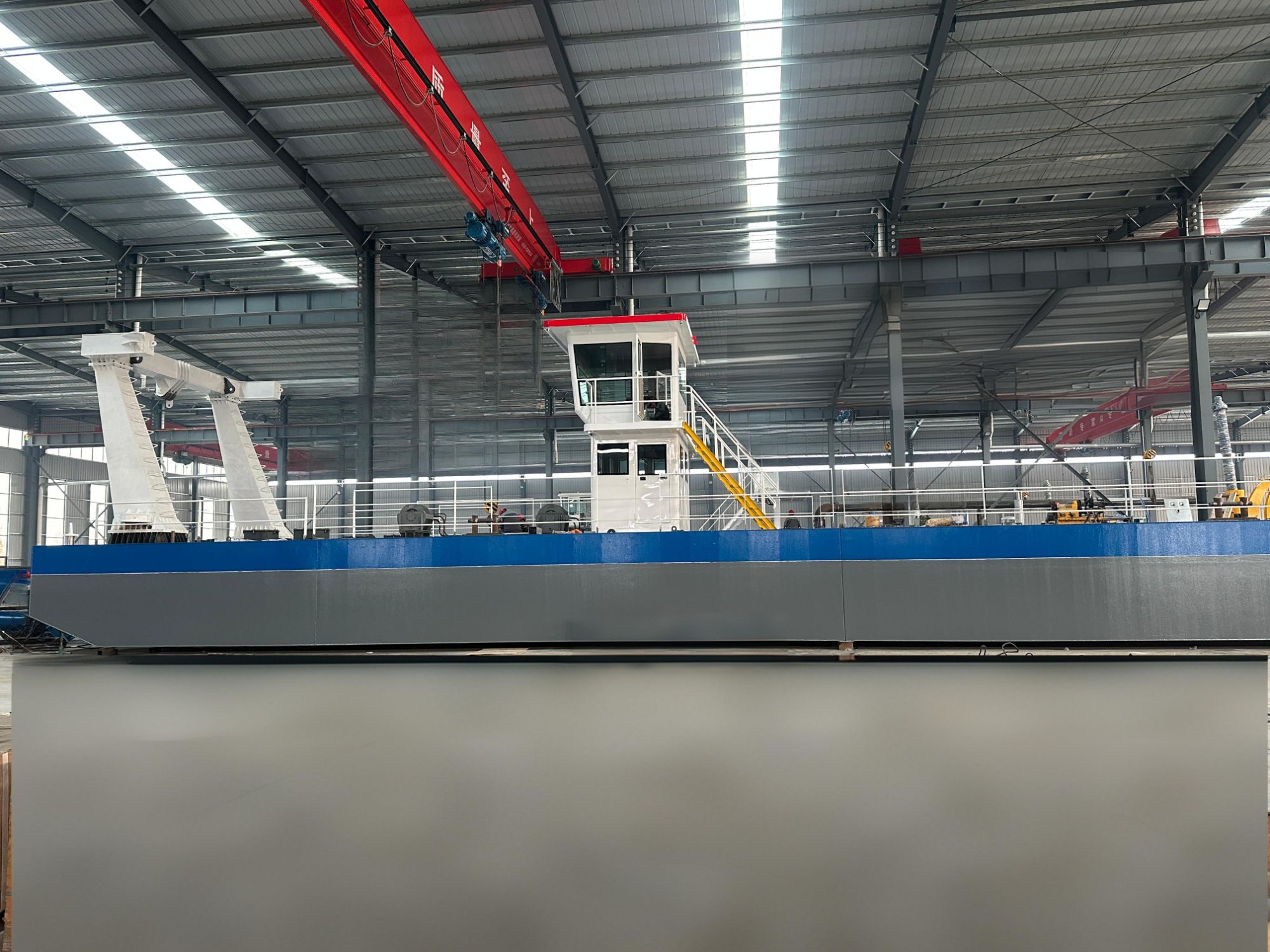
The push for eco-friendly marine construction just gained powerful momentum. YaKai Dredger, a name synonymous with dredging innovation, has revealed a groundbreaking lineup of next-generation vessel designs aimed squarely at sustainable marine projects. These new concepts promise to deliver the efficiency modern contractors demand while drastically reducing environmental footprint—something the industry has been chasing for years. From smart energy systems to precision dredging tools that protect fragile ecosystems, the designs signal a serious commitment to greener operations. If you've ever wondered how the future of dredging might look, this unveiling offers a compelling glimpse.
A New Blueprint for Eco-Friendly Dredging
Dredging projects have long been associated with turbid plumes and disturbed habitats, but a quiet shift is taking hold. Instead of simply scooping and relocating sediment, engineers are now weaving ecological thinking into every phase—from the first bathymetric survey to post-project monitoring. This new approach treats a waterway not as a static channel to be cleared, but as a living system where sediment placement can nourish eroding marshes, create shallow-water benches for fish, or cap old contamination with carefully chosen clean material. The blueprint doesn’t stop at the dredge head; it extends into how the work is timed around spawning seasons, how noise levels are mapped for marine mammals, and how real-time turbidity sensors trigger automatic pauses when thresholds are exceeded.
What makes the blueprint especially practical is its reliance on adaptive, low-footprint equipment. Instead of giant cutter suction dredges that churn up the bottom, more sites are deploying water injection and thin-layer placement techniques that reduce sediment resuspension by an order of magnitude. Mother Nature’s own processes—tidal currents and river flows—are harnessed to gently move material, cutting fuel use and carbon output. Some designs even swap traditional steel for geotextile containment tubes that can be filled in place and later vegetated, turning a maintenance project into wetland creation without extra steps. It’s a far cry from the brute-force methods of the past and a reminder that the most durable solutions often come from working with, rather than against, natural forces.
The final piece of this blueprint is transparency and long-term stewardship. Decades ago, a dredging project was considered finished the moment the last barge pulled away. Now, there’s a recognition that disturbed seed banks and altered bathymetry require years of light-touch intervention—like targeted seeding or seasonal flow adjustments—to fully recover. Monitoring programs no longer just check boxes; they use environmental DNA sampling and benthic surveys to track real biological recovery, and those findings feed directly into future designs. It creates a feedback loop where every project becomes a learning opportunity, quietly raising the bar for what responsible dredging should look like. That’s the heart of the blueprint: not a rigid checklist, but a way of thinking that keeps rivers, harbors, and coastlines resilient without sacrificing their ecological pulse.
Powering Up: Hybrid Systems and Smarter Fuel Use
The shift toward hybrid powertrains has unlocked new ways to stretch every drop of fuel without compromising on the driving experience. By pairing a combustion engine with an electric motor, these systems can recapture energy during braking, run solely on electric power at low speeds, and deliver extra torque when you need it most. It’s no longer just about switching between two power sources—modern hybrids blend them so seamlessly that the transition is almost invisible from behind the wheel, all while cutting consumption in stop-and-go traffic where traditional engines guzzle the most.
Smarter fuel use goes beyond simply adding batteries. It involves real-time adjustments that adapt to road conditions, driving style, and even topography. Predictive energy management can pre-charge the battery before a steep climb or let the engine loaf along on a flat highway, ensuring fuel isn’t wasted when electricity can do the job. This kind of intelligence turns every commute into a learning loop, where the system refines its behavior to stretch each tank further, making the vehicle feel more responsive and less thirsty over time.
What’s often overlooked is how these advances ripple outward. Hybrids that burn less fuel inherently produce fewer tailpipe emissions, but they also alter the rhythm of maintenance—brakes last longer thanks to regeneration, and engines spend fewer hours running under load. Combined with lightweight materials and aerodynamic tweaks, hybrid systems aren’t just a stepping stone to full electrification; they’re reshaping what efficiency can mean right now, giving drivers a practical way to do more with less without waiting for the next big breakthrough.
Designed to Work With Nature, Not Against It
True innovation doesn’t force nature into submission—it learns from the rhythms and resilience already perfected over millions of years. Our approach borrows from the silent intelligence of ecosystems: materials that breathe, structures that follow the sun, and systems that recycle waste into resource. Instead of dominating the landscape, we ask what the land itself suggests, letting water flow where it wants and wind carve the paths of least resistance. The result isn’t just a product or a building—it’s a living conversation between human need and the intricate wisdom of the wild.
Every design choice starts with a question: does this solution cooperate or collide with the natural order? We moved beyond the extractive mindset, choosing regenerative materials like mycelium composites and reclaimed timber, and shaping forms that reduce turbulence rather than fight it. Energy systems here aren’t bolted on; they’re woven into the architecture like a tree’s leaves, passively harvesting light and cooling the air. The goal is a seamless fit, where human activity becomes another layer in the ecosystem instead of a scar on it.
From Sediment Removal to Habitat Restoration
It often starts with a stark, barren channel—decades of accumulated silt and debris smothering the natural contours of a river or wetland. The initial phase of sediment removal is far more than just heavy machinery scraping layers of muck from the bottom. It's a painstaking process of cataloging what lies beneath, separating centuries-old pollutants from native seed banks that still hold life. Skilled operators work inch by inch, using modified equipment that minimizes turbidity and protects adjacent root systems. Every bucket lifted unearths not only trapped sediment but also the possibility of restoring the original hydrology that once pulsed through the landscape.
As the last loads of material are hauled away, the site appears ravaged, a blank slate that demands nuanced attention. This is where the work shifts from remediation to resurrection. Teams begin sculpting the newly exposed bed into a mosaic of depths and flow velocities, installing engineered log jams and burying root wads to mimic decades of natural debris accumulation in a single season. Rather than uniform banks, they create gentle slopes, undercut ledges, and gravel lenses that cater to specific spawning requirements of native fish. The water returning to the channel is guided through these features, immediately beginning to sort sediments and oxygenate riffles, kick-starting processes that usually take a flood cycle or two to ignite.
Into this freshly shaped framework, restorationists introduce life with a strategic patience that belies the urgency of ecological repair. Willow stakes are driven deep into the water table, their rapid growth stabilizing banks within months. Emergent plant plugs are installed not in rigid grids but in dense, overlapping communities that will compete, spread, and eventually self-design the marsh edge. Brush piles from cleared invasive species are anchored as temporary nurseries for juvenile fish. Within a single growing season, the transformation is already visible—not a manicured parkland, but the messy, resilient beginnings of a self-sustaining habitat. The sediment that once choked the system has become the foundation upon which a far more complex and enduring ecological story is written.
The Thinking Behind the Next-Gen Fleet
Rethinking a fleet isn’t just about swapping old vehicles for new ones. It demands a quiet but radical shift in operational philosophy—away from siloed cost-cutting toward deep integration with urban infrastructure, energy grids, and real-time data ecosystems. This connectivity dissolves the old command-and-control approach, forcing fleet operators to embrace a more fluid, adaptive strategy where boundaries between the fleet and its environment blur.
The deeper transformation lies in seeing the fleet not as a collection of depreciating assets, but as a network of mobile service units and data nodes. Electrification and autonomy are the visible facets, but beneath the surface, the real disruption is the density and granularity of decision-making. Every route update, every predictive maintenance alert emerges from algorithms that weigh millions of variables in milliseconds—far beyond human cognitive reach. This reshapes what it means to manage, turning the fleet into a continuous optimization loop.
Technology, however, has to bow to real-world purpose. Sustainability can’t be a sticker on a brochure; it must thread through energy sourcing, vehicle life cycles, and circular design principles. Just as crucial is the human layer—redefining driver and user experiences so that automation feels less like a replacement and more like a collaboration. The next-gen fleet will earn its place not by chasing efficiency alone, but by crafting systems that are both resilient and subtly humane.
Where the Industry Heads Next
The winds of change are sweeping through the industry with a force that feels both sudden and long overdue. We’re no longer just talking about incremental improvements—the conversation has shifted to fundamental reinvention. From rethinking supply chains that can weather geopolitical storms to redefining how we measure success beyond quarterly earnings, the road ahead is being paved by those willing to question every legacy assumption.
Technology, of course, remains the great accelerator, but its role is maturing. The hype around AI is settling into practical applications that actually move the needle: predictive maintenance that prevents outages before they happen, hyper-personalization that respects privacy, and automation that frees human talent for creative work rather than replacing it. The leaders of tomorrow aren’t just adopting tools—they’re rewiring their entire organizational logic around what these tools make possible.
Perhaps the most dramatic shift is in the very definition of value. Sustainability is no longer a side project or a marketing checkbox; it’s becoming the core framework for innovation. Companies are discovering that circular design, carbon transparency, and equitable labor practices aren’t constraints—they’re the new frontier of competitive advantage. This isn’t altruism, it’s a recognition that long-term resilience depends on it. The industry isn’t just heading somewhere new; it’s being reimagined from the ground up.
FAQ
They focus heavily on sustainable operations, incorporating hybrid power systems and advanced automation to cut fuel consumption and emissions by up to 30% compared to previous generations.
The designs come from a leading Dutch dredging technology firm with a century-long track record in custom-built marine solutions, though the official announcement didn't name a specific company.
They're built for versatility and can tackle everything from port deepening and coastal protection to offshore wind farm installations and land reclamation with minimal environmental disturbance.
Aside from cleaner engines, they feature smart dredging systems that reduce overflow of sediment, use biodegradable hydraulic fluids, and allow precise mapping of seabed habitats to avoid sensitive areas.
The manufacturer has confirmed that the first unit is scheduled to begin construction later this year, with sea trials expected within two years, transitioning from concept to reality.
There's a fully integrated autonomous dredging mode that uses AI-driven depth control and real-time material analysis, which lets one person oversee operations that used to require a full bridge team.
Yes, the modular hull design allows customization for shallow-draft operations in inland waterways or specialized deep-sea mining tasks, making them attractive to a wider client base.
They set a new standard for eco-efficiency, potentially pushing competitors to accelerate their own green transitions, and they could simplify permitting for projects near protected marine zones.
Conclusion
A leading dredger manufacturer has taken a decisive step toward greener marine construction by unveiling a forward-looking fleet that reimagines how vessels interact with sensitive aquatic environments. The new designs revolve around a holistic philosophy that treats dredging not as an extractive brute-force activity but as an opportunity to enhance ecosystems. At the core of this shift is an innovative blueprint that prioritizes low-impact operations, integrating hybrid propulsion systems that slash fuel consumption and emissions while maintaining the power needed for challenging projects. The vessels are engineered to work in concert with natural processes—minimizing turbidity, preserving shoreline stability, and actively reducing underwater noise that disturbs marine life. Every hull form, pump configuration, and onboard system has been fine-tuned to harmonize with the rhythms of the water, signaling a departure from the industry's traditionally adversarial relationship with nature.
Beyond mere efficiency gains, the next-gen fleet is conceived as a toolkit for environmental stewardship. Onboard technologies allow operators to precisely remove contaminated sediments and repurpose them for habitat creation, turning dredging cycles into catalysts for wetland renewal and coastal resilience. The design thinking stems from years of cross-disciplinary collaboration among naval architects, ecologists, and coastal engineers who analyzed real-world project feedback to eliminate waste and amplify restorative potential. By embedding features like real-time sediment monitoring and adaptive dredge heads, the manufacturer is setting a new standard that peers are likely to emulate. This evolution points to an industry future where marine projects are measured not just by volume moved or deadlines met, but by the net environmental benefit they deliver—a future where dredging becomes a regenerative act rather than a necessary disruption.
Contact Us
Contact Person: Nancy
Email: [email protected]
Tel/WhatsApp: (+86) 13869631558
Website: https://www.yakaidredger.com/