

Top 380V Vibrator Motor Options for Heavy-Duty Machinery
2026-11-16
Most 380V vibrator motors look fine on a spec sheet. Put them on a heavy-duty screen, feeder, or hopper after six months of nonstop vibration, and the differences start to show. This guide cuts through the catalog noise and focuses on options that actually survive demanding industrial environments. Along the way, you will see why Guangling keeps showing up in maintenance bays and OEM builds when uptime is the real specification.
What 380V Power Delivers When the Motor Never Stops
A motor that runs around the clock exposes every weakness in the supply. At 380V, the current stays low enough to keep cable runs manageable and terminal temperatures from creeping into dangerous territory, even when the load never eases. That headroom becomes obvious after a few hundred hours: connections stay tight, insulation keeps its color, and the drive spends less time fighting voltage drop.
The real difference shows up in torque behavior under sustained load. With a stable 380V feed, the motor holds its rated slip instead of sagging when other equipment starts on the same bus. Pumps, compressors, and conveyors get a firmer push without the controller stepping in to compensate, which matters most in plants where a few lost revolutions per minute change throughput.
Heat is the quiet killer in nonstop duty. Lower current at 380V means less I²R loss in the windings, so the frame dissipates heat more evenly and bearing grease lasts longer. Over a year of continuous operation, that subtle advantage reduces unscheduled stops and keeps the rebuild schedule closer to the original plan.
Bearing and Seal Configurations for Dusty and Wet Environments
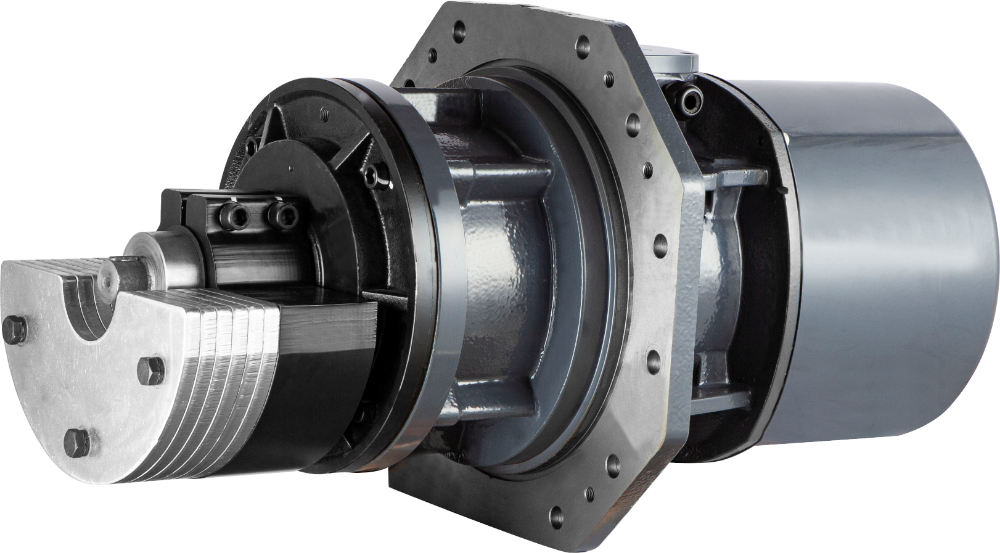
When a bearing operates in dusty or wet conditions, the sealing strategy becomes the difference between a long service life and premature failure. Dust acts as an abrasive, working its way past simple shields and wearing down rolling elements and raceways. Moisture, on the other hand, brings corrosion and can wash away lubricant, leaving metal-to-metal contact behind. A properly selected seal must handle both threats without creating excessive friction or heat.
Common configurations combine a contact lip seal on one side for wet environments with a non-contact shield on the other to keep out coarse particles. For heavily contaminated settings, a triple-lip seal or a flinger ring integrated with the bearing outer ring helps deflect water spray and debris before they reach the sealing surface. The orientation matters too: mounting the sealed side toward the contaminant source, and placing a drain hole or labyrinth on the opposite side, gives any moisture that does enter a way to escape instead of pooling inside the housing.
In practice, bearing users often pair a sealed or shielded unit with an external housing seal, such as a V-ring or a radial shaft seal, to create a double barrier. This adds cost and width but can extend relubrication intervals significantly. For washdown applications, a stainless steel bearing with a food-grade contact seal and a secondary cover cap offers both chemical resistance and physical protection. The key is to match the seal configuration to the actual contaminant load rather than assuming one standard design will handle every dusty or wet condition.
Start Stop Abuse and Thermal Limits on Tough Jobs
Frequent start-stop cycles punish equipment in ways that steady-state running never does. Each restart forces components to absorb sudden current inrush, torque spikes, and localized heating before oil, coolant, or air circulation has fully caught up. On a tough job site, operators rarely follow a gentle schedule, so the hardware has to survive abuse that looks almost random from the outside.
Thermal limits become the real gatekeeper when duty cycles get ugly. Rated output on paper means little once heat builds faster than the system can shed it. Winding insulation, bearing grease, power electronics, and coolant passages all age at different rates under repeated hot-cold swings. The failures that show up later are usually not caused by a single overload but by hundreds of small thermal cycles piling on stress.
Designing for these conditions means derating with actual work patterns in mind, not just ambient temperature. Short bursts at high load may be fine, but the recovery window between them decides whether the machine lasts. Watching coolant temperature alone misses hot spots in the stator, joints, or diode packs. A robust setup tracks multiple temperature points and pulls back power early enough to keep the next start from doing real damage.
Mounting Hardware and Alignment to Prevent Frame Cracks
Frame cracks rarely start at the point of impact. They begin where stress concentrates, and the bolt holes around your mounting hardware are prime suspects. If the bracket doesn’t sit perfectly flat against the frame, the first torque sequence pulls the metal into a slight bend. Over thousands of vibration cycles, that bend becomes a crack. The fix is not more torque — it’s better contact. Check for powder coat drips, weld spatter, or uneven plate surfaces before you ever thread a bolt in.
Alignment matters more than most riders assume. A bracket that fits “close enough” will still transfer load through the edges of the hardware instead of the full face. I’ve seen guys shim motor mounts with washers and then wonder why the lower frame rail split six months later. The energy has to go somewhere, and it will find the thinnest cross-section. Use a straightedge across the mounting points, and if you need more than a few thousandths of shim, the bracket itself is wrong for the job.
After alignment, the fastening pattern deserves the same attention. Tighten gradually, in a star or alternating sequence, and stop at the lowest end of the spec. Recheck after the first heat cycle. Bolts that stay put without excess clamping force are doing their real work — keeping the assembly rigid without preloading the frame into a permanent frown.
Force Adjustment and Speed Control Without Extra Cabinets
Instead of routing force and speed signals through a separate drive cabinet, the adjustments happen directly at the operator panel. The interface keeps the usual trim pots and digital settings within reach, so a technician can fine-tune pressure or feed rate during a run without walking to a remote enclosure. This changes the rhythm on the floor: small tweaks become immediate, and the machine responds before the next cycle starts.
The compact design does not force a trade-off between control range and cabinet count. A single onboard module handles both the load sensing and the velocity loop, using the same power stage that already sits inside the frame. Because there is no extra enclosure to wire, installers spend less time pulling cable and more time verifying actual motion. Maintenance is also simpler; most checks can be done at the point of use with a standard meter and the built-in readout.
For applications where floor space is tight or line changes are frequent, this approach removes one more fixed cabinet from the layout. Parameter changes stay local, and the absence of long control runs reduces the chance of noise creeping into analog references. The result is a drive setup that feels less like a separate subsystem and more like a native part of the machine.
Service Schedules and Parts That Minimize Downtime
A well-structured service schedule does more than keep equipment running; it prevents small wear from turning into unscheduled stops. Instead of relying on generic calendar reminders, many operations track actual run hours, load cycles, or fluid condition to decide when a unit needs attention. Pairing this kind of condition-based timing with a clear list of critical spare parts means a technician can often complete the work in one visit rather than waiting for a second trip after parts arrive.
Keeping the right components on hand changes downtime from a matter of days to a matter of hours. Common failure points like belts, filters, seals, and contactors are relatively inexpensive to store, yet their absence can hold an entire line idle. Smart parts planning also includes reviewing which items have caused the most recent interruptions and adjusting shelf stock accordingly, so the inventory reflects actual equipment behavior instead of an old purchasing template.
The goal is to make maintenance predictable without making it excessive. Over-servicing wastes labor and materials, while under-servicing invites breakdowns at the worst possible moment. By combining real usage data, a short list of proven spare parts, and a schedule that adapts to operating conditions, a facility can keep unexpected downtime to a minimum and make planned service something the team can prepare for instead of react to.
FAQ
A 380V three-phase design usually delivers higher torque with lower current draw, which reduces cable sizing and heat buildup on continuous shifts. Look for reinforced bearings, cast iron or heavy-gauge aluminum housings, and adjustable eccentric weights so the motor can be tuned to the exact stroke needed without oversizing.
Start with the bin, hopper, or screen weight and the material flow characteristics. A common starting point is roughly one pound of centrifugal force per 10 pounds of vibrating mass, but wet or compacted materials often require 20 to 30 percent more. It is safer to select a unit with adjustable weights than to rely on a fixed setting that cannot be fine-tuned after installation.
For most heavy-duty settings, IP66 is a practical minimum because it blocks dust and powerful water jets. If washdowns are frequent or caustic cleaning agents are used, check the specific chemical compatibility of the seals and cable glands rather than relying on the IP rating alone.
Yes. Three-phase motors run smoother, start more predictably, and handle frequent stop-start cycles better on large equipment. Single-phase units are often easier to wire into smaller operations but may need a capacitor and tend to produce more heat under sustained load, so they are less common above roughly 2 kW in heavy-duty applications.
Inspect the eccentric weights and fasteners every 500 operating hours and re-grease or replace bearings according to the manufacturer's load rating. In dusty plants, clearing material buildup from the fins and around the shaft seals every few weeks can prevent overheating and premature seal wear.
It is possible if the motors are identical and the VFD is sized for the combined current plus a 10 to 15 percent buffer. However, operating multiple vibrator motors on one drive can make tuning awkward because mechanical load differences may cause uneven amplitude. Separate drives or a mechanically synchronized setup usually give better control.
Most vibrator motors can be mounted horizontally, vertically, or at an angle, but the bearing arrangement must match the orientation. Vertical shaft mounting often requires a thrust bearing or a specific grease retention design. Always confirm the allowable mounting angle with the manufacturer rather than assuming the same motor can be flipped without consequence.
At a minimum, look for CE marking for European operations and CCC or equivalent approvals for certain Asian markets. For explosive dust atmospheres, ATEX or IECEx certification is often mandatory. Ask for the actual certificate number and verify the motor's zone rating instead of accepting a general 'explosion-proof' label.
Conclusion
Heavy-duty vibrating equipment tends to expose motor weaknesses quickly, so the more practical 380V options are built around heat tolerance, bearing life, and structural rigidity rather than raw horsepower alone. A motor that runs continuously on a grizzly feeder or foundry shakeout needs Class F or H insulation, a service factor that leaves room for voltage drift, and bearing arrangements that can shrug off fine dust or washdown moisture. Triple-lip seals, V-rings, and regreasable housings often separate machines that last from those that seize within months. Equally important is how the motor handles repeated stop-start cycles: short-term overloads, locked-rotor heating, and frame stress from misaligned mounts are common failure points, so looking for reinforced feet, heavier end brackets, and precise machined fits helps prevent cracks before they start.
Beyond surviving the environment, the best 380V choices give operators adjustment without costly control cabinets. Dual-voltage windings, movable eccentric weights, and stepped force settings let crews tune stroke and material speed at the motor itself, while externally accessible terminal boxes and robust cable entries keep changes quick. Smart purchasing also weighs service access: split housings, common bearing sizes, and grease lines routed to one side reduce hours lost on maintenance. In practice, a motor that combines tight alignment discipline, thermal reserve, and simple mechanical adjustment will outperform a higher-rated unit that is difficult to inspect or align. Those details, more than catalog specs, decide whether a heavy-duty vibrator motor holds up across years of dusty, around-the-clock work.
Contact Us
Contact Person: ZHUO
Email: [email protected]
Tel/WhatsApp: 86-576-86320988
Website: https://www.cnguangling.com