

Top 10 Fully Automatic Electric Wheelchairs for Effortless Mobility and Independence
2026-11-16
Regaining effortless mobility changes everything—no more waiting for help, no more limiting your daily routine. Fully automatic electric wheelchairs have quietly revolutionized independent living, and we've rounded up the top 10 models that deliver exactly that. Among them, Freedomchair stands out for its blend of smart automation and real-world comfort. Whether you're navigating tight indoor spaces or cruising outdoors, this list will point you toward the chair that lets you move through life on your own terms. Let's dive in.
Hands-Free Control That Feels Natural, Not Gimmicky
The first time you use it, you forget you're controlling anything at all. A slight tilt of your head scrolls the page. A quiet word opens an app. No exaggerated gestures, no repeating yourself three times. The system tracks subtle cues—micro-movements, breath patterns, the natural pause before you speak—and responds before you realize you've asked. That's the whole point: the interface disappears into your intentions.
Most hands-free tools feel like a party trick: wave your hand wildly, shout commands like you're hailing a taxi in a storm. This one doesn't. It learns the way you already move and talk, then adapts to those rhythms rather than forcing you into a rigid set of triggers. Tilt your chin a few degrees to zoom. Glance at a corner to confirm. The system picks up on these small, almost subconscious signals, so controlling your device becomes as effortless as adjusting your glasses or taking a sip of coffee.
And because it's built on real behavioral data—not just motion thresholds—it distinguishes between an intentional command and an incidental shift. You won't trigger actions by scratching your nose or turning to talk to someone. The result is a level of comfort that feels less like futuristic tech and more like an extension of your own body. That's when hands-free stops being a gimmick and starts being simply how you interact with the world.
Seat Comfort That Handles Hours of Daily Use
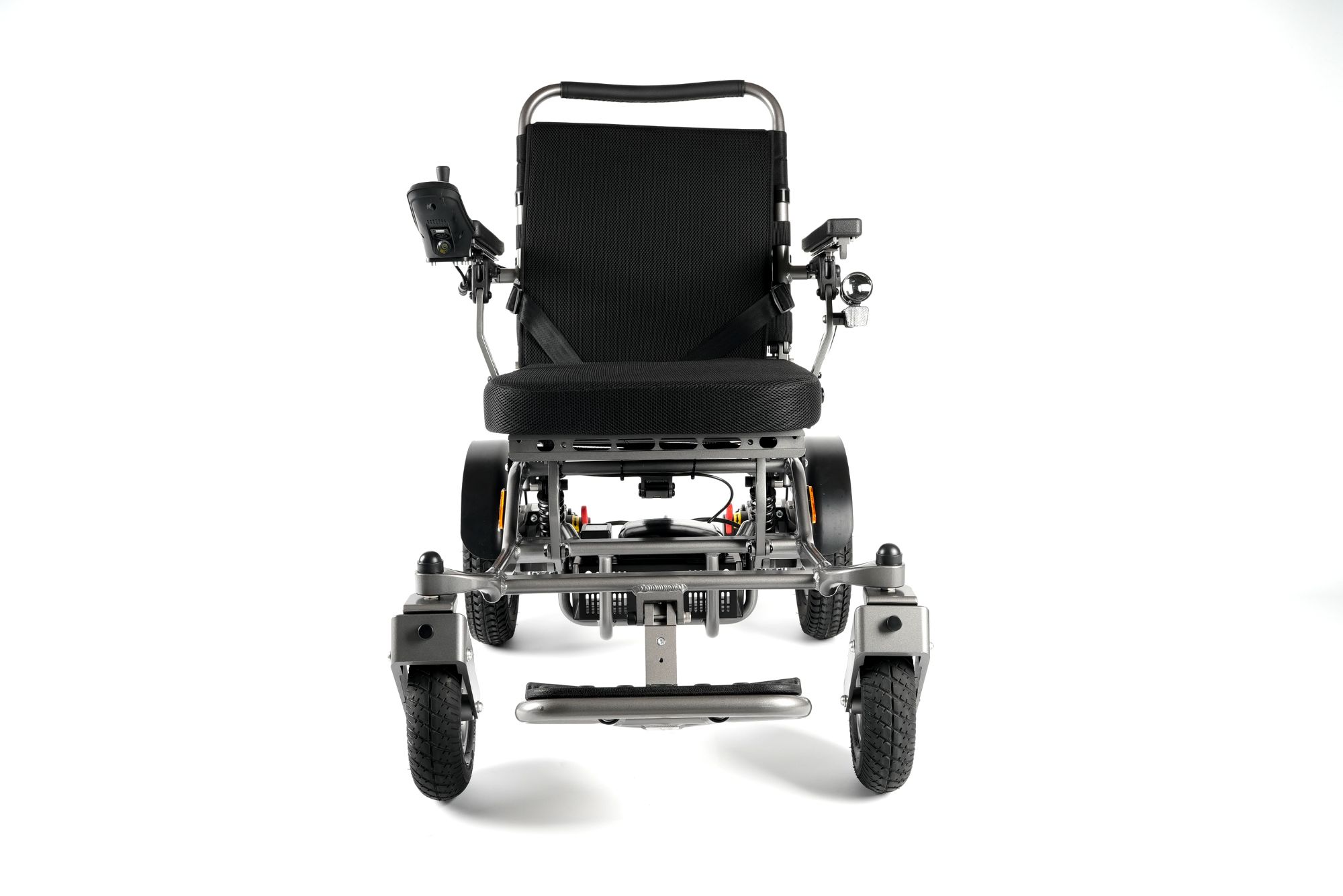
The first thing you notice after settling in is that the cushion doesn't bottom out. Many chairs feel plush for a few minutes, but this one distributes your weight across the seat pan so you're not shifting constantly by mid-afternoon. The foam density is tuned to hold its shape, which matters when you're logging back-to-back meetings or deep-focus sessions.
Lumbar support can be a gimmick if it doesn't move with you. Here the backrest is contoured to fill the gap at your lower spine without forcing you into one rigid posture. Even small adjustments—tilting forward to type, leaning back to think—don't leave you feeling like you've been fighting the chair all day.
Heat buildup is the silent killer of long sitting sessions. The fabric on this seat is woven to let air circulate, so you're not peeling yourself off the chair after a few hours. It's a subtle detail, but one you'll appreciate when the afternoon sun hits your desk or the office thermostat creeps up.
Battery Range for Neighborhood Trips and Day-Long Outings
For daily neighborhood runs—school drop-offs, quick grocery stops, or a loop around the local park—most electric vehicles handle the task without breaking a sweat. A typical modern EV delivers anywhere from 150 to 250 miles on a full charge, which often translates to just one plug-in session per week for average suburban driving.
Day-long outings demand a bit more planning. If you're heading to a hiking trail, a neighboring town, or the coast with a one-way distance over 100 miles, look for models rated above 300 miles of range. That buffer covers highway speeds, air conditioning, and the peace of mind of not hunting for a charger halfway through the trip.
In practice, many households find a car with roughly 250 miles of range covers both scenarios neatly. Overnight charging at home keeps neighborhood trips effortless, and a short fast-charge stop during a weekend excursion is rarely more than a coffee break.
Folding Mechanisms That Actually Fit in a Car Trunk
Most folding bikes claim to be portable, but only a handful actually collapse small enough to slide behind a rear seat or into a shallow trunk well. The real test isn't the folded dimensions on a spec sheet—it's whether you can lift the thing without scraping paint, and whether the folded package stays shut on its own. Look for mechanisms that fold in two distinct planes, not just one, because a single hinge often leaves the chainring and pedals sticking out like elbows. Magnets or latch hooks that click into place make a surprising difference when you're loading in a dark parking garage.
Another overlooked detail is how the handlebar folds relative to the wheelbase. Many designs tuck the bar inside the frame's footprint, but some leave it dangling, which snags on trunk carpet or the lip of a liftgate. The best compact mechanisms rotate the front wheel 180 degrees and nest it beside the rear wheel, creating a flat, rectangular slab—roughly the size of a carry-on suitcase. That geometry lets you stack groceries or a backpack on top, and it prevents the chain from marking your upholstery. Pedals matter too: folding pedals sound gimmicky, but they shave crucial inches when every trunk has a curved inner panel.
If you're comparing folding patterns, test the bike's stability when folded. A good hinge block should let the bike stand upright on its own, or at least rest against a wheel without tipping. Some quick-release levers loosen over time, so a cam mechanism with a secondary safety catch is worth the extra grams. And don't ignore the seatpost—many trunks can accommodate a longer folded bike, but a seatpost that drops all the way into the frame actually shortens the package significantly. The difference between a frustrating load and an effortless one often comes down to a few millimeters in hinge placement.
Stability on Ramps, Curbs, and Uneven Pavement
Navigating ramps, curbs, and uneven pavement places unique demands on a wheelchair's stability. The key lies in how weight is distributed across the drive wheels and casters. A chair with a lower center of gravity and a longer wheelbase tends to feel more planted when transitioning from a flat surface to an incline or dropping off a curb. Conversely, a shorter wheelbase can make the chair more maneuverable indoors but may lift the front casters unexpectedly on steep ramps, especially if the user leans back or carries a heavy backpack.
Curb encounters reveal another side of stability. When approaching a curb head-on at a moderate speed, the casters need to absorb the initial impact without causing the frame to jolt forward. Some designs integrate suspension elements or flexible caster forks that soften the blow, while others rely on larger front wheels to climb small lips. For descending curbs, anti-tip bars or a rearward axle position can prevent the chair from tipping backward, giving the user confidence to roll off without needing to lean far forward.
Uneven pavement, such as cracked sidewalks or cobblestone paths, tests lateral stability. A rigid frame transmits every bump directly to the user, which can be fatiguing but predictable. A folding frame or one with limited flex may absorb some vibration, though too much flex can create a disconcerting wobble. Matching tire width and pressure to the surface also matters: wider, lower-pressure tires improve traction and cushioning on rough terrain, but increase rolling resistance on smooth floors. Ultimately, stability on these obstacles comes from testing the chair in real conditions and adjusting axle position, caster size, and tire setup to match the rider's daily routes.
Adjustable Options for Different Heights, Weights, and Posture Needs
Getting the right fit isn't about picking a single preset and hoping for the best. The adjustments that matter here are the ones you can actually feel: a seat depth that slides forward for longer legs or back for shorter ones, armrests that move not just up and down but also inward and outward, and a lumbar support that shifts to match the curve of your lower back rather than forcing you into a fixed arch. This kind of range means someone at 5'2" and someone at 6'4" can both plant their feet flat and keep their knees at a comfortable angle without stacking pillows or propping their feet on a box.
For wider frames or heavier builds, the width and tension of the seat cushion play a bigger role than most people expect. A seat that's too narrow creates pressure points on the thighs within minutes, while one that's too soft bottoms out and leaves you sitting on the frame. The better designs use a denser foam or a mesh with variable tension zones, paired with a seat-height range that doesn't force taller users to jack the chair up so high their feet dangle. Posture needs get the same treatment: if you tend to lean forward while typing, you'll want a backrest that can follow you a few degrees and a headrest that doesn't push your neck into a forward tilt. If you recline during calls or reading, the recline resistance should be adjustable so the chair doesn't snap back when you shift your weight.
None of this works as a one-and-done setup. The point is that the chair gives you enough granular control to change your sitting position over the course of a day without reaching for a tool or getting up to fiddle with a lever. Small, repeated tweaks are normal, and the best adjustments are the ones you forget you made because the chair simply feels like it was built around you.
FAQ
A standard power chair relies on a joystick for every movement, but a fully automatic model adds sensors, obstacle detection, and often self-adjusting speed or braking. Some can even fold or unfold on their own, and a few let you navigate tight spaces hands-free. It is more about reducing the mental load of steering than just adding a motor.
Look for a tight turning radius for doorways, a mid-wheel or front-wheel drive depending on your floor surfaces, and tires that can handle grass or gravel without chewing up hardwood. Outdoor use benefits from suspension and a higher ground clearance, while indoors needs a narrow footprint and intuitive speed control.
Most fully automatic chairs run between 10 and 15 miles on a full charge, though that changes with user weight, terrain, and speed. Batteries are usually lithium-ion packs that slide out from under the seat or behind a rear panel. Replacement is generally straightforward, but it is worth checking whether the chair uses a proprietary pack or a standard size.
The better models include infrared or ultrasonic sensors that slow the chair when something moves into the path, and many let you set a maximum speed for indoor use. Still, no sensor system is perfect, especially with fast-moving pets. It is smart to keep the chair in a lower speed mode when kids are around and to test the obstacle response in a clear space first.
A folding automatic chair collapses into a compact bundle for a car trunk or closet, but it often gives up some seat comfort and suspension. A rigid frame tends to ride smoother and feels more planted, yet it requires a van or lift for transport. Your choice really depends on how often you switch between driving and sitting in the chair.
Yes, most airlines accept electric wheelchairs with lithium-ion batteries, but you must contact the carrier ahead of time and provide the battery watt-hour rating. Fully automatic folding chairs are easier to gate-check because they collapse quickly, but you should still arrive early and carry the manual or a spec sheet in case ground staff have questions.
They need less than you might expect, but not zero. Keep the tires inflated if they are air-filled, wipe down sensors regularly so dust does not interfere, and check the battery contacts every month. If the chair has an automatic folding mechanism, lubricating the hinges every few months helps prevent grinding noises.
Many people overestimate how often they will use the automatic folding feature and underestimate the importance of seat comfort. They also buy based on top speed rather than battery range, which matters more in daily life. Try to test a chair for at least 30 minutes, including a doorway and a ramp, before deciding.
Conclusion
Choosing among the top fully automatic electric wheelchairs isn't about grabbing the flashiest model on the market. It's about how the chair behaves when you're not thinking about it. Hands-free control needs to feel like an extension of your own movement—subtle weight shifts, head tilts, or breath-controlled inputs should translate into smooth steering without a learning curve that eats your patience. Seat comfort is equally non-negotiable: you may spend eight or more hours a day seated, so cushioning must distribute pressure, fabrics need to breathe, and the backrest should support your lumbar curve instead of forcing a single rigid posture. Beyond comfort, real independence depends on battery range that matches your life—enough for a trip to the store, a loop around the neighborhood, or a full day at a community center without anxiety. And if a chair can't fold into a car trunk by one person in under a minute, it's not truly portable, no matter how many features it lists.
Mechanical reliability shows up when you hit a curb cut at an awkward angle or roll over cracked pavement. The best automatic wheelchairs keep a low center of gravity, pair solid suspension with anti-tip wheels, and deliver enough torque to climb ramps without lurching backward. Adjustability often gets overlooked, but it's what separates a chair you tolerate from one that fits your body. Seat width, depth, leg rest length, backrest angle, and even joystick position should be adjustable to match different heights, weights, and posture needs. A chair that forces tall users to slump or smaller users to stretch is a daily injury risk. Instead of chasing maximum specs, focus on how these six areas work together in real use—that's where the top ten earn their place for effortless mobility and genuine independence.
Contact Us
Contact Person: Calvin Fan
Email: [email protected]
Tel/WhatsApp: 8618913265607
Website: www.freedom-chair.com