

Sinotruk HOWO 6x4 Refrigerated Truck Supplier Selection Made Simple
2026-11-29
Finding a dependable Sinotruk HOWO 6x4 refrigerated truck supplier often feels more complicated than it should. Buyers are left juggling mixed specifications, unclear after-sales support, and suppliers that overpromise. This guide cuts through the noise with a straightforward selection process. KANGMU TRUCK keeps the focus on real-world performance, verified configurations, and supply chain transparency, so you spend less time second-guessing and more time moving cold cargo.
What the HOWO 6x4 Gets Right Before the Reefer Box Goes On
The HOWO 6x4 earns its keep before the reefer box even touches the chassis. The frame rails come through with consistent hole spacing and clean welds, so body installers aren't grinding or re-drilling for hours. Crossmembers sit at the right pitch for a standard refrigerated unit, and the rear section already leaves room for the compressor and fuel tank brackets. It's the kind of unglamorous groundwork that saves a fleet real downtime later.
Under the cab, the electrical take-off points are laid out with body builders in mind. The chassis harness has sealed connectors near the back of the cab, and the PTO provision is present without forcing an aftermarket hack. Air and brake line routing stays clear of the area where the reefer unit's condenser gets mounted, which means fewer zip-tie fixes and less chafing once the box is bolted down.
Suspension calibration also matters before the insulated body adds its constant weight. The factory leaf pack and shock tuning handle an empty chassis run without bouncing the cab, yet they don't sag dramatically when the reefer and payload come aboard. That balance is easy to overlook until you drive a truck that pitches over every expansion joint. HOWO gets the pre-body setup right, making the upfit less of a correction and more of a continuation.
Where Cheap Refrigeration Units Start to Cost You on the Road
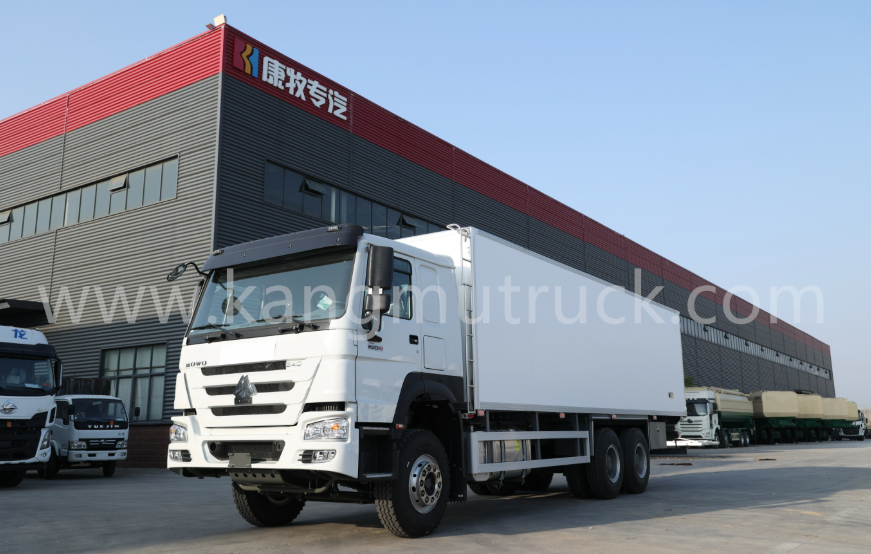
The first long haul usually tells you where the savings went. A budget unit might hold temperature on a mild day, but once it has to run hard through desert heat or repeated door openings on a multi-stop route, the compressor rarely cycles off. That constant load burns more fuel, strains the belt and clutch, and pushes discharge temperatures high enough to thin the oil. Before long, the low purchase price starts showing up as shorter service intervals and a cab full of warning alarms.
Temperature swing is another place where cheap units quietly fail. The thermostat may have a wide dead band, letting the box drift several degrees before cooling kicks back in. For frozen loads that can mean surface thawing; for produce, it can trigger condensation and shortened shelf life. One rejected pallet or a customer claim can erase whatever you saved on the invoice. Even a roadside repair gets expensive when the nearest technician doesn't stock parts for an off-brand control board.
Resale and compliance costs tend to surface later. Some low-cost units are built around older compressors that are no longer accepted in certain states or cold chain programs, so the truck's flexibility shrinks. When you add the extra labor hours for chasing intermittent faults, replacing cheap sensors, and rewiring corroded connectors, the total cost per mile often climbs past a mid-range unit. The real comparison isn't the number on the purchase order; it's what the unit costs you when the warehouse door opens and the load isn't at the right temperature.
Why a Supplier’s Lead Time Says More Than the Quote
A quote tells you what a supplier hopes to charge, but lead time exposes how they actually run their shop. When a vendor promises four weeks and routinely delivers in six, every downstream plan quietly collapses. The gap between the quoted date and the real one reveals whether their production schedule is built on discipline or wishful thinking. You can negotiate price later, but you cannot negotiate back the weeks lost to a late shipment.
Short lead times sometimes signal lean, responsive operations. Other times they are a sales tactic with no capacity behind them. Suppliers who pad their dates because they fear disappointing you are not doing you a favor; they are shifting their own chaos onto your inventory. The real signal is not the number itself but how confidently and consistently they hit it. Ask for their last three actual dispatch dates, not their brochure figure.
When two quotes look similar, lead time becomes the sharper filter. A supplier who quotes two weeks but has a backlog stretching into next quarter is not really offering two weeks. They are offering a queue position disguised as a promise. The companies that earn trust are the ones who say no when the calendar is full, then deliver early when it isn't. That kind of honesty costs nothing extra, yet it protects your launch, your cash flow, and your reputation far more than a five percent price cut ever will.
Service Support That Actually Answers When Cargo Is on the Line
When a shipment stalls at a border or a temperature log shows a spike at 2 a.m., the last thing anyone needs is a ticket queue. The support desk here is staffed by people who can read a manifest and a map, not just a script. They pick up, pull the shipment record, and tell you what they can do now—not what they will escalate by morning.
That matters most when the cargo is perishable, bonded, or already promised to a production line. We keep the chain short: one call reaches someone with access to carrier dispatches, warehouse leads, and the authority to approve a reroute or a last-mile recovery. No handoffs between departments, no vague we will look into it. Just a direct answer on whether the freight moves tonight or needs a Plan B before sunrise.
Reading Fuel, Maintenance, and Resale Numbers on a HOWO Reefer
Fuel figures on a HOWO reefer rarely match the brochure once a full load and a chiller unit are involved. Expect the chassis engine to sit in the high teens to low twenties per 100 km on regional hauling, while the reefer unit adds its own burn, often 2 to 4 litres an hour depending on set point and outside heat. Idling overnight or running the box hard in summer will push that number up faster than most buyers expect.
Maintenance costs split into two separate wallets. The truck side follows normal HOWO service intervals, but the refrigeration unit demands its own belt, compressor, and defrost checks. A missed reefer service often shows up first as temperature drift rather than a dash light, so repair bills tend to arrive after cargo claims. Budget for door seals, floor drains, and evaporator cleaning if the trailer runs wet or salty routes.
Resale values hold best when there is a complete fuel log, a dated maintenance folder, and a reefer unit with a known service history. Buyers in this segment pay less attention to paint than to compressor hours and recent cold box repairs. A HOWO reefer with patchy records often sells well under book, while one with clean temperature logs can move close to asking price even with higher mileage.
Telling a Cold Chain Specialist Apart From a General Truck Broker
Plenty of freight brokers can move a pallet of canned goods from Memphis to Dallas without breaking a sweat. Hand them a load of fresh salmon, insulin, or frozen vaccine, and the entire conversation changes. A cold chain specialist lives in a world of temperature logs, dwell-time limits, and reefer unit alarms. They know that a two-hour delay at a warehouse dock isn't just an inconvenience—it can spoil an entire shipment. General brokers often treat the trailer as a box on wheels. A specialist treats it as a controlled environment where every degree and every minute matters.
The difference shows up long before the truck backs into a dock. A cold chain broker asks about product temperature at pickup, pre-cooling requirements, maximum transit hours, and what happens if the reefer unit fails at 2 a.m. They vet carriers not just for insurance and safety ratings, but for their equipment's age, temperature monitoring systems, and drivers' experience hauling perishables. A general broker might quote a rate in ten minutes. A specialist starts with questions, because the wrong answer is more expensive than any freight bill.
During transit, the specialist's value becomes even clearer. They monitor reefer temps remotely when possible, coordinate contingency plans for breakdowns, and understand that a load of frozen peas and a load of fresh strawberries have completely different tolerances. When problems happen—and in cold chain, they always eventually happen—the specialist doesn't just apologize. They already know which nearby cold storage facility can accept the product, which repair vendor can respond quickly, and whether the shipper or receiver needs to be notified first. That kind of operational memory doesn't come from a load board. It comes from years of working specifically with temperature-sensitive freight.
FAQ
A dependable supplier talks in specifics: reefer unit brand options, actual insulation thickness, pre-delivery temperature pull-down tests, and a spare parts shelf that is not just a promise. Average suppliers tend to stay vague about body materials and after-sales response times.
The refrigerated body and cooling unit change weight distribution and electrical load. If the chassis is not prepped properly, you often see wiring faults, frame stress, or cooling interruptions later. That is why frame reinforcement, correct PTO or alternator setup, and factory-grade harness routing should be checked before purchase.
Ask for recent cold-chain delivery examples, request a live video walk-through of the production line, and require written confirmation of the reefer unit brand, insulation material, and floor design. Comparing those details first usually filters out suppliers who only compete on price.
Confirm the brand is one you can service locally, the cooling capacity matches the box volume and target temperature range, and whether a standby or electric standby option is available. Also ask about defrost behavior and how the unit performs in extreme heat, because those details affect real delivery quality.
A late truck can miss an entire peak season, and slow after-sales response can keep it parked for weeks. That is why the real cost should include penalty clauses for delayed delivery, guaranteed spare parts availability, and a named contact for technical support rather than a generic hotline.
In most cases yes, because a single responsible party makes matching, type approval, and warranty claims much simpler. If you split the purchase, you end up coordinating the bodybuilder and chassis dealer yourself, which often creates finger-pointing when something goes wrong.
Check that the insulation material and overall dimensions match local registration rules, the emission level meets the destination market, and the refrigeration system uses an acceptable refrigerant. Also confirm the completed vehicle documentation will not cause delays at inspection.
A reliable supplier usually runs a temperature pull-down test, checks for water leaks, performs a road test with the full body mounted, and verifies electrical loads under working conditions. If the supplier only sends photos of the finished truck without test records, that is a warning sign.
Conclusion
Selecting a reefer truck often goes sideways when buyers focus only on box temperature. With the HOWO 6x4, the chassis does a lot before the refrigeration unit is mounted—axle load distribution, frame strength, and engine cooling airflow all shape how the cold chain performs. Cheap reefer units look fine on a spec sheet, but they cycle poorly, struggle at hot idle, and wear compressors out faster. A supplier who pushes the lowest unit price rarely talks about those roadside failures. Lead time tells you more than a quote: if a supplier cannot explain where the truck is in build or why the refrigeration kit is delayed, the delivery promise is probably guesswork.
Service support is what actually matters when a load of vaccines or fresh produce starts losing temperature. Ask what happens at 2 a.m. with a fault code. A cold chain specialist will mention spare parts locations, reefer technician training, and warranty claim handling without hesitation, while a general broker usually says “we’ll get back to you.” Also check the numbers that show up after purchase—fuel burn under load, maintenance intervals for the compressor and engine, and resale demand for HOWO reefer trucks in your region. Choosing a supplier is less about the first price and more about whether they understand how the chassis, unit, parts, and after-sales network fit together.
Contact Us
Contact Person: Shen Zhikang
Email: [email protected]
Tel/WhatsApp: 8613908668969
Website: https://www.kangmutruck.com/