

Ring Main Unit Factory: Behind the Scenes of Modern Production
2026-06-21
Step inside a world where precision meets innovation—the modern ring main unit factory. Every circuit, every switch, every seamless performance starts here, often unseen but never unimportant. At Lugao, production isn't just assembly; it's a choreography of advanced testing, meticulous design, and an obsession with reliability that goes far beyond the final product. Curious what really powers the backbone of our electrical grids? Let's pull back the curtain.
From Blueprint to Assembly Line: The RMU Production Process
Every RMU starts its journey as a detailed digital model, where engineers fine-tune every component long before any metal is cut. This stage is all about precision—clearances, thermal behavior, and electrical clearances are simulated to avoid surprises later. The blueprint doesn't just map the physical layout; it also captures the logic behind interlocking, protection schemes, and communication pathways, ensuring that what's on paper aligns perfectly with real-world demands.
Once the design is locked, the shop floor takes over. Fabrication begins with laser-cut enclosures and busbar systems, where even a millimeter's deviation can cascade into major issues. Assembly teams follow a choreographed sequence: frames are welded, panels mounted, then comes the careful installation of circuit breakers, relays, and metering equipment. Each module is wired and labeled with obsessive consistency, making future maintenance almost intuitive.
Before an RMU leaves the factory, it passes through a gauntlet of tests that leave no room for compromise. Dielectric strength, partial discharge, and temperature rise are measured under load conditions that mimic years of service. Only when every parameter falls within the tightest tolerances does the unit get its final sign-off. This isn't just checklist engineering—it's a deliberate rhythm that turns a collection of parts into a reliable link in the power distribution chain.
Advanced Automation: Robotics and Precision in Every Step
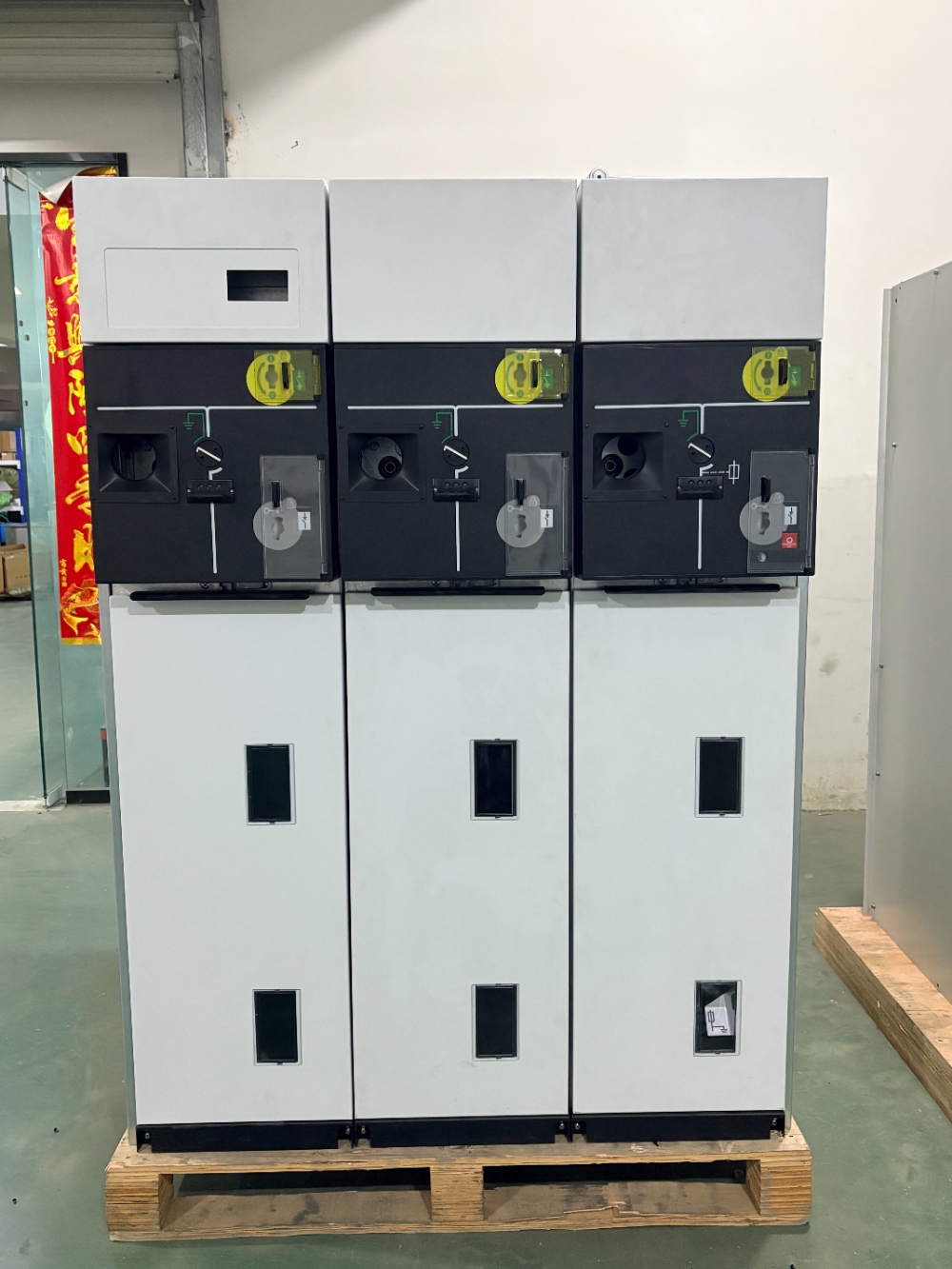
Behind the scenes, robotic arms orchestrate movements with micrometer-level accuracy, transforming raw materials into finished products through hundreds of synchronized steps. Each motion is pre-calibrated and monitored in real time, eliminating the subtle variations that human hands inevitably introduce. The result isn’t just consistency—it’s a kind of flawless repetition that becomes almost mesmerizing to observe.
Sensors embedded throughout the production line feed data back to central control systems dozens of times per second. This constant stream of feedback allows instant micro-adjustments: a slight temperature shift triggers an automatic cooling tweak, a tiny torque fluctuation prompts an immediate recalibration. You could watch the process for hours and never see the same correction twice—yet every single unit emerges identical to its predecessor.
What sets this apart isn’t just the hardware but the layered intelligence behind it. Machine learning models trained on years of production data predict wear patterns and schedule maintenance before any decline in precision can occur. So while the robots move with their quiet, exacting rhythm, the real sophistication is in the subtle, predictive orchestration that keeps every step locked in perfect cadence.
Rigorous Testing Protocols That Ensure Unmatched Reliability
When every second counts and failure carries real consequences, trust isn’t something you ask for—it’s earned through proof. Our testing protocols weren’t designed just to check boxes; they mimic the messy, unpredictable conditions of the real world. We push components past their certified limits, bake them in salt fog, freeze them overnight, and run them through shock trials that would rattle most equipment apart. Because reliability isn’t theoretical, it’s the sum of thousands of hours deliberately trying to cause a breakdown.
Each test is part of a layered approach where products face mechanical stress, thermal cycling, and electrical surges in sequence—not just isolation. A single unit might endure a high-frequency vibration run, then immediately cycle through extreme temperature swings while under load. We watch for micro-cracks, signal drift, and material fatigue that standard checklists miss. Our engineers track these subtle failures with a stubborn attention to detail, adjusting manufacturing processes in real time so that what ships to you has already survived far worse than anything you’ll throw at it.
The result isn’t just a spec sheet number or a warranty promise on paper. It’s a quiet consistency field technicians notice when gear keeps working after a decade of abuse. It’s the absence of “new batch” anxiety that plagues other solutions, because our validation data spans years of consecutive production runs. We invest in this depth of testing so that reliability becomes an invisible feature—one you’ll never have to think about, even when it’s the only thing standing between uptime and a costly shutdown.
Sustainable Manufacturing: Reducing Waste and Energy Consumption
Factories today are rethinking production by tracking exactly where materials end up. Instead of massive bins of mixed scrap, sensors now monitor cutting and molding steps, flagging inefficiencies instantly. One textile mill cut fabric waste by 11% just by adjusting pattern layouts based on real-time data rather than historical averages.
Energy efficiency often starts with the obvious lights and motors, but the real gains hide in compressed air and steam systems. Leak audits sound dull until a plant manager sees that fixing leaks saved them more than switching to LEDs. Some facilities even capture heat from compressors to warm workspaces, turning a waste stream into a free resource.
The trick is making reduction part of daily work, not a quarterly initiative. Operators who used to run machines until a tool broke now track wear patterns to extend life. When people see scrap bins as tuition for process education, the whole cost logic shifts—waste becomes a visible loss everyone owns.
Custom Solutions: Tailoring Ring Main Units for Unique Grid Demands
Every power network comes with its own set of quirks—load patterns, environmental stresses, space constraints, and future expansion plans. Off-the-shelf ring main units rarely address these nuances completely. That's where customization steps in, reshaping RMU designs around the exact specifications of a site. Whether it's adding advanced protection relays, integrating remote monitoring modules, or adapting physical dimensions to fit a cramped substation, the goal stays the same: deliver reliable switching and protection without forcing the grid to adapt to hardware limitations.
Tailoring often starts with a deep dive into the operating context. A coastal installation might demand stainless steel enclosures and conformal-coated circuits to combat salt fog, while an underground vault in a flood-prone area needs submersible ratings and fault-tolerant seals. Functionality can be extended too—motorized breakers, directional fault indicators, or specialized arc-quenching methods that align with safety protocols. The real value emerges when these adjustments work together, creating an RMU that feels like it was engineered for that exact spot, because it was.
The process isn't just about hardware modifications; it often reshapes maintenance and operation workflows. Custom labeling schemes, pre-configured parameters for local SCADA systems, or modular layouts that allow expansions without total shutdowns all reflect the careful attention given to the user's long-term reality. When done right, a tailored ring main unit fades into the background, doing its job without drawing attention, simply because it was built to answer the demands that matter most on that particular grid.
The Human Element: Skilled Technicians Behind the Machines
Behind every seamless automated process stands a team of technicians whose expertise keeps the gears turning. They don't just monitor screens and press buttons—they read the subtle shifts in vibration, temperature, and sound that signal something about to go wrong. A seasoned technician can anticipate a bearing failure long before a sensor triggers an alarm. This kind of deep, intuitive knowledge is forged over years of hands-on work, not stamped out by a training manual.
In highly regulated environments, the value of a skilled technician multiplies. When a sterile filling line in a pharmaceutical plant drifts out of spec, it takes more than a calibration procedure to set it right. The technicians who thrive here blend mechanical aptitude with a knack for creative problem-solving, often redesigning small parts or tweaking parameters on the fly—all while remaining within strict compliance boundaries. Their decisions can mean the difference between a brief pause in production and a costly product recall.
Technology is nothing without the human instinct that backs it. While automation handles the repetitive and the precise, it's the technician who steps in when variability strikes—whether it's a raw material behaving unexpectedly or a subtle environmental change affecting a sensitive instrument. They bring context that data alone can't capture, bridging the gap between what should happen and what actually happens on the floor. In a world obsessed with algorithms, these professionals remind us that experience, judgment, and a quiet sense of ownership remain irreplaceable.
FAQ
The key stages typically include sheet metal cutting and forming, welding and assembly of the enclosure, installation of switchgear components, busbar system integration, wiring and control panel setup, vacuum interrupter and mechanism fitting, followed by rigorous testing such as dielectric, partial discharge, and mechanical endurance tests before final inspection and packaging.
Quality is maintained through a combination of in-process inspections and final testing. Critical steps like welding are checked via X-ray or ultrasonic methods, assembly dimensions are verified with laser alignment tools, and every unit undergoes routine tests including high-voltage withstand, insulation resistance measurement, and circuit breaker timing tests. Additionally, samples from each batch undergo type tests to ensure long-term reliability.
Automation enhances precision and efficiency—robotic arms handle repetitive tasks like welding and painting, CNC machines ensure accurate metal cutting and bending, and automated guided vehicles transport components between stations. Production lines often use IoT-enabled sensors to monitor machine health and track product quality in real time, minimizing human error and speeding up throughput.
The switchgear compartment assembly begins with mounting the circuit breaker or load break switch onto a pre-fabricated frame. Current transformers and voltage sensors are installed, followed by the busbar system which is bolted or clamped in place. The mechanism is then connected and adjusted for smooth operation. Finally, the compartment is sealed, and SF6 or solid insulation medium is filled if the design requires it.
Safety measures include mandatory personal protective equipment like arc-flash suits for test areas, lockout-tagout procedures for energy sources, ventilation systems to remove fumes from welding and coating, and regular safety drills. Automated systems reduce direct contact with high-voltage components. The factory layout clearly separates high-risk zones and ensures emergency stops are accessible across the floor.
Environmental compliance is achieved by using closed-loop systems for gas handling to prevent SF6 emissions, recycling metal scrap and packaging waste, and employing energy-efficient machinery. Wastewater from painting and cleaning is treated on-site. The facility often holds ISO 14001 certification and follows strict local regulations regarding hazardous materials and emissions.
Completed units undergo a series of tests: a dielectric test to verify insulation strength, a partial discharge test to detect any voids or defects, a mechanical operation test to ensure switch mechanisms work reliably over thousands of cycles, a temperature rise test to confirm safe thermal limits, and a gas leakage test for sealed systems. Only after passing all these does the unit get approval for shipment.
Workers need a mix of electrical engineering knowledge, mechanical assembly skills, and familiarity with PLC-based automation. They must be able to read technical drawings, operate CNC machinery, and interpret test data. Continuous training is common, especially for handling smart manufacturing tools and safety protocols. Problem-solving and attention to detail are essential, as even small assembly errors can lead to field failures.
Conclusion
Walking onto the floor of a Ring Main Unit factory, the first thing that strikes you isn’t a machine, but the quiet fusion of digital blueprints and human expertise. The journey from initial design to a fully assembled unit starts days before any metal is cut—engineers refine 3D models alongside grid operators, tailoring fault ratings and switching configurations to fit everything from dense urban substations to remote wind farms. Once locked, the plans flow into a production line where robotic welding arms and laser-guided press brakes shape steel sheets with sub-millimeter accuracy, while overhead gantries shuttle subassemblies between workstations without pause. Yet it’s not a lights-out operation: seasoned technicians move between cells, adjusting parameters, inspecting seams, and occasionally pausing a line to discuss a subtle weld profile with an automation engineer. This blend of precision robotics and hands-on judgment ensures that every RMU, even within a high-volume batch, can inherit a bespoke character when customers need a unique busbar configuration or a specific protection relay.
Behind the hum of conveyors lies an equally rigorous testing ritual. Before a single unit leaves the factory, it endures a barrage that goes far beyond standard type tests—heat runs at 40°C ambient, dielectric withstand checks at elevated voltage, and mechanical endurance cycling that replicates decades of on-site operation in a handful of days. In the background, sustainability teams monitor energy recovery from test benches and track scrap metal reclamation, pushing the plant toward near-zero landfill output. Quiet innovations like regenerative braking on motorized assembly rigs and solvent-free painting cells chip away at the carbon footprint. Meanwhile, customer-specific needs—a compact SF6-free RMU for a heritage city, a corrosion-proof variant for coastal humidity—are met not by separate lines but through flexible tooling and digital twins that instantly update assembly instructions on tablets at each station. It all comes together because, at heart, the factory is a living ecosystem: algorithms predict spindle wear, but it’s the veteran technician’s ear that catches an off-beat bearing before any sensor, and it’s the collaboration between the lab and the shop floor that turns bespoke requests into repeatable excellence.
Contact Us
Contact Person: Doreen
Email: [email protected]
Tel/WhatsApp: 8618057712366
Website: https://www.liugaopower.com/