

RFID Label Brands: A Comprehensive Guide to Choosing the Best
2026-05-07
Choosing the right RFID label can feel overwhelming with so many brands and specs out there. Whether you’re tagging assets in a warehouse or tracking inventory on the retail floor, the label you pick makes all the difference. That’s where OSRFID comes in—a brand that’s been quietly powering some of the most reliable tracking systems worldwide. In this guide, we’ll cut through the noise and help you understand what really matters when selecting an RFID label, so you can make a confident choice that fits your needs.
The Hidden Engineering That Separates Great RFID Labels from the Rest
When you peel apart a high-performance RFID label, you’re not just looking at a sticker—you’re seeing a carefully tuned antenna, a chip measured in microns, and materials chosen to survive everything from sterilization to salt spray. The difference starts with how the antenna geometry is matched to the chip’s impedance. A great label doesn’t just slap any dipole onto a substrate; the designers run iterative simulations to squeeze every decibel out of the power transfer, often shaping copper or aluminum traces in ways that look more like art than circuitry. That hidden dance of inductance and capacitance is what lets the label wake up on the edge of a reader’s range, where lesser designs fall silent.
Then there’s the matter of the substrate and adhesive, which most people dismiss as mere backing. In truly great labels, the dielectric constant of the face material is tightly controlled because even a tiny shift can detune the antenna. Add in the environmental stresses—thermal cycling, humidity, chemical exposure—and you realize why premium labels use aerospace-grade polyesters or specialized foams that breathe without retaining moisture. The adhesive layer is no afterthought: it must not only stick permanently to wood, glass, metal, or cardboard, but also remain electrically stable so it doesn’t corrode the antenna or change the near-field coupling. Getting that combination right requires real-world testing in freezers, autoclaves, and dust chambers, not just a data sheet.
Finally, the manufacturing tolerances separate the ordinary from the exceptional. A great RFID label maintains consistent read range across millions of units because the production line controls etching or printing to tolerances of a few micrometers. The chip bonding—flip-chip, wire bond, or direct attach—is executed with such precision that the interconnects stay intact through flexing and vibration. Quality labels go through AOI (automated optical inspection) and RF testing on a reel, culling any unit that deviates. It’s this relentless attention to detail, invisible to the naked eye, that ultimately gives you a label you can count on, whether it’s tracking a pallet in a warehouse or a surgical tray in a hospital. The best labels don’t just work on the first day; they’re engineered to keep working long after the box is opened.
Reading Between the Lines: How Frequency and Application Dictate Label Success
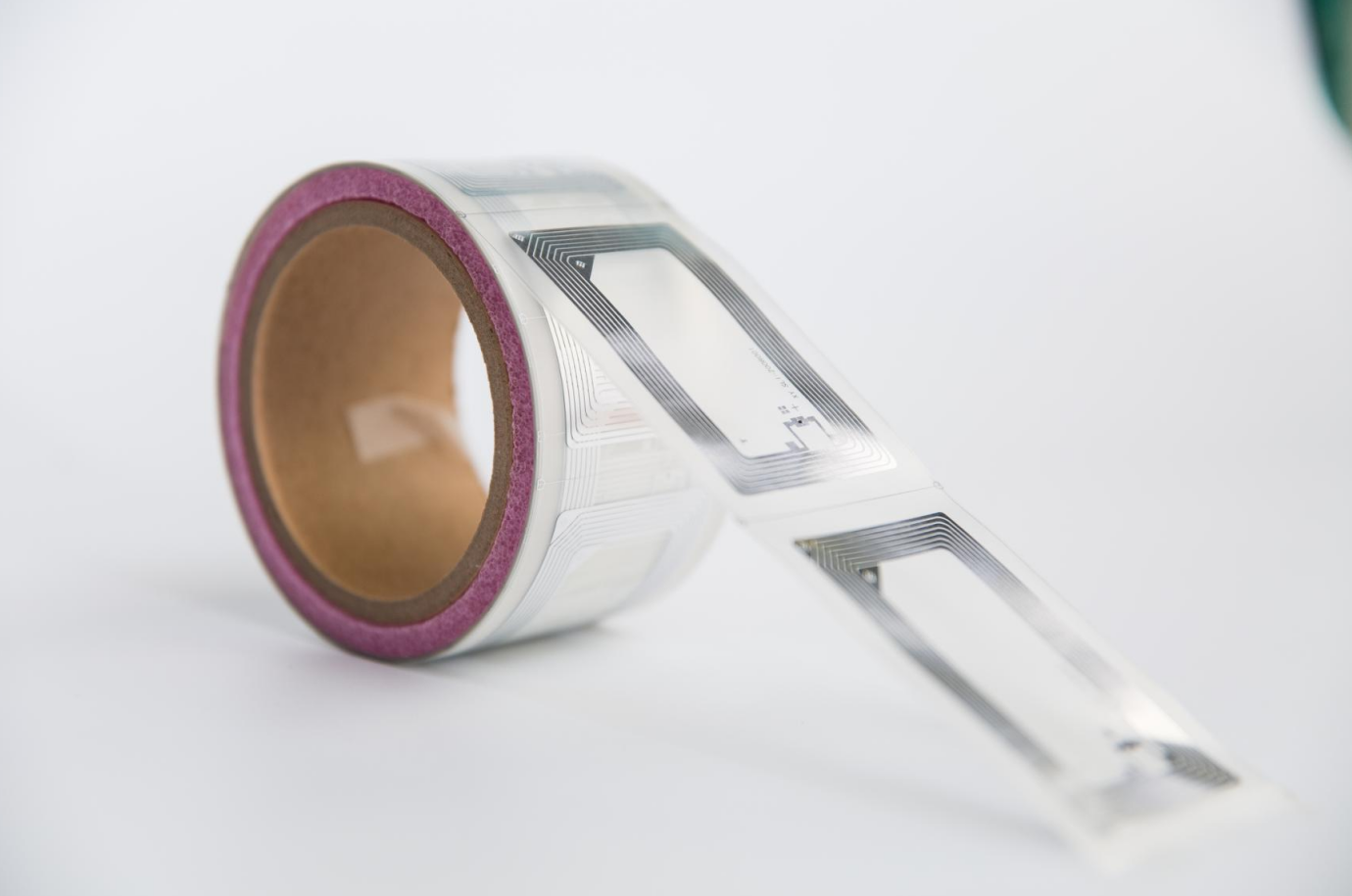
The real measure of a label’s performance is rarely found in its datasheet. It lives in the quiet details: how many times will a worker grab that bin, a customer squeeze the bottle, or a courier toss the package into a truck? Frequency of handling and the specific demands of the application silently rewrite the rules. A label that spends its life in a temperature‑controlled office drawer leads a vastly different existence from one stuck to a reusable container circulating through a washdown facility. The success formula isn’t one‑size‑fits‑all; it’s stitched together from these everyday encounters that no brief fully captures.
High‑frequency touchpoints force materials into a marathon of abrasion, skin oils, and repetitive stress. That warehouse tote, marked with lot numbers and scanned dozens of times daily, needs a facestock that won’t ghost or crack under constant friction. Meanwhile, a compliance label on a medical device might be handled only twice—once at installation and once during an annual inspection—but it must hold legible text for a decade under UV light. The adhesive that works perfectly on that sleek gadget’s smooth surface can lift whimsically from the textured plastic of a power tool case, all because the surface energy and expansion rates weren’t part of the initial conversation. Application context doesn’t just influence choice; it vetoes assumptions.
Reading between the lines means challenging the obvious. Before specifying a label, you have to imagine the arc of its daily drama: the gloved hands, the chemical splashes, the condensation cycles, the stack pressure in a cramped storeroom. Labels fail not because they’re weak, but because the quiet expectations of their environment were never articulated. The most durable label is the one that silently absorbs all the unspoken abuse its application throws at it, and still looks as though it belongs there. That’s the difference between a sticker and a solution.
Durability Unpacked: What ‘Industrial Grade’ Actually Means for Your Labels
When we say "industrial grade" labels, we're talking about materials and adhesives that refuse to quit—even when splashed with chemicals, baked under UV light, or frozen in a cold chain. It's not a buzzword; it's the difference between a label that crumbles into illegibility after a few weeks on the factory floor and one that stays sharp and scannable for years. The real workhorse behind this durability is often a carefully chosen polymer facestock paired with a pressure-sensitive adhesive fine-tuned for extreme conditions.
What separates a truly rugged label from a standard one goes beyond just a thicker material. It's about how the label handles thermal cycling, abrasive contact, and exposure to oils or solvents without peeling, smearing, or fading. In practice, an industrial-grade label earns its keep in places where failure isn't an option: think asset tracking in heavy machinery, warning placards that must outlast the equipment, or cryogenic vials that get yanked from -80°C freezers into ambient humidity without a hint of condensation-induced lifting.
Choosing the right label often means matching its construction to the specific beatings it will take. You might need a polyimide film that laughs at soldering temperatures, or a vinyl that stretches around curving pipes without shrinking back. The key is to see past marketing claims and ask for the hard data: accelerated aging tests, chemical resistance panels, and real-world deployment stories. That's when "industrial grade" stops being a label on a label and becomes the reason your system hums along without a squeak.
The Automation Effect: RFID Labels in High-Speed Logistics
RFID labels have turned logistics hubs into environments where packages practically route themselves. Instead of relying on slow line-of-sight barcode scans, these tags respond to radio waves as items fly down conveyors, cutting processing times from seconds to milliseconds. The immediate payoff is a system that no longer chokes on peak volume—sorters read hundreds of tags at once without breaking stride, which means fewer bottlenecks and far less manual intervention.
What makes this truly transformative is how RFID reshapes decision-making on the fly. A package with a cracked label or odd weight distribution used to require a human stop-and-check. Now, tag data feeds directly into automated diverters and real-time inventory platforms, flagging exceptions before they become delays. Warehouse management software no longer waits for batch updates; it sees every move as it happens, rerouting items mid-stream to balance workloads or prioritize urgent shipments without anyone touching a keyboard.
The ripple effect hits where it counts: labor, accuracy, and throughput. Workers shift from scanning and sorting to overseeing robots and handling rare edge cases, while lost-in-system errors drop sharply because the network always knows where things are. In high-speed parcel hubs moving 10,000 units an hour, the automation effect isn't just about speed—it's about building a self-correcting flow that scales without adding chaos.
Balancing Act: Cost vs. Longevity in RFID Label Investments
When evaluating RFID label options, the initial price tag rarely tells the whole story. A bargain label that fades or fails within months on a reusable asset can trigger a cascade of hidden costs—unplanned downtime, manual reconciliation, and premature replacement cycles that quietly erode any up-front savings. Conversely, a premium label built to withstand harsh environments might seem excessive for a short-term promotional campaign where the tag’s functional life far outlasts its actual need. The real skill lies in mapping the label’s durability profile directly to the asset’s journey: will it face abrasion on a conveyor belt, chemical exposure during cleaning, or temperature swings in a cold chain? By aligning material choices—such as PET, polyimide, or specialized adhesives—with the expected lifespan and environmental stressors, businesses can avoid both over-engineering and under-specifying their investment.
Cost-per-cycle thinking shifts the conversation from unit price to value over time. If a logistics pallet circulates for five years, a $0.50 label that lasts the whole cycle beats a $0.15 alternative that requires three replacements, especially once you factor in the labor to re-tag and the risk of data discontinuity. This lens also encourages looking beyond the inlay: the substrate, face stock, and attachment method often determine survival more than the chip itself. For instance, a label with a stronger adhesive and a flexible face stock might prevent edge-lifting on curved surfaces, extending readability without a jump in silicon cost. Smart buyers increasingly request accelerated aging tests or real-world field samples, coupling that data with total-cost-of-ownership models that account for operational disruptions. In this light, longevity becomes not just a feature but a lever for operational stability.
There’s also a sustainability dimension that quietly reshapes the balance. Long-lasting labels reduce material waste and the carbon footprint of replacement logistics, but in some circular-economy models, labels that detach cleanly at end-of-life can be more valuable than permanent ones. The choice then hinges on whether the priority is a single-use traceability event or a cradle-to-cradle asset-tracking loop. As RFID adoption deepens, companies are learning that the optimal balancing point is not a fixed formula; it’s a dynamic intersection of application context, data integrity requirements, and the total operating environment. Sometimes the smartest investment is not the longest-lasting label, but the one engineered to fail predictably—and cheaply—exactly when its mission is complete.
Beyond the Hype: Real-World Performance of Leading RFID Brands
When you strip away the marketing gloss, field tests reveal gaps between lab specs and on-site results. A well-known UHF tag from Brand A might boast a 15-meter read range in ideal conditions, but in a crowded warehouse with metal shelving and liquid containers, that distance often shrinks to under 7 meters. Similarly, Brand B's handheld readers shine in open-air demos yet frequently stumble in high-density tag populations, missing up to 20% of reads when more than 200 tags pile into a single zone.
Durability is another factor that separates dependable workhorses from fragile contenders. In logistics trials where tags endured vibration, temperature swings, and rough handling, Brand C's rigid tags maintained consistent read rates above 98%, while some flexible alternatives from newer entrants began to delaminate after six months. Even subtle design choices matter: antenna placement on a tagged asset can make a 30% difference in detection consistency, a nuance often overlooked until deployed at scale.
FAQ
Focus on chip sensitivity, tag construction, and real-world performance data. A trustworthy brand will openly share spec sheets and testing results rather than just marketing claims.
Check the tag's frequency compatibility, IC type, and memory structure against your reader's specifications. Whenever possible, request sample tags to test in your actual environment before committing to a purchase.
Yes, brands that specialize in on-metal tags — those with foam spacers, ceramic packaging, or ferrite layers — generally outperform general-purpose labels. Look for proven off-metal performance metrics, not just a 'metal-friendly' label.
It depends on the application. For high-value asset tracking or harsh conditions, branded labels often deliver more consistent read ranges and durability. In low-stakes, short-term campaigns, generic labels might suffice if they match your specs.
Check if they offer customization services like encoding, printing, or adhesive selection, and whether they can provide third-party test reports. A history of serving demanding industries like aerospace or healthcare also hints at deeper expertise.
Chips from suppliers like Impinj, NXP, or Alien have different read sensitivities, memory capacity, and anti-collision algorithms. A strong brand will match the chip to the intended use case instead of using a one-size-fits-all approach.
Absolutely. Polyester labels handle moisture and abrasion better than paper ones. Brands that offer material options for specific environments — like freezer-grade or chemical-resistant — show they understand practical demands beyond just electronic performance.
Conclusion
Choosing the right RFID label brand isn't just about brand recognition—it's about the invisible engineering that determines whether a label will survive on a warehouse shelf or fail in a freezer. Great labels are built with tuned antennas, precise chip bonding, and substrate materials that hold up under stress, but none of that matters if the frequency doesn't match the job. UHF labels excel at long-range logistics, while HF shines in liquid-heavy or metallic environments, and specialty LF tags solve close-proximity animal tracking. The real differentiator often hides in the word “industrial grade,” which means chemical-resistant facestocks, robust adhesives that don’t creep on curved surfaces, and inks that won’t fade after a few hundred steam cycles. Without that, a label is just a sticker with a chip.
In high-speed logistics, RFID labels face a brutal test: they must be read in milliseconds on fast-moving conveyor belts without orientation sensitivity, a feat that demands electromagnetic precision and zero-defect encoding. Yet the best choice isn't always the most expensive. Some brands offer a calculated balance—labels designed to last just long enough for a specific lifecycle, avoiding over-engineering that bloats cost. Real-world performance data shows that top-tier brands consistently deliver read accuracy above 99% in harsh settings, while others stumble when faced with vibration, moisture, or radio interference. The lesson? Ignore the marketing gloss and demand proof: field pilot reports, cycle counts, and failure analyses. A smart investment is one that aligns the label's actual endurance and sensitivity with your operational reality, not a spec sheet.
Contact Us
Contact Person: Esme Mo
Email: [email protected]
Tel/WhatsApp: 0086 191 2931 7837
Website: https://www.osrfidglobal.com/