

OEM Tactile Switches Factory Partnerships That Strengthen Custom Product Development
2026-11-28
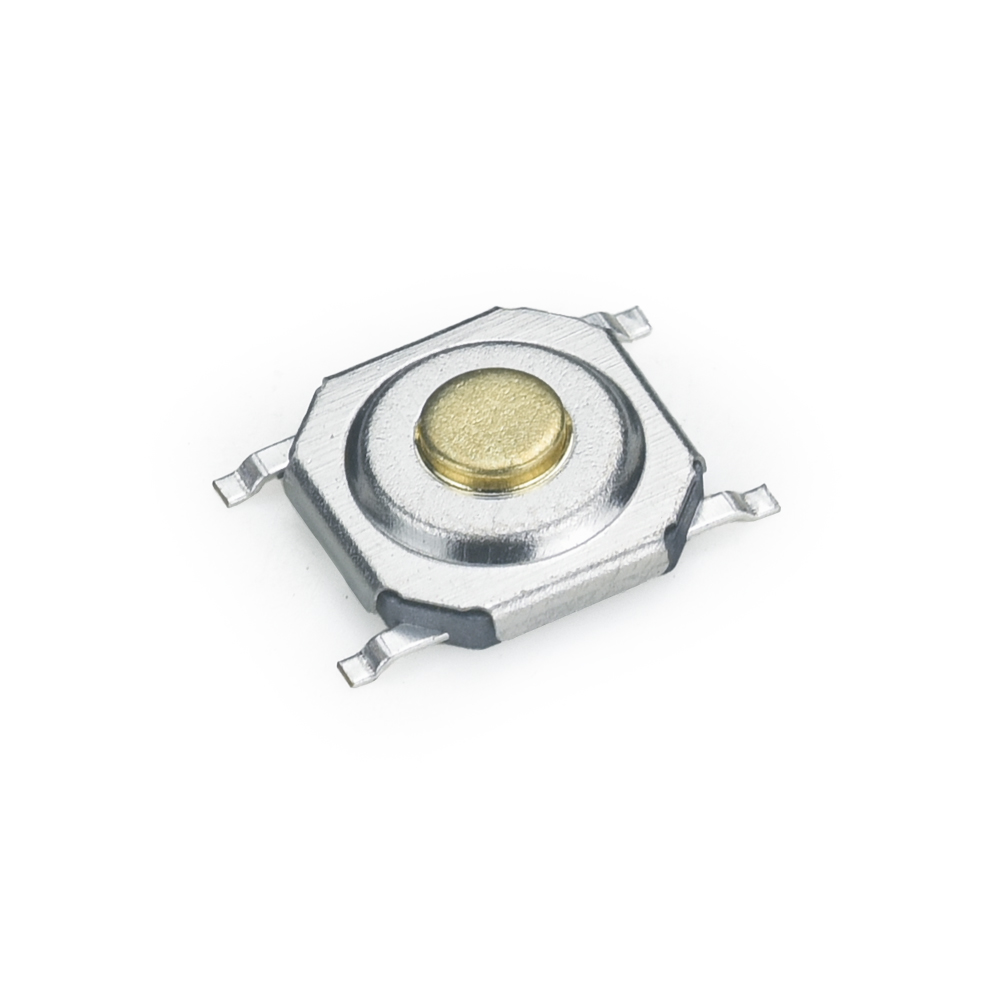
Every custom product starts with a switch that has to feel right—literally. Yet sourcing tactile switches that match exact actuation force, life cycle, and footprint requirements often stalls even the best design teams. That’s where a factory partner like KEJIAN ELECTRONICS changes the equation, turning early-stage specs into production-ready components without the usual back-and-forth.
Molding Floor Feedback Before the Design Locks
Locking a design before anyone on the molding floor has looked at it tends to turn small fixes into expensive tooling changes. A moldmaker will see gate location, draft, or an undercut that never shows up clearly in a part model. A quick walk to the bench with a printed section or a rough prototype almost always surfaces something the CAD review missed.
This is not about running another formal DFM checklist. It usually works better as a short, informal pass with the people who will actually cut steel, set the tool, and watch the first shots. They can point out where material will hesitate, where the ejection might drag, or where a wall thickness change will leave a sink mark. Those observations carry a weight that a redlined drawing alone does not.
Making that feedback part of the regular design cadence changes the conversation before the design locks. The goal is to catch the quiet issues while the model is still cheap to adjust. Once the tooling starts, every correction gets multiplied by time, steel, and scheduling pressure, so a few early floor conversations are cheaper than any later change order.
Tooling Adjustments Without the Custom Actuator Guesswork
Most tooling changes used to start with a handful of shims, a marked-up printout of torque values, and a rough guess at where the actuator would end up. The new setup replaces that loop with a fixed mounting pattern and a short list of adjustables: stroke limits, acceleration ramp, and payload profile. Set those three values, run the built-in homing cycle, and the actuator settles into a repeatable position instead of creeping past the mark while someone watches the gap with a flashlight.
That also changes how fixture revisions are handled. A slightly longer gripper arm or a different vacuum cup layout no longer means ordering another custom unit or waiting for a controls engineer to retune the drive. The mechanical stops and the software envelope are designed to be moved together, so the same actuator can cover a wider range of tool weights without changing its internal gearing. When a new variant shows up on the line, the adjustment is closer to filling out a setup sheet than solving a kinematic puzzle.
The practical benefit appears during shift changes and short-run work. Operators can swap tooling, enter the new dimensions, and verify the motion envelope from the pendant before production restarts. There is no hidden stroke multiplier to discover and no serial number check to confirm which firmware the custom actuator shipped with. The adjustment path is documented, repeatable, and visible enough that the person doing the work can trust the numbers instead of chasing a last-minute surprise.
Prototype Loops That Keep the Timeline Honest
When you build a prototype that steps outside the expected sequence, small failures start to show up in places you never planned to look. A button that should wait for data fires too early; a loading state lingers because nobody told it the request had already finished. These loops are not about punishing the timeline—they are about making it visible. By forcing the prototype to revisit its own assumptions after each interaction, you catch the moments where the story drifts from what actually happens on screen.
A useful trick is to run the prototype against a shadow clock: every event carries a timestamp, and every transition must answer one question—did this happen before, after, or instead of what the user saw last? When the answer is fuzzy, the loop tightens. You replay the sequence with a slower tick, then with a faster one, and the inconsistencies start to surface as concrete bugs rather than vague feelings. This keeps the timeline honest without turning the process into a formal audit.
The habit also protects you from the quiet drift that comes from polishing one screen at a time. You might make a checkout flow feel smooth in isolation, then discover that the back button now returns the user to a state that never existed. Honest loops mean the prototype refuses to let that slide—it walks the path forward and backward, checking that each step leaves a trace the next step can actually use. Over time, the loop becomes less of a testing ritual and more of a design muscle, one that keeps your work aligned with the real order of events.
Tactile Curves Tuned to the Product, Not the Datasheet
Most grip shapes are drafted around a set of published measurements, then adjusted until they look right in a render. That approach misses what a hand actually notices. Here, each curve starts from the way the product gets held in real use—the angle of the wrist, the pressure of a thumb against a ridge, the small shift in weight when someone reaches for it without looking. The form grows outward from those points of contact, not inward from a spec list.
This means some radii are deliberately uneven, and a few transitions feel softer on one side than the other. A perfectly symmetrical profile might graph beautifully, but it doesn't always sit better in the palm. By testing early clay models and worn prototypes, the team kept the surfaces that felt natural and sanded away the ones that only made sense on paper. The result has a kind of quiet logic—familiar the first time you pick it up, hard to explain in numbers.
The details that matter most are the ones you rarely see in a photograph: a slight undercut near the index finger, a flattened spot where the pinky rests, a ridge just tall enough to stop a slip without digging in. Those choices came from repeated handling, not from a tolerance sheet. They give the object a sense of having been worn into shape, even when it's brand new.
Life Testing Built Around Actual Usage Patterns
Most life tests still lean on steady charge-discharge cycles in a climate chamber, but that rarely matches how a device actually gets used. Our approach starts with field data: wake-up times, app sessions, GPS pings, overnight charging habits, and the idle drain that happens in a pocket. Instead of forcing a battery through identical full cycles, we compress those real patterns into a repeatable profile that keeps the messy parts—short top-ups at odd hours, temperature swings, bursts of high load followed by long standby.
The test profiles are built from aggregated usage logs rather than a single idealized routine. Some units run a commuter pattern with two short charges a day and heavy navigation in the afternoon heat. Others follow a shift-worker pattern with frequent screen-off intervals and irregular charging. By varying the sequence, we catch failure modes that fixed cycling misses: lithium plating at partial state of charge, connector wear from repeated plug events, and drift in fuel gauge accuracy after months of uneven drain.
What matters is not just surviving a set number of cycles, but staying predictable under conditions people actually create. The data feeds back into charging firmware, thermal limits, and cell selection so the lifespan estimate stays honest. When a product is labeled for years of use, that claim is tied to these usage-based patterns—not a clean laboratory loop.
One Engineering Voice From First Sketch to Packout
A sketch here is not a loose visual that gets redrawn later. It carries the first tolerance assumptions, the early material callouts, and the questions that usually get lost between departments. Because those details stay in one thread, the jump from concept to detail design does not require anyone to rebuild context.
That same voice carries into tooling, inspection, and packaging. When a supplier flags a fit issue or a floor team adjusts a datum, the note lands beside the original decision rather than in a separate log. Later, someone reviewing the packout file can trace why a surface was relieved or why a fastener changed without chasing emails.
By the time the product reaches packout, the record feels less like a collection of handoffs and more like one evolving conversation. It makes final checks simpler because the references, revisions, and inspection notes all speak the same language.
FAQ
A genuine partner gets involved before the design freezes. They ask about travel, actuation force, expected lifecycle, and the surfaces around the switch. Instead of pushing a standard catalog part, they suggest changes to stem shape, plating, or contact material that make the final product feel intentional rather than assembled from off-the-shelf pieces.
It compresses the part of the timeline that usually gets wasted on mismatched samples. When the factory understands the end product, they can recommend proven combinations of dome, housing, and actuator instead of sending generic options. That reduces back-and-forth and lets the team spend more time on how the switch feels in actual use.
Ask about the limits of their tooling, how they handle tight actuation force tolerances, and whether they can support low-force or high-lifecycle variants without requiring a completely new mold. Also worth asking how they document changes during sampling. Clear change records prevent the unpleasant surprise of a production batch that feels different from the approved sample.
Tactile feedback depends on a mix of dome geometry, contact materials, housing stiffness, and even how the switch is mounted. Small changes can shift a crisp click into a soft or sluggish feel. A factory with experienced engineers can isolate which variable is causing the difference, which is far faster than guessing across multiple sample rounds.
They can test beyond the basic electrical life rating. A strong partner will look at contact wear, dome fatigue, and housing deformation under repeated use, then adjust materials or geometry without losing the intended tactile response. The goal is a switch that still feels right after hundreds of thousands of cycles, not just on day one.
Pilot runs let the team validate how the switch behaves in the real enclosure, not just on a test board. A factory that supports short runs and clearly documents any process adjustments during the pilot can help the team catch issues before full production. It also builds confidence that the final run will match the approved feel.
Look at their engineering response. If they ask detailed questions about the application, return samples with measurement data, and propose alternatives when a design is hard to manufacture, that is a strong sign. If they mainly quote price and lead time without technical feedback, the partnership may not go much deeper than order fulfillment.
Expect clear process control data, notice before material or tooling changes, and access to engineering support when field issues appear. A reliable partner treats the production phase as part of the design process, not as the end of the conversation.
Conclusion
Working with an OEM tactile switch supplier that puts molders and tooling engineers in the same room early changes how custom designs take shape. Instead of locking a drawing and then discovering the actuator geometry fights the mold flow, feedback from the floor arrives while changes are still cheap. That practical input often means a dome can be repositioned, a boss can gain a few microns of clearance, or a travel stop can be adjusted before the steel is cut. Tooling adjustments stop being a blind iteration loop because the supplier already knows how a custom actuator will fill, eject, and hold tolerance. Prototype rounds become less about fixing avoidable surprises and more about confirming feel, so the schedule reflects real lead times rather than an optimistic guess.
The bigger payoff comes when that same team tunes the tactile curve to the product rather than a generic datasheet. A switch in a wearable with a soft housing needs different collapse, return, and over-travel behavior than one in an industrial keypad, and a factory that builds its own molds can modify the dome contact and stem geometry to match. Life testing follows actual usage patterns: the supplier might run actuations with a gloved finger, off-axis pressing, or temperature swings that reflect field conditions instead of a clean lab stroke. Having one engineering voice from the first sketch through packout means those observations are not lost between sales, design, and production. The result is not just a switch that passes a spec, but one that feels right and holds up in the product it was made for.
Contact Us
Contact Person: Anna lin
Email: [email protected]
Tel/WhatsApp: +86 13567768885
Website: https://www.kjele.com/