

OEM Stand-Up Pouch Filling Machine Features That Improve Packaging Efficiency
2026-11-16
Packaging efficiency often drops in the gaps between filling, sealing, and changeover. For stand-up pouches, those gaps get wider when the machine isn't designed for quick adjustment or consistent seal pressure. An OEM stand-up pouch filling machine can remove those slowdowns if it includes the right production-focused features. This post breaks down the features that matter most for output, accuracy, and uptime. For teams comparing equipment options, Wanying Machinery builds stand-up pouch fillers with those practical improvements already in mind.
Servo-driven filling accuracy that reduces costly product giveaway
Every gram that leaves the filler above the target is money walking out the door. Servo-driven filling replaces air-driven guesswork with closed-loop position control, so each stroke delivers the same volume within a narrow tolerance. That repeatability lets operators set the target closer to the label claim without falling below the legal minimum.
The real savings show up on long runs. Instead of padding every container by a few percent to cover drift, the system adjusts fill profiles on the fly for changes in product viscosity, temperature, or line speed. A shift that used to lose hundreds of kilograms to overfill can now keep those kilograms in inventory where they belong.
Setup is also less of a gamble. Recipe changes load exact fill parameters, and the first container off the line is typically within spec, not a starting point for trial-and-error adjustments. That cuts startup waste and keeps giveaway from quietly eroding margins across multiple products.
Tool-less pouch size changeovers keep short runs profitable
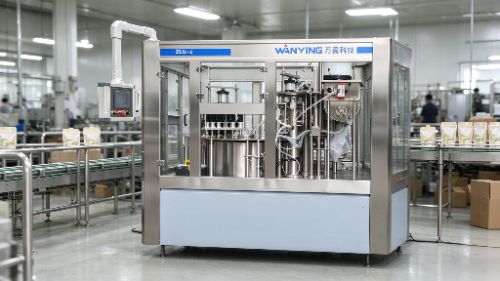
Changeover time decides whether a short pouch run makes money or burns it. The tool-less design removes the usual ritual of finding the right wrench, loosening set screws, and nudging formers into position. Instead, the operator releases a lever, slides the old size off a keyed rail, and locks the next set in place. A switch from a narrow stick pack to a wider stand-up pouch takes minutes, not a maintenance call.
What keeps the process stable is that each pouch size uses fixed stops rather than guesswork. Jaw alignment, film tracking, and seal pressure stay repeatable across shifts, so the first bags after a changeover run close to spec instead of becoming setup scrap. Short runs lose their penalty when the line can move from one SKU to the next without slow mechanical adjustments or re-qualifying the setup.
The real gain appears in scheduling and labor. Three or four small orders can run back-to-back in an afternoon with the same crew, because the bottleneck shifts from tooling changes to simply staging the next material. Jobs that were once rejected for low volume become worth accepting, and the line stops treating short runs as interruptions.
Automatic pouch opening lowers misfeed waste on thin films
Thin films rarely behave like rigid packaging. Static charge, surface cling, and just a trace of moisture can hold the top layers together, so a standard vacuum cup will occasionally lift two plies instead of one or yank the film far enough to skew the registration. Automatic pouch opening tackles this by splitting the separation step into smaller controlled movements. A short air pulse or a set of soft-touch grippers can create a small gap at the leading edge, then a sensor checks that only one layer has moved before the next station takes over.
That check is where many misfeed problems end. Instead of running blind and discovering the double sheet further down the line, the system stops the cycle or re-tries the opening motion while the material is still in the loading position. On ultra-thin gauge films the difference shows up quickly in the waste bin. Operators stop seeing crumpled corners, half-opened pouches, and torn film tails that have to be pulled out of the sealing area by hand.
Over a full shift the savings add up in ways that go beyond raw material. Fewer misfeeds mean fewer stops, cleaner sealing surfaces, and less time spent clearing jammed film from the forming collar or transfer grippers. The line holds a steadier rhythm because the opening station no longer forces the rest of the machine to react to a problem it could have prevented.
Compact frame design frees floor space without slowing output
The footprint shrinks, but the work pace doesn't. Instead of simply trimming the outer shell, the internal layout gets rearranged so motors, drives, and cable runs sit closer to the load path. That shortens the distance power has to travel and leaves less room for flex or lag, which is why a narrower machine can still hold the same cycle time as a bulkier one.
On a busy floor, that saved square footage changes how people move. A row of these units can be placed tighter against a wall or closer to a conveyor without forcing operators to squeeze past. It also leaves space for a staging cart, a tool chest, or a wider walkway, so the line feels less cramped even when production volume climbs.
Maintenance benefits from the condensed layout too. With fewer long belt runs and external covers, routine checks take less bending and reaching. Panels open from the front, and the parts that need regular attention are grouped where a technician can reach them without clearing the surrounding area first.
On-screen diagnostics shorten downtime when alarms appear
A fault light used to send someone hunting through a binder or scrolling through a manual. Now the screen names the device, the signal that fell out of range, and the time it happened. The operator can see immediately whether it is a loose cable, a temperature spike, or something that needs a technician.
Each alarm comes with a short list of likely causes ranked by what is easiest to check first. If a fill sensor reports an error, the display might suggest verifying the air supply and cleaning the sensor face before replacing the unit. That guidance keeps minor issues from turning into an hour of disassembly.
The real payback shows up when alarms happen during a night shift or when the most experienced person is off-site. The machine tells the crew what to look at, so the line comes back up while the problem is still small. Downtime shrinks because the diagnosis no longer depends on who happens to be standing there.
Sanitary build details speed up washdown between batches
Hygienic equipment design often gets reduced to a checklist of polished welds and sloped surfaces, but the real difference in washdown efficiency comes from how the details work together under pressure. Instead of treating every corner as a separate problem, the build is approached as a continuous flow path for both product and cleaning chemistry. Tight-radius transitions, shielded fasteners, and self-draining frames are positioned so rinse water doesn't pool or spray back into already-cleaned zones. This cuts the number of passes needed between batches and removes the temptation to rush through shadowed areas where residue hides.
The practical side shows up most clearly during changeover. When stands, guards, and sensor brackets are mounted with standoff hardware and slotted for quick release, operators can strip a line down without tools and get full access to the surfaces that matter. Pipe runs are kept out of dead zones, and cable trays are angled or perforated so they don't become secondary contamination traps. A few intentional choices here, like placing the most soiled components at the easiest reach height and grouping utilities into a single drop, save more time than upgrading pump pressure ever will.
What separates a good sanitary build from a merely compliant one is the absence of small delays that don't show up on a spec sheet. Door gaskets that snap out instead of peeling, leveling feet with minimal thread exposure, and drain locations that let the last liter of water leave under gravity, all add up to a faster, more repeatable washdown. These aren't dramatic features, but on a packaging floor where every hour between batches matters, they quietly determine whether sanitation becomes a bottleneck or just another step in the rhythm.
FAQ
Usually it comes down to how the machine handles the pouch before it reaches the filling station. Machines with servo-driven grippers and active pouch opening tend to run fewer misfeeds, so the operator is not constantly clearing jams. That steady, uninterrupted motion does more for real throughput than a higher nominal cycle speed.
A combination of quick-release tooling and auger or piston heads that can be swapped without tools makes the biggest difference. It is not just about the fill mechanism itself. If the hopper, nozzles, and seals are designed to drain and rinse easily, changeover time drops from hours to minutes.
Many units now use vacuum-assisted seal bars or air knives to pull loose product away from the top seal area before sealing. Some also delay sealing by a fraction of a second while a deflator settles the product. This reduces leakers and the need for manual inspection downstream.
In most high-volume operations, yes. The key is that the filler receives live weight feedback and adjusts the fill dose automatically. That helps avoid overfilling expensive product and catches drift in auger or pump performance before it becomes a full batch problem.
Look for modules that orient and seat the closure without forcing it, with sensors confirming placement before sealing. If the station has to stop for a misaligned zipper, that one pause tends to ripple through the whole line. Independent servo control usually handles minor variations better than mechanical cams.
It often comes down to how the film transport and registration system is set up. Machines with automatic splice tables and precise tension control can restart after a format change with very little scrap, while older chain-driven systems may use several pouch lengths just to get registration stable again.
For a well-integrated machine, one operator can usually manage loading, periodic checks, and minor adjustments. Features like automatic pouch feeding, reject tracking, and recipe-driven settings take over the repetitive jobs that used to tie up two or three people, so labor gets redirected to quality checks and material supply.
Conclusion
The servo-driven filler on this OEM stand-up pouch machine keeps overfill margins tight, which quietly trims ingredient costs across a production season. That accuracy shows up in the hopper and at the seal, not just on a spec sheet. Pair it with tool-less changeovers, and switching from one pouch size to another becomes a quick adjustment instead of a wrench-and-shim exercise. Short runs hold their margin because the line is back up before the next order is stacked. On thin films, automatic pouch opening removes the usual headache of misfeeds and torn corners by controlling the grip and separation just enough to keep the web moving without waste.
The compact frame keeps the footprint small, but the infeed and discharge paths are arranged so output stays steady even in tight packing areas. When an alarm does come up, the on-screen diagnostics identify the station or sensor at fault, which means less time tracing wires and more time running product. For changeover cleanup, the sanitary build details do their part: sloped surfaces, fewer crevices, and quick-release guards let washdown finish faster with less standing water. Taken together, these details cut downtime, product waste, and changeover labor in ways that show up directly in per-pouch cost.
Contact Us
Contact Person: Tyson
Email: [email protected]
Tel/WhatsApp: +8613396971296
Website: https://www.wanyingmachinery.com