

OEM Miniature Circuit Breaker Manufacturer Guide to Quality and Compliance
2026-09-03
When sourcing OEM miniature circuit breakers, quality and compliance are not just checkboxes—they’re the bedrock of safe, reliable electrical systems. Yet, navigating the maze of standards, certifications, and supplier claims can feel overwhelming. That’s where this guide comes in, and why SINGI stands out as a partner you can trust. From material selection to final testing, we’ll walk you through what truly matters—so you can make confident decisions without the guesswork.
Material Decisions That Decide Breaker Longevity Before Production Starts
The contact material selection is arguably the first fork in the road. Pure silver has excellent conductivity but suffers from rapid arc erosion and welding under short-circuit conditions. Blending it with tin oxide or nickel oxide creates a harder, more arc-resistant surface that preserves contact geometry over thousands of operations. The ratio matters: too much oxide raises contact resistance and heat buildup, while too little leaves the contacts vulnerable to material transfer during interruption.
Beyond the contacts, the arc chamber and its lining materials quietly determine how many fault interruptions a breaker can survive before the internal walls are carbonized or cracked. Glass-filled polyester and ceramic-impregnated polymers outperform standard thermoplastics here, maintaining dimensional stability when exposed to repeated plasma jets. A cheap nylon housing might pass initial dielectric tests, but after a dozen high-current trips it warps enough to misalign the moving contact assembly, causing partial contact bounce and accelerated wear.
Even the choice of lubricant on the mechanism and the grade of spring steel in the trip linkage play a role that only becomes visible after years in the field. Low-volatility greases prevent outgassing that condenses on the contacts, while corrosion-resistant spring alloys keep the trip force consistent. These decisions are locked in long before the first unit rolls off the line, which is why material audits at the design stage are more effective than any post-production fix.
Navigating IEC and UL Divergence Without Losing Entry Speed
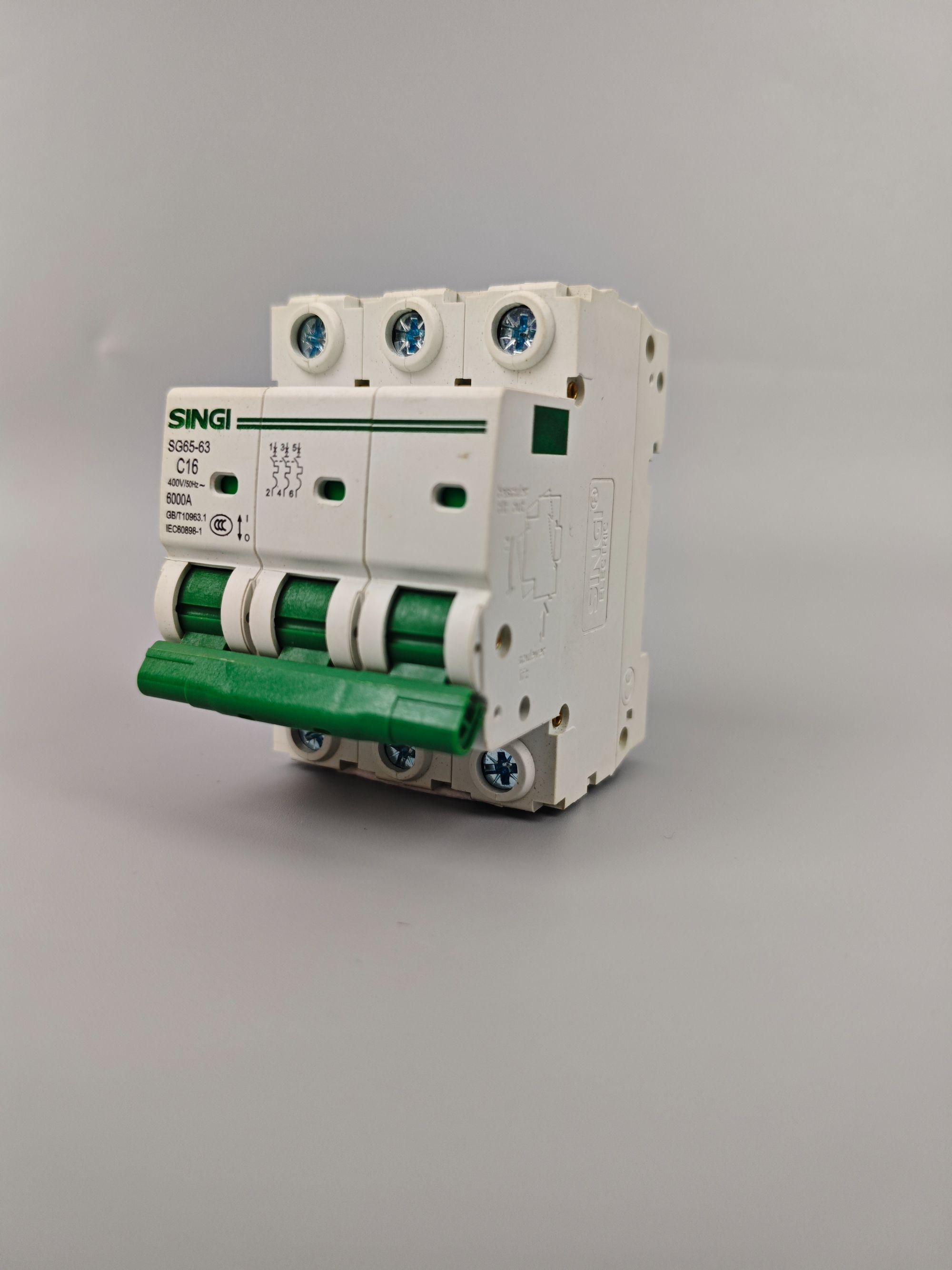
The fastest way to stall a global launch is to treat IEC and UL requirements as interchangeable. They share lineage, but the gaps are real: UL often pushes harder on enclosure flammability and component ratings, while IEC leaves more room for manufacturer self-declaration. A slim pre-compliance checklist that maps these differences against your bill of materials can save weeks later. Don't wait for the test lab to flag a non-compliant connector or a missing RTI rating.
Entry speed rarely comes from rushing the final certification run. It comes from forcing design decisions early when changes cost little. If you know a plastic housing will face UL's stricter glow-wire or flame class expectations, pick a material that satisfies both regimes upfront. For power supplies and connectors, choose parts with dual IEC/UL recognition. That single sourcing decision removes a common re-test loop and keeps your certification timeline intact across North America and Europe.
Another overlooked accelerator is running IEC and UL evaluations in parallel with a shared test plan. Many labs can execute both under one project if you provide clear guidance on the divergences. The goal isn't to eliminate every difference; it's to keep them from becoming late-stage surprises. When regional variations are documented and communicated to engineering early, the certification process stops being a bottleneck and becomes just another design requirement with a known path.
Auditing OEM Partners Beyond the Paper Certificate
A certificate on the wall tells you very little about what actually happens on the factory floor. Most OEM audits stop at a document review, checking that ISO badges and compliance forms are in order. But paper trails can be outdated, incomplete, or even fabricated. True assurance comes from walking the production line, watching how materials are handled, and talking to the operators who do the work every day.
Beyond the certificate, you need to verify process consistency. Are quality checks performed at every shift, or only when auditors are scheduled? Do suppliers source raw materials from approved vendors, or does convenience sometimes override policy? These details rarely appear in a compliance folder, yet they directly affect product reliability and safety.
A meaningful OEM audit should combine document sampling with on-site observation and unannounced spot checks. It also helps to review training records against actual worker interviews. When you dig past the paperwork, you often uncover gaps between written procedure and daily practice. Closing those gaps is what separates a compliant partner from a truly dependable one.
Why Passing a Type Test Does Not Equal Consistent Batch Quality
A type test provides a snapshot under tightly controlled conditions, not a promise that every production batch will mirror those results. Materials from new suppliers, subtle shifts in ambient temperature, or a worn mixing blade can introduce deviations that never show up in a one-off qualification run.
Batch consistency depends on process discipline that extends far beyond a single pass. Incoming raw materials need screening, equipment requires regular calibration against drift, and operators must follow methods that leave little room for improvisation. Without these ongoing checks, a product can drift away from the approved type sample while still technically meeting the original specification on paper.
The real measure is not whether a batch could pass if tested, but whether every batch is produced under conditions that make passing the expected outcome. That demands statistical process control, routine in-process inspections, and a willingness to investigate small anomalies before they become rejections. A type test certifies capability; batch consistency proves it continuously.
Customization Risks When Design Tweaks Break Compliance Without Anyone Noticing
A design team decides to swap a muted gray for a brighter brand color on the submit button. It looks cleaner in the mockup, passes the visual QA round, and ships with the next sprint. What nobody notices is that the new contrast ratio falls below the WCAG threshold, making the form unusable for a chunk of visitors with low vision. That tiny tweak just turned a compliant interface into a legal liability, and the team has no idea until an auditor or a lawsuit points it out months later.
These slips rarely come from big overhauls. They hide in the small, well-intentioned edits: a product manager asks to remove a “cluttered” disclaimer from the footer, a front-end engineer tightens letter spacing to match a new style guide, a copywriter rewrites an error message so it no longer matches the accessible name of the input. Each change on its own feels harmless, even polished. But compliance frameworks are built on precise details, and those details don’t announce themselves when they break.
The real risk is that the people making these changes usually have no visibility into the regulatory constraints tied to the pixels they’re adjusting. Design systems and component libraries can enforce some guardrails, but they aren’t bulletproof. When compliance checks happen only at the end of a release cycle or during an annual review, the gap between “we changed it” and “we broke it” stretches wide. The safest approach is to treat compliance not as a separate audit layer but as a shared vocabulary embedded in the daily design and development conversation.
Traceability Gaps That Shift Liability to Brands After Delivery
Once a shipment leaves the distribution center, many brands effectively go blind. The handoff to carriers, retailers, or final-mile partners creates a data vacuum that can last days or weeks. If a product issue emerges after delivery—say, a contamination report or a safety failure—the brand often cannot trace whether the problem arose during transport, storage, or consumer use. That absence of proof pushes liability straight back to the brand, even when the root cause sits downstream.
Most traceability systems are built around batch numbers and stop at the point of dispatch. What happens after that—warehouse rotation, shelf life, returns handling, resale through secondary channels—rarely gets recorded in a unified way. When a claim lands, legal teams scramble to reconstruct events from fragmented documents. Without a continuous chain of custody beyond the dock door, defending against product liability claims becomes nearly impossible, forcing brands to settle or absorb damages they did not cause.
The regulatory landscape is tightening, but many companies still rely on spreadsheets and disconnected portals. This fragmented approach leaves a structural gap between delivery and the end user, a gap that plaintiffs’ attorneys and regulators are quick to exploit. Closing that gap with a lightweight, event-based record—capturing delivery conditions, storage anomalies, and return paths—turns traceability from a compliance chore into a shield. Brands that ignore post-delivery data will keep paying for failures they cannot see and cannot prove they did not create.
FAQ
Focus on tooling ownership, in-house calibration records, batch traceability, and how the factory handles deviation requests during production. A strong partner will walk you through their failure analysis process, not just show a clean showroom.
For Europe, EN 60898-1 covers household MCBs; IEC 60947-2 is for industrial use. North America needs UL 489 or CSA C22.2 No. 5. Gulf countries often require Gulf Mark; China uses CCC. Confirm the exact standard for your target market, because a generic CE mark is not enough.
Custom printing, terminal changes, or altered trip curves usually add 15-30 days and can raise the MOQ by 20-40%. If the factory already has similar tooling and contacts, the impact is smaller. Ask for a realistic pre-production sample timeline before signing.
Routine tests should include trip-time verification at 1.45x and 2.55x rated current, dielectric strength test at 1500V or 2500V, insulation resistance, and contact resistance measurement. Some factories also run temperature rise tests on sample units from each shift.
Type test reports show the design can pass under specific conditions, but production variation in bimetal strips, coil winding, or arc chamber assembly can shift performance. Without strict incoming material control and periodic re-qualification, field failures happen even when the certificate is genuine.
Ask for the full technical file: drawings, BOM with approved vendor list, test plan, calibration certificates for test equipment, and a process flow chart. Also confirm who retains the design files if the partnership ends — ownership of tooling and software matters.
Genuine factories can show injection molding machines for the housing, spot welding or riveting lines for contacts, coil winding stations, and an in-house test lab with calibrated equipment. They will also allow a live video walkthrough or on-site audit without excessive delays.
Request the IEC/EN 60898 or 60947-2 test report from an accredited lab like VDE, TUV, KEMA, or UL. Cross-check the certificate number on the lab's online database. Be wary of reports from unknown labs or documents that only show a cover page without detailed test data.
Conclusion
Quality for OEM miniature circuit breakers is determined long before assembly lines start. Material choices—contact alloys, arc-quenching polymers, terminal plating—set the ceiling for endurance, not just the initial spec. A breaker that passes a type test once can still drift in production if incoming material lots or heat treatment vary. That is why factory audits focused solely on certificates miss the real controls: how suppliers lock down raw material sources, how they handle IEC and UL divergences in short-circuit testing, and whether internal spot checks catch slow deviations before batches ship. Too often, buyers treat a type-test report as a permanent license, but consistent batch quality depends on daily discipline, not a single lab event.
Customization adds another layer of risk. A seemingly minor change—longer terminal, different actuator spring, modified arc chute—can quietly invalidate compliance because the original certification scope no longer matches the actual construction. Without tight revision control, brands may not notice until an inspection or field failure occurs. Traceability gaps make it worse: if batch records do not link raw material lots to finished serial numbers and final test data, liability shifts to the brand after delivery. The strongest OEM partners treat compliance as a continuous operating rhythm—documented change management, live traceability, and audits that verify behavior on the floor rather than paper promises.
Contact Us
Contact Person: Jack
Email: [email protected]
Tel/WhatsApp: (+86) 13757759651
Website: https://www.singi.com