

ODM Sunscreen Mousse Supplier Tips for Launching a Lightweight SPF Product That Customers Love
2026-11-18
Launching a sunscreen mousse that customers actually finish—not abandon after two uses—comes down to one thing: texture. A lightweight SPF feels effortless, but getting that airy, non-greasy finish at scale takes more than a promising lab sample. It takes an ODM partner who understands foam stability, broad-spectrum protection, and sensory appeal as one connected problem. Wilson works behind the scenes with brands to solve exactly that mismatch. Here’s how to turn a promising mousse formula into a launch-ready product people reach for every morning.
The First Touch Test That Tells You If a Lightweight SPF Mousse Will Sell
You can skip the focus groups and fragrance panels. Put a dab of the mousse on the back of your hand and press it lightly between two fingers. If it holds its shape for a beat before melting, people will read that as whipped rather than runny. If it collapses immediately, the product already feels cheap before anyone checks the price.
The next clue is friction. A good lightweight SPF mousse should glide for a second or two, then disappear into a dry, almost powdery finish. Nothing sticky, nothing that rolls into white lines around the jaw or hairline. That dry-down is what makes someone reach for it again on a humid morning.
Finally, watch how the skin looks after thirty seconds. Not under studio lighting, just by a window or in a car mirror. If the surface looks like skin with a slight blur, the mousse will sell itself. If it looks coated or tight, no amount of airless packaging will fix it.
Why Foam Density Matters More Than SPF Numbers in a Mousse Launch
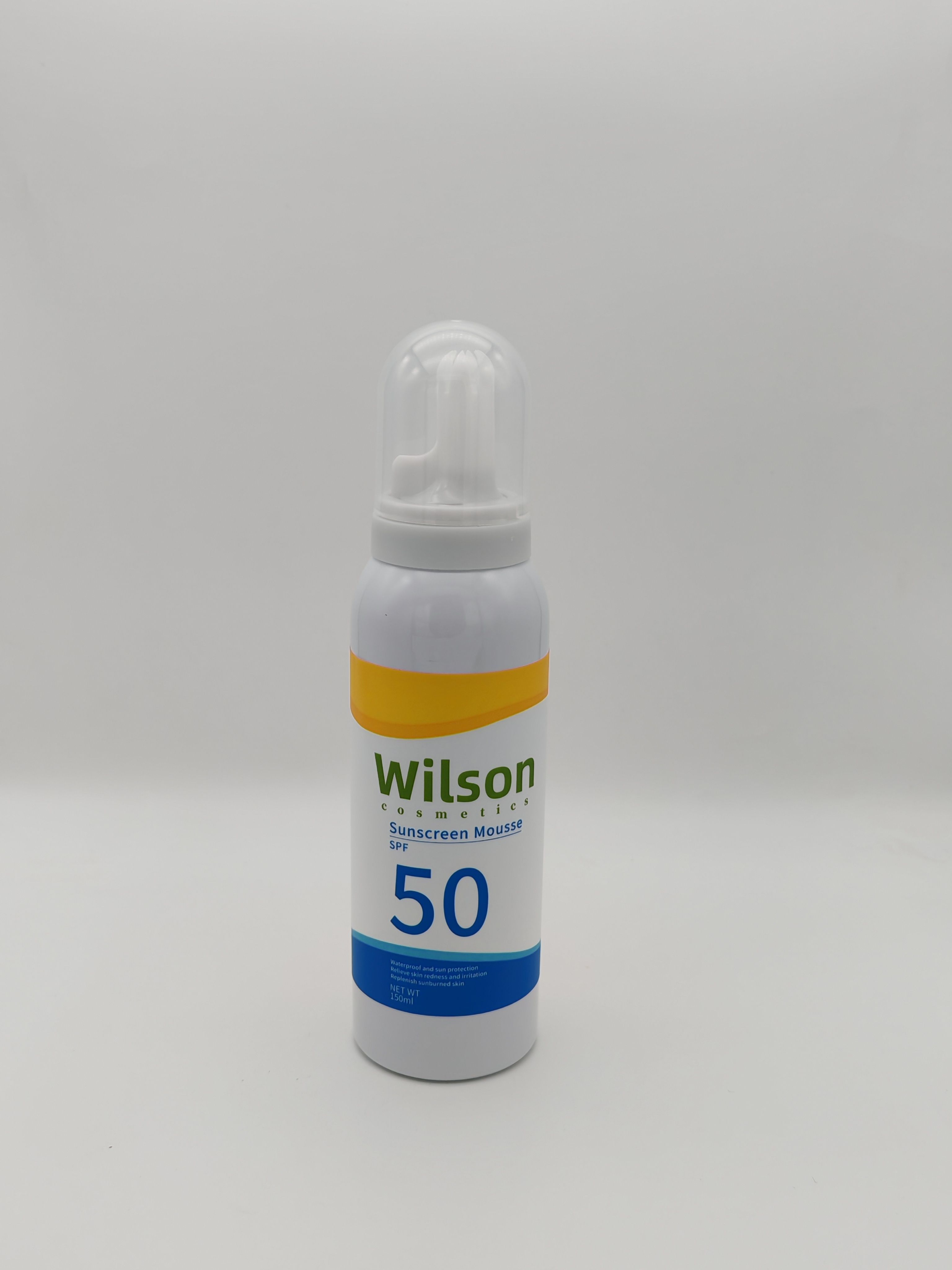
A mousse can carry an SPF 50 label and still fail the moment it touches skin. That failure rarely has anything to do with the UV filters themselves. It comes down to how tightly the foam holds together, how evenly it collapses under pressure, and how much air has been whipped into the formula. Density shapes the entire sensory arc: the first press into the palm, the spread across the cheeks, the dry-down that either disappears cleanly or leaves a tacky residue. Two sunscreens with identical active ingredients and identical SPF numbers can feel like entirely different products if one mousse is dense and cushiony while the other is loose and watery.
SPF testing measures protection under controlled, heavily dosed conditions. Real use is messier. People apply about half the recommended amount, they rub rather than pat, and they often skip the hairline or the ears. A denser foam encourages more generous, more uniform application because it gives the fingers something to push against. It sits on the skin long enough to be worked in rather than sliding off or soaking in too fast. Lighter, airier textures often invite under-application simply because they feel like they are enough when they are not. The number on the bottle matters, but only if the film left behind is thick and coherent enough to deliver that number.
There is also a quiet economic angle. A high-density mousse dispenses more predictably, with less waste around the nozzle and fewer over-pumps. That consistency makes it easier to build consumer trust across different skin types and climates. When a brand chases an SPF figure without paying attention to foam structure, they end up with a product that looks impressive in a lab report and feels forgettable in a bathroom. Density is what turns a functional sunscreen into a daily habit.
Keeping the Mousse from Falling Flat Without Resorting to Heavy Emollients
A mousse that collapses the moment it hits room temperature usually owes its instability to a lack of internal scaffolding, not an absence of richness. Instead of piling on heavy emollients that dull the finish and weigh down the texture, start by reinforcing the structure with a carefully chosen polymer blend. Film-formers like vinylpyrrolidone copolymers or acrylates create a fine, resilient mesh around each air cell, allowing the foam to hold its lift without turning sticky or greasy. The trick lies in the ratio: enough polymer to lock the bubble walls in place, yet not so much that the mousse loses its soft, cloud-like spreadability.
Another angle is to manipulate the water phase rather than the oil phase. A tiny amount of a gelling agent, such as xanthan gum or a lightly crosslinked carbomer, can thicken the continuous liquid just enough to slow drainage and slow bubble coalescence. When paired with a volatile silicone or a light ester, this approach keeps the structure upright without introducing the kind of occlusive film that makes the foam feel like a cream masquerading as air. The result is a mousse that stays springy and buoyant on the fingertips, yet still collapses gently when massaged into the skin.
Finally, pay attention to how the mousse is dispensed and dried. A formulation that relies solely on chemical stabilizers may still fail if the propellant or pump introduces uneven shear, rupturing the delicate foam before it ever reaches the skin. Testing different valve geometries or switching from an aerosol to a bag-on-valve system can preserve bubble uniformity far better than adding another drop of dimethicone. In practice, the most elegant solutions come from aligning the delivery mechanism with the internal rheology, so the mousse arrives intact, stays lofty, and never asks the wearer to compromise on lightness.
Fragrance Choices That Work With Sunscreen Filters Instead of Against Them
Not every fragrance has to fight your SPF for control of your skin. The real issue usually comes down to alcohol-heavy formulas and certain citrus oils that can make sunscreen films break apart faster or leave skin more reactive in direct sun. Choosing a fragrance with a softer base and a lower alcohol load gives the filters a better chance to settle evenly, so the two layers behave less like rivals and more like a single routine.
It helps to look for scents built around clean musk, iris, light woods, or sheer white florals. These tend to sit quietly over mineral and chemical sunscreens instead of pulling them around. Watery green notes can also be useful because they soften the slightly bitter, plastic edge that some UV filters carry, making the whole combination feel smoother without masking the protection.
On the other hand, dense resinous oils, heavy vanilla extracts, and high concentrations of bergamot or lime are worth avoiding when you plan to be outside for hours. They can feel sticky, interfere with how the sunscreen spreads, and in some cases increase the chance of pigment staining or irritation under sunlight. A lighter, skin-hugging fragrance leaves the sunscreen's film intact and still gives you a clear, lasting scent.
The Packaging Details That Keep Air in the Mousse and Out of the Formula
The bag-on-valve setup is what separates the mousse from the propellant. Inside the can, the formula sits in a collapsible pouch while gas fills the space around it; when you press the nozzle, the gas squeezes the pouch and pushes the product out without ever mixing into it. Because outside air is never drawn back into the pouch, the whipped texture stays intact.
A lot of the stability comes down to the valve and gasket. The gasket has to close cleanly after every press, otherwise a small breath of air gets pulled into the formula and the foam starts to loosen. The narrow dip tube also limits backflow, so the air that gives the mousse its lift stays where it belongs.
The inner lining plays a quieter role. Coatings inside the can keep the formula from touching raw metal and reacting over time, while the sealed pouch prevents oxygen from dissolving into the product. That is why the last application still has the same spring as the first.
What Your ODM Partner Needs to Hear Before the First Pilot Batch Runs
Before anything hits the line, spell out the exact hardware revision, firmware build, and BOM version the factory should pull for the pilot. A surprising number of delays come from the ODM assuming an older drawing is still current. Include the minimum acceptable yield, the top three defects you will not tolerate, and the exact measurement method for any dimension or signal that has drifted in previous samples.
Clarify what the ODM can change without asking. If a capacitor brand swap is fine but the connector supplier is locked, say so before kitting starts. List the test fixtures, golden units, and boundary conditions the pilot must pass, and agree on how borderline results get escalated instead of quietly shipped.
Give them non-negotiable dates for first-article reports, reliability data, and your on-site checkpoint. The point is not to pile on requirements; it is to remove the guesses that usually turn into rework after the batch is already built.
FAQ
Ask for samples that are at least three months old, not fresh from the lab. Mousse stability issues often show up later as deflation or separation. Also confirm whether the supplier owns the whipping and filling process or outsources it, because that handoff is where texture often goes wrong.
The initial fluff can come from propellant or high gas volume, but the film former and emollient package determine dry-down. If the formula relies too much on heavy esters to carry UV filters, it collapses into an oily layer. A good mousse uses a tight ratio of volatile silicone or light emollients to keep the airy feel through the rub-in phase.
Dosage uniformity. Consumers apply a cloud of product, but standardized testing uses a precise weight. Mousses can trap air and cause under-application if the labeled SPF is based on a dense lab sample. Ask the ODM to test the formula at the actual foam density the consumer will dispense, not a degassed version.
Sound and spread matter more than people expect. A slight cushioning sound when the mousse hits skin, quick spread without dragging, and a finish that shifts from wet to dry in under a minute tend to drive repeat use. If there is a long white drag phase or the skin feels powdery tight, customers often stop reaching for it.
Some mineral filters add grit and can break the foam structure, so particle coatings and dispersion quality matter. High levels of water-soluble humectants can also thin the foam over time. It is usually easier to start with chemical filters or a hybrid system, then work with the ODM on a mineral version once the base texture is stable.
Get clarity on the propellant or air system, the can lining, and valve type. Ask what happens to the texture after freeze-thaw cycles and at 45°C for a month. Also request photos of the foam after dispensing 10 seconds, 1 minute, and 5 minutes, not just immediately after fill.
Use boosters and careful solvent selection instead of piling on more UV filters. A small amount of a good stabilizer can add several SPF points without changing texture much. Let the ODM run a few iterations with different filter ratios and measure the drop after a month, because some lightweight formulas lose protection faster than viscosity shows.
Conclusion
Launching a lightweight sunscreen mousse is less about chasing a higher SPF label and more about how the product behaves in the first five seconds of contact. A quick touch test on the back of the hand usually tells you whether the texture will feel airy or collapse into a wet, thin layer that customers associate with cheap foam. Foam density often shapes that impression more than the SPF number itself. A mousse that holds its structure without turning sticky or heavy needs careful work with polymeric emulsifiers, small amounts of structuring powders, or volatile carriers, so you are not forced to pile on rich emollients just to keep the foam from flattening. Fragrance selection also has to work alongside UV filters rather than fight them, since certain aromas can destabilize filters, shift viscosity, or amplify greasiness. It is usually safer to stick with low-volatility fragrance systems or encapsulated options that release slowly on skin.
Packaging is where many mousse launches quietly fail. The can, valve, actuator, and propellant balance have to keep air suspended in the foam while stopping outside oxygen and moisture from entering the formula. Even a small mismatch between propellant ratio and valve output can leave the product spitting or deflating within weeks. Before the first pilot batch runs, the ODM partner needs a clear picture of your target skin feel, market requirements, stability data on the filters, and the kind of application experience you want at the nozzle. When that brief is specific, the supplier can adjust hardware and formula together instead of treating them as separate problems. That combined approach is what usually turns a promising concept into a lightweight SPF mousse customers actually repurchase.
Contact Us
Contact Person: Simon
Email: [email protected]
Tel/WhatsApp: +86 13267966849
Website: https://www.wilsoncosmetic.com