

ODM Merino Wool Hiking Socks for All-Day Trail Comfort
2026-10-24
When your boots start rubbing at mile six, the last thing you want is a sock that quits before you do. That's where ODM Merino Wool Hiking Socks from Mingjun come in—engineered for all-day trail comfort without the bulk or itch you might expect from wool. But what actually makes these socks different from the dozens of pairs already in your drawer? Let's take a closer look at the fibers, fit, and small details that keep hikers moving.
Why These Socks Earn a Permanent Spot in Your Pack
Most socks are afterthoughts—grabbed last minute, replaced when holes appear. But these earn their keep from the first mile. The weave sits snug without squeezing, and the padding lands exactly where your foot takes the brunt of a long descent. No bunching under the arch, no slipping into the toe box. After a full day on trail, you forget you're wearing them, which is the highest praise a sock can get.
Durability is where they separate from the pack. The heel and toe are reinforced with a denser knit, so the usual wear points don't thin out after a season. You can wash them in a creek, wring them hard, and they still hold their shape. That resilience means fewer replacements, less waste, and one less thing to think about when you're packing for a trip.
Then there's the moisture factor. These socks move sweat away from your skin fast enough to prevent blisters, but they don't turn stiff or crunchy when they dry. On wet mornings, they warm up quickly without feeling clammy. It's a small thing, but when you're miles from anywhere, dry feet change the whole day. That's why they stay in the pack long after other gear gets rotated out.
Merino Wool's Quiet Superpower on the Trail
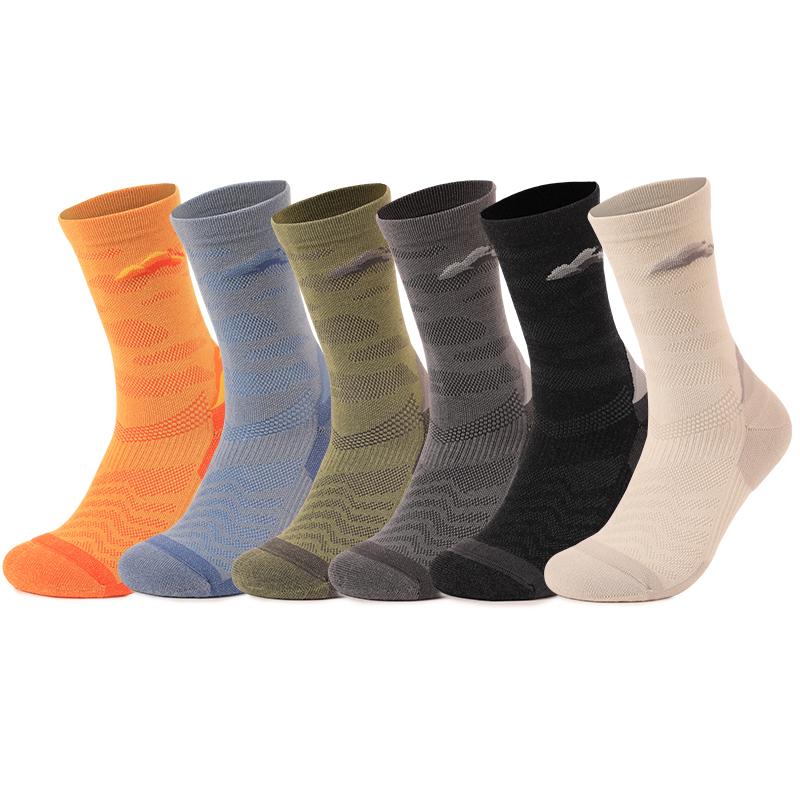
On a long ridgeline where every gram counts, merino's quietest trick is how it lets you forget you're wearing it. The fiber's natural crimp traps warmth when the wind picks up and releases it as the climb turns sweaty, so you spend less time fiddling with layers and more time watching the switchbacks.
That same unassuming quality shows up after camp is pitched, too. Wear the same base layer for three days and it still won't broadcast your whereabouts to the next valley. Merino's structure resists odor-causing bacteria, meaning a quick air-out on a rock is often all it takes before you pull it back on for the descent.
No microplastic shedding, no crinkly rustle with every step—just a fabric that works with your body's rhythm, not against it. On a trail full of loud gear claims, that's the kind of superpower you only notice when you need it.
From Trailhead to Summit Without a Second Thought
Some trails make you work for every step, second-guessing each fork. This one doesn't. The path from the trailhead unrolls like a familiar song, each turn obvious enough that you stop checking the map and just walk.
By the time the first switchback opens onto bare rock, you've stopped thinking about distance or elevation. The summit stops being a goal and becomes an inevitability. A few more strides over wind-smoothed stone and you're there, looking down at where you started.
No cairn confusion. No backtracking. Just a clean line from bottom to top, the kind of route that lets your mind wander while your feet do exactly what they're supposed to.
How the Right Cushioning Changes Long Miles
The difference between finishing a long run strong and hobbling through the last few miles often comes down to what's underfoot. Cushioning isn't just about softness; it's about managing the repeated impact that accumulates over thousands of strides. When the midsole absorbs and distributes force efficiently, your legs don't have to work as hard to stabilize each landing. That means less muscle fatigue in your calves and quads, and a lower chance of that deep, dull ache settling into your joints by mile fifteen.
But the right cushioning also influences your running form over distance. Too little, and you'll unconsciously tense up, shortening your stride and tightening your hips to avoid harsh landings. Too much, and you risk losing ground feel, which can make your foot strike sloppy and increase energy loss. The sweet spot is a midsole that returns energy without feeling mushy, letting you maintain a consistent cadence even when your form starts to waver. Many runners notice their breathing stays more relaxed as well, because they're not bracing for impact with every step.
Over the course of a training cycle, that small difference per mile compounds. You recover faster between long runs, which means you can stack quality weeks without breaking down. The mental shift matters too: when your feet and legs feel protected, you're more willing to push past the point where you'd normally back off. That confidence translates directly into stronger finishes and a lower injury risk over months of consistent mileage.
Sweat, Streams, and the Dry-Foot Advantage
Out on the trail, your feet face two constant threats: sweat from within and streams from without. Both leave your socks damp, and that moisture softens the skin, making blisters far more likely. Wet fabric also pulls heat away from your toes, leaving them cold even on mild days.
Keeping your feet dry isn't just about comfort. Dry skin stays tougher and more resistant to the repeated rubbing of a long hike. Without that layer of moisture, the friction between sock and insole drops sharply, which means fewer hot spots and a much lower chance of painful blisters forming by mile ten.
Rather than dealing with wet feet after the fact, plan ahead. Choose breathable shoes and quick-drying socks, step carefully on rocks when crossing a creek, or pause to remove your footwear entirely. Small habits like these keep your feet dry over the long haul, letting you cover more ground without that squelching reminder underfoot.
The Little Details That Make Big Days Feel Easier
Forget the grand gestures for a moment. It’s the small, almost invisible choices that quietly pull a big day together: having a pair of scissors where you’ll actually wrap gifts, writing the timeline on a sticky note instead of keeping it in your head, charging the speaker the night before. These tiny moves don’t impress anyone, but they keep your hands steady when the schedule starts to slip.
Comfort matters more than perfection when hours stretch long. A second pair of shoes under the table, a stack of thank-you notes pre-stamped, a cooler full of cold water within arm’s reach. None of it makes the photos, yet it changes how the day feels from the inside. That’s the point: you’re not adding more to do, just removing the friction that wears people out.
FAQ
Merino wool naturally regulates temperature, wicks moisture away from your skin, and resists odor even after long days. Cotton tends to hold sweat and can cause blisters when it stays damp against your feet.
They’re midweight with a bit of cushioning in the heel and toe, so they add warmth without making your boots feel tight. Most people wear them with their usual hiking boots or trail runners.
Merino wool is breathable enough for warm days, and the moisture-wicking keeps your feet from getting clammy. They work well from spring through fall, and in winter they’re a solid base layer under heavier socks if needed.
No, the merino fibers used here are fine and soft, so you won’t feel that scratchy sensation from traditional wool. Many people compare them to a soft cotton blend but with better performance.
Turn them inside out, machine wash cold on a gentle cycle with mild detergent, and either air dry or tumble dry on low heat. Avoid bleach and fabric softeners, which can break down the wool fibers over time.
The blend includes just enough nylon and spandex to hold their shape and prevent sagging, while the merino wool does the heavy lifting for comfort. The seamless toe design and targeted cushioning reduce pressure points during long descents.
The stretchy construction gives a snug but not constricting fit, and the lack of bulky seams helps accommodate wider feet. If you have very high arches, the extra cushioning under the arch area can feel supportive without being tight.
With proper care, most hikers get at least a full season of weekly hikes, often longer. The reinforced heel and toe areas take the brunt of friction, so they hold up better than standard wool socks.
Conclusion
A good pair of hiking socks rarely gets the credit it deserves, but the ODM Merino Wool Hiking Socks change that. They've earned a permanent spot in my pack because they handle everything from dusty switchbacks to damp creek crossings without turning stiff or scratchy. Merino wool works quietly here—it regulates temperature when the morning chill gives way to midday heat, wicks moisture before it becomes a problem, and stays surprisingly fresh after long miles. The cushioning is placed exactly where it matters, under the heel and forefoot, so rocky descents don't leave your feet feeling bruised or tender. The first time I wore them from trailhead to summit, I stopped noticing them, which is the highest compliment a sock can get.
What sets these apart is how they manage moisture. Sweat and shallow stream splashes dry quickly, and the socks never get that clammy, heavy feeling that leads to blisters on steep climbs. Small details make big days easier: a smooth toe seam prevents rubbing, the arch band holds everything in place without squeezing, and the cuff stays up without choking your ankle. By the end of a long day, my feet still feel dry and supported rather than tender and spent. These aren't just another pair of hiking socks; they're the kind you reach for whenever the trail calls, whether it's a quick afternoon loop or a full weekend ridge traverse.
Contact Us
Contact Person: Tiga
Email: [email protected]
Tel/WhatsApp: 8613058331729
Website: https://www.china-socksfactory.com/