
Naxi Cultural Experience: Immersive Attractions and Traditions
2026-07-26
Nestled deep in the foothills of Jade Dragon Snow Mountain, there’s a place where Naxi traditions aren't just on display—they’re alive, breathing, and waiting to sweep you off your feet. At Jade Water Village, it’s not about peering at lifeless exhibits behind glass; it’s about feeling the pulse of an ancient culture through immersive rituals, music, and daily rhythms that have echoed through these valleys for centuries. Join me on a journey into the heart of Naxi life—where every corner holds a story, and you’re part of it.
Whispers of the Dongba: Unlocking Ancient Scripts
The Dongba script, carved into bark and paper by the Naxi people of southwest China, remains one of the few pictographic writing systems still in use. Unlike alphabets that abstract sound, each symbol tells a story—a mountain looks like a mountain, a bird takes flight across the page. But the real challenge isn’t just recognizing these glyphs; it’s understanding the living tradition behind them, where ritual and recitation breathe meaning into the marks.
For centuries, Dongba priests guarded these texts, using them to chant myths, heal the sick, and guide souls. The scripts weren’t meant for casual reading; they were mnemonics for a vast oral literature that only initiates could fully decode. Today, as the number of fluent Dongba dwindles, scholars and local communities are racing to preserve not just the symbols, but the cultural memory embedded within them—a world where every stroke is a whisper from the past.
Efforts to unlock the Dongba’s secrets have taken surprising turns: digital archives now store high-resolution scans of crumbling manuscripts, while young Naxi artists blend ancient glyphs with modern design, giving the script a new voice. The scripts never aimed to freeze language but to sing across generations. That song grows fainter, yet those who listen closely can still hear the old chants in the rustle of the paper.
Echoes of Ages: Naxi Music in Lantern-lit Courtyards
Deep in the ancient lanes of Lijiang, as dusk settles and paper lanterns begin to glow, a quiet resonance drifts through wooden courtyards. It is not a tune you would hum along to at first—its cadence sits somewhere between a ritual chant and a faded memory. Old men in indigo robes take their seats, cradling instruments that have long outlasted empires: the slender erhu, the mellow pipa, the deep-bodied guzheng, and a chorus of gongs and wooden clappers. When the first note unfurls, it carries the weight of centuries, a sound shaped by Tang dynasty scholars and Song dynasty caravans, preserved in the high mountains by the Naxi people who long ago made this remote corner of Yunnan their home.
Threads of Heritage: Traditional Naxi Attire
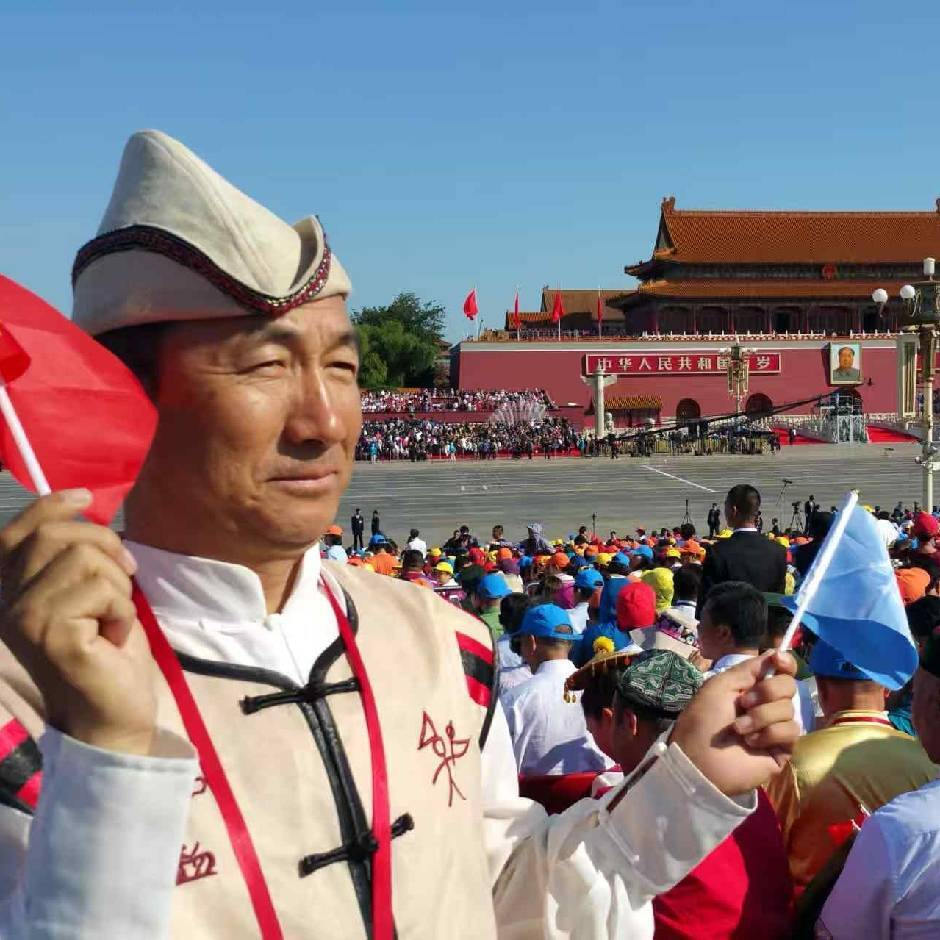
In the high-altitude valleys of Lijiang, the Naxi people have woven a living story into their garments for centuries. Far more than mere clothing, traditional Naxi attire is a tactile chronicle of migration, cosmology, and everyday resilience. Women's capes, famously embroidered with seven round disks representing the sun, moon, and stars, embody the 'wearing the stars and moon on one’s back' ethos—a poetic nod to the long hours of labor before dawn and after dusk. The heavy indigo-dyed wool, layered and pleated, speaks of protection against mountain winds, while every stitch of the sheepskin backing and silk trimming hints at ancient trade routes crisscrossing the Tea Horse Road.
Look closer at the blouse and apron, and you’ll discover a hidden language of motifs: butterflies for long life, bats for blessings, and interlocking geometric waves that mirror the peaks surrounding their homeland. These symbols aren’t randomly chosen—they echo the pictographic Dongba script, one of the world’s last living hieroglyphic systems, turning the wearer into a walking canvas of spiritual and historical memory. The iconic T-shaped gown, secured with intricately carved silver clasps, shifts in silhouette depending on a woman’s age and social role, allowing for a fluid expression of identity that factory-made fashion rarely permits.
Today, these threads of heritage persist amidst a deluge of mass-produced clothing. While many Naxi elders still don the full regalia for festivals and market days, younger generations are reinterpreting the palette and patterns—pairing a handwoven striped apron with modern jeans, or using traditional appliqué on contemporary jackets. It's a quiet act of preservation, not behind museum glass, but in the rhythm of daily life, reminding us that heritage, when worn close to the skin, stays warm and alive.
Feast with the Naxi: Flavors of the Jade Dragon Mountain
Sharing a meal with the Naxi people near the foothills of Jade Dragon Mountain is more than sustenance—it’s a journey through centuries-old traditions where every herb, cured meat, and stone-ground grain tells a story of survival and celebration at 3,000 meters above sea level. The crisp alpine air seems to infuse their staples: think yak butter tea whisked to a frothy warmth, tender wisps of air-dried pork belly hanging from kitchen rafters, and baba bread baked on hot stones, its cracked surface echoing the snowy peaks outside the window.
What sets Naxi cuisine apart is its quiet dialogue with the mountain’s microclimate. Wild foraged mushrooms like matsutake burst with an earthy punch in simple stir-fries, while pickled vegetables preserved in clay jars introduce a tangy brightness that cuts through the richness of yak cheese famously sliced into the region’s hearty hotpots. Even a humble bowl of buckwheat noodles arrives with a backstory—its dark, nutty strands a nod to the hardy crop that thrives in thin, rocky soil where rice refuses to grow.
Yet it’s not just the ingredients but the rhythm of the feast that lingers. Elders pour cups of homemade barley liquor in a circular motion, never letting a guest’s cup sit empty, while songs drift from the kitchen where women pat out bread with hands that seem to move in time with some ancient melody. The flavors are bold, unpretentious, and deeply tied to the landscape—a true taste of the clouds that drape the Dragon’s spine.
Stone and Soul: Exploring Naxi Architecture in Lijiang
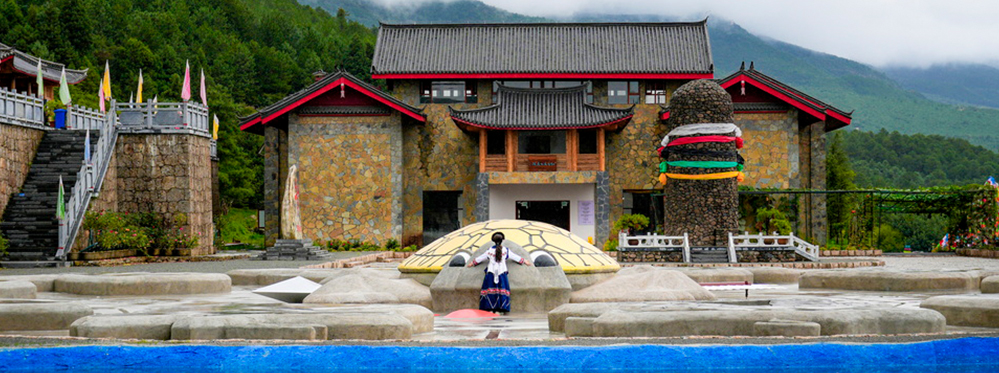
In Lijiang, the ancient Naxi dwellings are not simply built; they are breathed into existence. Walk the cobbled lanes at dawn and you'll feel how the stone foundations anchor homes to the earth, while intricate wood carvings seem to whisper old stories. Each residence is a quiet dialogue between the mountains and the hearth, where grey rooflines mimic the slopes of the Jade Dragon Snow Mountain, and courtyards open to the sky like a palm waiting for rain. There's a deep, unspoken belief here that a house must have roots in the land and wings for the spirit, so masons and carpenters follow rhythms dictated by feng shui and local lore, choosing timber and rock not just for strength but for the quiet life they hold within.
Peel back the layers of a typical Naxi courtyard house, and you uncover a language of symbolism carved into every beam and bracket. The sanfang yizhaobi layout—three buildings framing a screen wall—does more than shield against chill winds; it creates a contained universe where family and ancestral spirits coexist. Stone steps are set slightly off-center to confuse malevolent ghosts, while door thresholds stand high to keep good fortune inside. Look up, and the carved panels depict plum blossoms for resilience, fish for abundance, and bats for blessing—a silent lexicon passed down through generations. Even the dark, wood-fire-stained kitchens speak of continuity, where smoke rises like an offering, permeating the timber until the house itself seems to remember every meal ever shared.
Ultimately, Naxi architecture is a living manuscript of a people who learned to build not against nature, but within its embrace. The heavy stone walls bear the patience of mountains, while the sway of veranda screens catches the wind like a slow breath. In a rapidly shifting world, these homes remain repositories of soul, where the crack of aged timber at night is said to be the house speaking its name, and the moss on roof tiles grows thick with memory. To truly see Lijiang is to understand that its buildings are never finished—they continue to evolve, holding fast to their stone bones while letting the soul wander free, much like the Naxi themselves.
Festivals of the Moon and Fire: Naxi Celebrations
In the highlands of northwest Yunnan, the Naxi people mark the passage of seasons with celebrations that bind the lunar glow to the dance of flames. Their traditional calendar is punctuated by rituals that pay homage to the moon's quiet pull and fire's fierce vitality, creating a rhythm of life still visible in the ancient town of Lijiang and the villages cradled by the Jade Dragon Snow Mountain. These are not tourist spectacles but living customs passed down through generations, woven into the fabric of daily existence.
The Torch Festival, held on the 24th to 26th days of the sixth lunar month, transforms every Naxi settlement into a realm of light. As dusk falls, families erect towering torches in courtyards and fields, their flames licking the dark sky to drive away misfortune and honor ancestors. Young people leap over embers in displays of courage, while elders recount the legend of the hero who once used fire to defeat a plague of locusts. The celebration is not only a plea for a bountiful harvest but also a joyous reconnection with the strength that fire symbolizes—renewal, community, and the triumph over shadows.
When the autumn moon reaches its fullest, the Naxi turn their reverence skyward during the Mid-Autumn Festival. Unlike the grand communal fires, this observance is intimate and reflective. Families gather on moonlit terraces to share pomegranates, mooncakes, and the distinctive Naxi baba, a pan-fried bread. Elders whisper the story of Chang'e, yet they also speak of their own mountain spirits who dance in the lunar glow. The moon here is not a distant orb but a gentle guardian that watches over lovers, crops, and the quiet harmony of home—a balance that the Naxi see as essential to their way of life.
FAQ
Lijiang Old Town is the heart of it all, with its winding cobblestone alleys and wooden houses crisscrossed by canals. Baisha Village offers a quieter window into Naxi life, famous for ancient murals and traditional embroidery. Shuhe Ancient Town, a UNESCO World Heritage site, provides a more laid-back immersion. Don’t miss a live performance of 'Impressions Lijiang,' a grand outdoor show set against Jade Dragon Snow Mountain, created by Zhang Yimou.
Many local guesthouses and cultural centers offer hands-on experiences like learning the Dongba pictographic script, trying your hand at Naxi papermaking, or joining a tea ceremony. You can also sign up for a guided village tour that includes a Naxi cooking class or a bonfire dance with locals. Even just chatting with elders in the market square can lead to impromptu music sessions—Naxi people are known for their love of spontaneous singing and dancing.
It’s the only living pictographic writing system still in limited use today. Unlike most scripts, Dongba symbols are highly pictorial, often depicting animals, plants, and abstract concepts with a simplicity that feels almost like cave drawings. Created by Dongba priests for ritual texts, it holds a trove of knowledge about Naxi religion, astronomy, and herbal medicine. Visiting a Dongba museum or watching a priest demonstrate writing on handmade paper is a highlight for many travelers.
Absolutely. The Torch Festival in late July or early August sees the streets of Lijiang blaze with flame parades and folk dances—visitors are often invited to hold a torch or join the circle. The Sanduo Festival in February honors the Naxi protector god with offerings, traditional sports, and all-day singing. During Chinese New Year, Naxi communities host special ancestor-ritual ceremonies where respectful guests can observe and sometimes participate in the quieter home-based traditions.
Start with baba—a thick, savory flatbread often stuffed with minced meat or sweet bean paste. Naxi roasted fish, served sizzling with chili and Sichuan pepper, is a street-food staple. For something heartier, find a pot of wild mushroom hotpot, especially during the rainy season when locals forage for matsutake. Wash it down with suyou cha (butter tea), an acquired taste that warms you up on cool mountain evenings. Don’t skip the cured ham—it’s been salted and air-dried to perfection.
Definitely. Several family-run workshops in Baisha and Shuhe offer short courses in Naxi embroidery, silverwork, and leather crafting. You can spend a couple of hours carving your own Dongba-inspired woodblock print or try weaving on a traditional loom. Some homestays even arrange for you to work alongside a master artisan, and you get to keep whatever you make—a much better souvenir than anything from a market stall.
The Mu mansion, often called the 'Forbidden City of the South,' was the political and cultural center of the Naxi-dominated Chiefdom for over 400 years. It blends architectural influences from the Ming and Qing dynasties with Naxi and Tibetan elements, reflecting the region’s role as a crossroads on the Tea Horse Road. Today, it’s a living museum where you can see intricate carvings, ancient tablets, and even a reproduction of the chief’s throne room. Strolling through its courtyards gives you a real sense of how the Naxi elite balanced Chinese imperial power with their own traditions.
Conclusion
Stepping into Lijiang’s ancient lanes feels like entering a living tapestry of Naxi traditions. The Dongba script, etched onto weathered paper, invites you to trace pictograms that have survived centuries. In moonlit courtyards, the strains of Naxi ancient music—an amalgam of Tang, Song, and indigenous tunes—float through lantern-lit nights, each note telling stories of caravans and forgotten dynasties. Wandering further, the stone-paved streets and timber-framed houses of the old town reveal a deep-rooted architectural harmony, where every courtyard is a quiet dialogue between nature and dwelling.
Beyond the structures, the culture wraps around you in vivid ways. You can drape yourself in the embroidered layers of traditional Naxi attire, the iconic seven-star cape glinting under the highland sun. The market wafts with aromas of baba bread and cured pork ribs, flavors shaped by the Jade Dragon Mountain’s crisp air and age-old preservation methods. And when festivals ignite—whether the fiery Torch Festival or the serene Moon Festival—you witness the collective joy of a people whose beliefs are woven into every dance step and prayer. This is not a distant spectacle; it’s an invitation to feel the pulse of a culture that thrives in every stone, thread, and bite.
Contact Us
Contact Person: Changhong He
Email: [email protected]
Tel/WhatsApp: 086-0888-5190152
Website: https://vip.e-baixing.com/ysh