

Levelling Agent Recommended List for Superior Surface Quality
2026-09-06
You’ve fine-tuned the formulation, dialed in the viscosity, and still the finish falls short. The missing link is often the levelling agent—and choosing the wrong one can undo all that work. That’s why we’ve compiled a recommended list of levelling agents for superior surface quality, cutting through the noise to highlight options that actually deliver. If you’re serious about eliminating orange peel, craters, or uneven flow, the selection ahead is worth a close look. For formulations that demand consistent results, HAISEN provides a range of additives trusted by coaters and formulators.
What actually happens when you skip the levelling agent
Without a levelling agent, the coating tends to retain every brush stroke, roller mark, or spray pattern. Surface tension differences across the wet film pull the liquid into uneven thicknesses while it's still fluid, and once it sets, those imperfections are locked in. You end up with a finish that looks rippled or orange-peeled even if the underlying surface was perfectly smooth.
The problems go beyond appearance. In areas where the film is too thin because the coating didn't flow out, corrosion protection and hiding power drop off sharply. Edges and corners may pull away slightly, leaving voids that invite moisture or chemicals. For pigmented systems, uneven levelling also creates subtle color variations because pigment concentration varies with film thickness.
Adhesion can suffer as well. When the wet coating doesn't wet the substrate uniformly, micro-air pockets or contaminant-rich spots remain trapped at the interface. These weak points often show up later as blisters, peeling, or early rusting. So skipping the levelling agent might save a small cost upfront, but the trade-off is usually a shorter service life and a visibly inferior finish.
A builder's take on silicone versus acrylate levelling aids
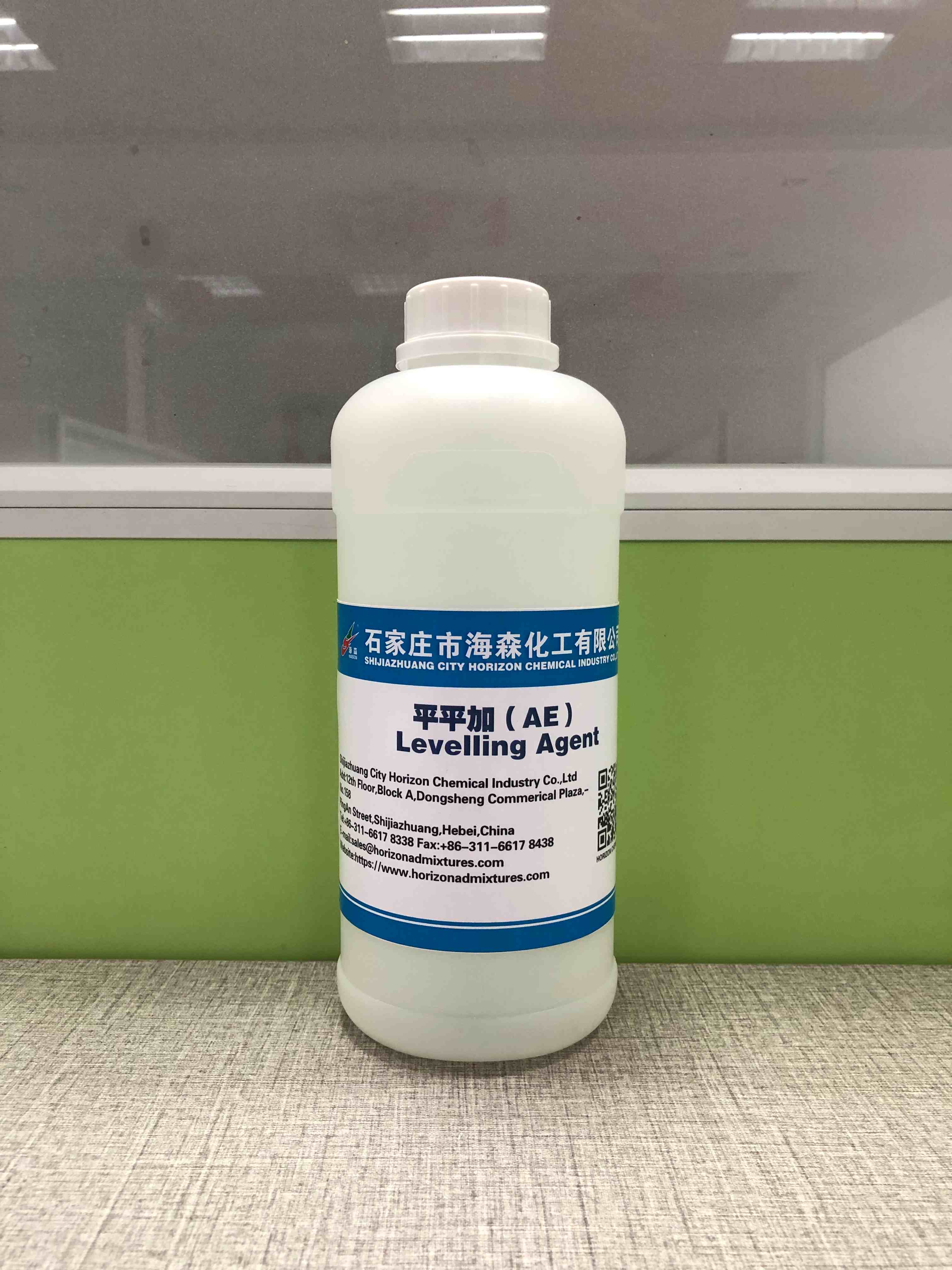
Most builders I know have a strong opinion on this, but the truth is both silicone and acrylate levelling aids earn their keep in different situations. Silicone flows beautifully over large, uneven surfaces and gives you that glass-smooth finish with minimal effort. It also resists moisture well once cured, so it shines in bathrooms and exterior pours. The trade-off? Silicone can be fussy if you plan to paint or coat the surface later, and cleanup often requires solvents.
Acrylate levelling aids, on the other hand, feel more forgiving on the jobsite. They mix in easily, stay water-based for simpler tool cleanup, and accept paints or sealers without adhesion headaches. You lose a bit of that ultra-flat sheen compared to silicone, and they may need a second pass on very rough substrates. For indoor work where repainting is likely, I reach for acrylate first.
My personal rule: if the floor will stay bare and needs a mirror finish, silicone wins. If there is any chance of a coating down the line, or you want a quicker turnaround without solvent smells, go acrylate. Test a small patch either way, because ambient temperature and slab porosity shift how both products behave more than the datasheets admit.
The real difference between flow modifiers for high-solids and waterborne coatings
In high-solids coatings, where solvent levels hover around 20% or less, flow modifiers earn their keep by wrestling with viscosity spikes during film formation. Traditional solventborne systems lean on organosiloxanes or acrylate copolymers that migrate to the surface fast, smoothing out orange peel before crosslinking locks everything in place. The challenge isn't just surface tension—it's keeping the modifier soluble long enough to work without cratering the film. Here, molecular weight and polarity balance matter more than anyone admits on a technical data sheet.
Waterborne coatings flip the script entirely. You're not fighting solvent evaporation rates; you're managing a whole ecosystem of surfactants, coalescents, and latex particle packing. Flow modifiers for these systems often double as defoamers or substrate wetting agents, because water's high surface tension makes even the best acrylic emulsion look like it's been rolled on with a cactus. The real difference is that waterborne modifiers must survive a longer open time and still level out after the coalescent starts softening the polymer beads—something a high-solids formulator never loses sleep over.
What trips people up is thinking one chemistry translates across both platforms. A silicone polyether that works miracles in a 2K polyurethane high-solids clearcoat will laugh at you in a waterborne acrylic direct-to-metal primer. The high-solids system demands modifiers that stay active under rapid viscosity build, whereas the waterborne system needs surfactants that can bridge the gap between hydrophilic and hydrophobic phases without causing foam or intercoat adhesion failures. Same job title, completely different toolbox.
The shortlist for spray-applied finishes that need zero rework
Zero rework doesn't come from a fancy gun setting. It comes from matching viscosity, tip size, and flash-off time to the substrate before the first pass. On clean drywall and sanded wood, a waterborne acrylic enamel around 25–30 seconds in a Ford #4 cup lays down flat, hides lap marks, and cures hard enough to scuff same day. Thin it exactly per the data sheet—usually 5–10% with clean water—and strain through a 125-micron mesh. That single step removes most fisheyes and clogs that force rework.
For millwork, doors, and metal that take a beating, a 2K polyurethane or pre-catalyzed lacquer offers better block resistance and less color rub-off. Stick to a 1.2–1.4 mm tip on HVLP or air-assisted airless, overlap each pass by 50%, and keep the gun 6–8 inches square to the surface. If a wet-film gauge reads 4–5 mils after one coat, you're in the right window; any heavier and runs turn from risk into schedule delay.
The shortlist worth keeping on the truck: waterborne alkyd for trim, pre-cat lacquer for cabinets, and high-solids acrylic for production drywall. All three tolerate normal temperature swings and won't leave witness lines if you keep a wet edge. Skip cheap contract paint, skip over-reduced material, and skip back-brushing once the film starts to skin. Rework rarely comes from the product—it comes from ignoring the working time.
How to read a levelling agent datasheet without the marketing fluff
Most levelling agent datasheets spend the first half convincing you that the product is "revolutionary" or "unmatched." Strip that away and start with the chemical backbone: is it a silicone, acrylate, or fluorosurfactant? Each behaves differently in a coating, and the datasheet often hides the actual active content behind flowery prose. If the solids percentage or recommended addition rate is missing or vague, treat the rest of the sheet as an opinion, not a specification.
Look for hard numbers that you can verify in your own system. A real datasheet will state surface tension reduction in dynes/cm, compatibility windows with common resin types, and any known side effects like haze or intercoat adhesion loss. Be suspicious of phrases like "excellent compatibility" without a test method or concentration range. Ask for the migration rate or recoatability data — if the supplier can't provide it, the levelling agent probably hasn't been properly characterised.
When comparing two levelling agents, throw away the marketing adjectives and build a simple table from the fine print: active ingredient percentage, solvent carrier, flash point, VOC content, and storage stability. Then run your own ladder study at 0.1%, 0.3%, and 0.5% addition. The datasheet is only a starting map; the real performance lives in your specific formulation, not in the glossy brochure.
Why two levelling agents often beat one in tough coating jobs
A single levelling agent is often asked to solve two very different problems at once: wet the substrate quickly and even out surface irregularities as the film dries. Under mild conditions, one chemistry can manage both. But in tough jobs—low baking temperatures, high pigment load, or rough substrates—the required surface tension reduction for wetting can easily conflict with the controlled surface tension gradients needed for flow. Splitting the job between two agents lets each one stay in its strongest range without forcing a compromise.
There is also the sag-versus-flow problem. A medium-molecular-weight modifier may offer decent flow, but when you push the dose to get enough film build on vertical areas, it starts to hurt sag resistance. By pairing a high-molecular-weight rheology-friendly acrylic with a low-molecular-weight surface-active silicone, you can hold the film in place while still letting the surface relax. Overdosing a single additive to reach that balance often leads to haze or intercoat adhesion loss—side effects that are easier to avoid when the functions are separated.
Different application methods also expose the same coating to a wide range of shear rates. Airless spray generates high shear at the nozzle, while brushing or rolling introduces low-shear flow after deposition. One levelling agent rarely performs equally across that range. Two agents chosen for complementary shear responses keep the coating level from the moment it hits the surface until the wet edge disappears, reducing cratering and orange peel in cases where a single product would leave visible defects.
FAQ
An aralkyl-modified polysiloxane at 0.2–0.4% on total batch usually clears up micro-craters fast by dropping dynamic surface tension without causing haze. Add it after letdown and check gloss before shipping.
A polyether-modified polydimethylsiloxane with mid-range silicone content can work in both, but the dosage has to move. Expect 0.05–0.15% in solventborne and 0.2–0.5% in waterborne to get the same flow.
A low-molecular-weight polyacrylate levelling agent at 0.3–0.6% is the safer choice. It improves flow and brush mark release without the recoatability risk that some silicone types carry.
It is usually solvent evaporation or film thickness, not the additive itself. On the line, higher film build and faster flash-off change the flow window, so you may need to lower the dosage slightly and add a slower tail solvent.
A fluorocarbon-modified polyacrylate at 0.1–0.3% helps the coating pull back from edges and flow more uniformly. It also cuts surface tension gradients without over-plasticizing the film.
Try combining 0.1–0.2% of a high-flow silicone levelling agent with a small amount of a rheology modifier that relaxes quickly under shear. That shifts the flow curve without increasing VOC.
Pick a recoatable or slip-controlled grade, stay at the low end of the recommended range, usually 0.05–0.2%, and test adhesion after a sanding step. Avoid overdosing because excess silicone migrates to the interface.
Conclusion
Skipping a levelling agent isn't a minor shortcut—it's a direct invitation to surface defects that no amount of polishing can fully hide. Without a proper flow modifier, coatings dry unevenly, leaving behind brush marks, orange peel, and cratering that compromise both gloss and durability. Builders who've worked with both silicone and acrylate levelling aids know the trade-offs intimately: silicones deliver fast, dramatic surface tension reduction but can cause recoat adhesion issues, while acrylates offer more forgiving intercoat compatibility at the cost of slightly slower flow. The real difference becomes even sharper when comparing high-solids systems to waterborne ones. High-solids coatings typically need low-molecular-weight flow modifiers that migrate quickly before crosslinking locks them in place; waterborne formulas demand a careful balance of hydrophilic and hydrophobic segments to avoid foam stabilization or water sensitivity.
For spray-applied finishes that need zero rework, the shortlist narrows to products with proven wide processing windows and minimal tendency to sag or pinhole. Reading a datasheet without marketing fluff means ignoring vague terms like "excellent flow" and instead checking surface tension reduction data, compatibility ranges, and real-world recoat intervals. In tough coating jobs—especially on complex substrates or under extreme humidity—two levelling agents often beat one: a fast-acting silicone for immediate wetting paired with a slower acrylate for long-range leveling can eliminate defects that neither could handle alone. The recommended list for superior surface quality isn't about picking the most expensive additive; it's about matching the right combination to your specific resin chemistry, application method, and end-use performance demands.
Contact Us
Contact Person: Sam Lee
Email: [email protected]
Tel/WhatsApp: 86-311-6617 8338
Website: https://www.horizonadmixtures.com/