

Leading China Tamping Rammer Factories Driving Global Compaction Solutions
2026-11-16
In the world of compaction equipment, few machines work as tirelessly as the tamping rammer—and even fewer manufacturers manage to blend rugged reliability with smart engineering. As global infrastructure demands surge, a new wave of Chinese factories is redefining what’s possible, and Dynamic stands at the forefront. This blog dives into the stories, innovations, and sheer grit behind the manufacturers that are shaping the future of soil and asphalt compaction, one powerful blow at a time.
How Chinese Manufacturers Are Redefining Tamping Rammer Performance
Walk onto any major construction site today and the odds are high that the compacting power beneath your feet was engineered in China—but not in the way you might expect. A quiet revolution has taken hold, where domestic manufacturers have moved far beyond basic reverse-engineering. By rethinking the entire power-to-weight ratio and systematically analyzing operator fatigue, they are delivering machines that feel lighter under control yet hit with more force per blow. It’s not about adding raw horsepower; it’s about precision casting techniques that shave kilograms from the shoe assembly, paired with redesigned crank gears that maintain optimal stroke length even under heavy soil resistance. The result is a tamper that doesn't just match international benchmarks—it introduces a more responsive, less punishing rhythm that crews notice after the first hour of use.
What often gets overlooked is how supply chain integration is reshaping reliability. Instead of treating the engine and tamping mechanism as separate procurement items, leading Chinese factories now co-develop both in-house. This means the carburetor’s jetting is calibrated specifically for the vibrations and tilt angles a rammer actually encounters, not a generic stationary test bench. Sealed, multi-stage air filters that would have been a premium foreign option are becoming standard, combating the fine silica dust that chews through cylinder walls. Long-term field data, openly shared between foundries and assembly plants, has doubled the typical service interval for the foot-shoe linkage—a small detail that keeps machines out of the repair shed and on the job.
Perhaps the most dramatic shift is happening around the operator. Vibration isolation was once an afterthought; now it’s a central design parameter. Engineers are employing tuned-mass dampers and composite guide handles that don’t just meet EU whole-body vibration directives—they undercut them noticeably, even in cold weather when rubber stiffens. Meanwhile, the classic throttle-and-choke dance is disappearing thanks to simplified digital ignition modules that auto-adjust for altitude and fuel quality. These are not feature-bloated gadgets; they are intentional choices that reduce the mental load on the person running the machine, letting them focus on the compaction quality rather than fussing with a temperamental carb. It’s this blend of operator-centric engineering and aggressive value engineering that is genuinely rewriting what contractors can expect from a tamping rammer, no matter where it’s built.
Inside the Engineering Advances Powering Today’s Compaction Equipment
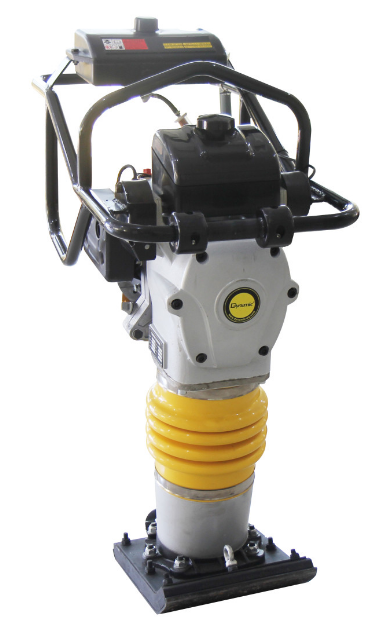
The shift from simple deadweight rollers to intelligent compaction systems didn’t happen overnight. At the heart of modern machines lies a tight integration of sensors, GPS mapping, and real-time feedback loops that actively adjust drum amplitude and frequency as ground conditions change. This means a single pass can now adapt to varying soil stiffness beneath the surface, preventing over-compaction in soft zones while ensuring density targets are met in tougher areas. The result is less guesswork, fewer passes, and a drastic reduction in fuel waste — all driven by onboard algorithms that learn from each square meter they roll over.
Hydraulics have undergone a quiet revolution too. Where older rigs relied on fixed-displacement pumps and brute force, today’s systems use load-sensing, variable-displacement pumps that only deliver oil when and where it’s needed. This not only slashes energy consumption but also allows for smoother transitions between high-torque climbing and high-speed travel on flat grades. Coupled with electro-hydraulic steering that eliminates the lag of pilot controls, operators get a responsiveness that feels almost intuitive, letting them hold tight lines along curbs and edges without constant corrections.
Perhaps the most underrated advance sits in the drum design itself. Engineers have moved beyond simple cylindrical shells to profile-machined drums with staggered pad configurations that break up soil more effectively while channeling vibrations deeper into the lift. Some manufacturers now embed temperature and moisture sensors directly into the drum rim, feeding data back to the operator and the cloud simultaneously. This turns each roller into a data-collection node on a connected job site, where compaction progress isn’t just observed — it’s tracked, archived, and used to build a defensible quality record long after the asphalt has cooled.
Why Global Contractors Are Turning to China for Reliable Rammers
For years, job site chatter painted a narrow picture of Chinese compaction equipment—cheap, temporary fixes that couldn't handle serious ground work. That narrative has quietly crumbled as tight project timelines and brutal cost pressures have forced a rethink. Contractors across Southeast Asia, the Middle East, and parts of Europe are now quietly loading container after container with Chinese rammers, not because they're gambling on low prices, but because the machines keep pounding away long after the warranty cards of pricier alternatives have been filed away. The shift isn't loud, but the evidence shows up in fleet renewal orders and the dwindling number of rented units sitting idle in the yard.
The real pull goes deeper than a competitive bid. It rests on something much more pragmatic: a manufactured toughness that aligns with how crews actually treat equipment—run hard, serviced sparingly, expected to perform in red clay one day and crushed stone the next. Leading Chinese manufacturers have spent the last decade ditching generic engine pairings and flimsy recoil systems, instead co-developing proprietary power units with established diesel names and stress-testing shoe assemblies in their own foundries until the failure rates matched or beat European benchmarks. Distribution networks have grown up too; a contractor in Nairobi or Jakarta can now get a replacement piston or throttle cable faster than they could for some legacy Western brands, often from in-country stock. That logistical confidence is doing more to move the needle than any glossy brochure ever could.
There's also an undercurrent of no-nonsense customization that's winning over site managers who used to treat a rammer as a disposable tool. Need a narrower baseplate for trench work between tight formwork? It gets built. Want a handle that folds differently for transport in a pickup bed? The factory actually listens. This isn't mass-market off-the-shelf thinking; it's a responsive manufacturing culture that has learned to treat a compaction rammer not as a finished product but as a platform that evolves with job site feedback. When coupled with walk-in service centers that speak the contractor's language—literally and figuratively—and don't require a parts number degree to navigate, the appeal becomes obvious. The result isn't just a cheaper rammer; it's a machine that keeps showing up to work, rain or dust, without a chorus of complaints from the crew.
Breaking Down the Quality Controls at Top Chinese Compaction Plants
Walking into a top-tier compaction equipment factory in China, the first gate of quality doesn't sit on the assembly line but rather in the incoming materials warehouse. Every steel plate, hydraulic cylinder, and engine block is subjected to spectral analysis, hardness indentation tests, and full traceability verification against the mill certificate. Any raw material that falls outside the narrow acceptance window is quarantined before it can ever touch a cutting tool.
On the shop floor, dimensional control has shifted from post-check to in-process monitoring. Critical components like eccentric shafts and vibration drum hubs are machined to tolerances measured in single-digit microns, with coordinate measuring machines feeding data back to the CNC in real time. During assembly, parameterized tools enforce exact torque sequences and sealant bead profiles; the line automatically halts if a bolt falls outside its engineered band, leaving no room for operator interpretation.
Before a machine earns its serial plate, it undergoes endurance tests that go well beyond published specifications. Compactors are run for hours on purpose-built test tracks with slopes, staged overloads, and simulated high-temperature, dusty environments. Hydraulic systems are cycled thousands of times while sensors log every pressure spike and temperature drift. Only after passing this gauntlet of accelerated punishment does the unit receive its digital identity, creating an audit-ready birth certificate that stays with the machine for its entire service life.
A Closer Look at Material and Design Innovations in Modern Rammers
It’s easy to overlook the humble rammer on a busy job site, but the latest machines bear little resemblance to the clunky, back-breaking tools of a decade ago. A quiet materials revolution has reshaped what these compactors can handle. Engineered composites are steadily replacing traditional cast iron and steel in shoe assemblies, sharply reducing weight without sacrificing impact force. At the same time, advanced elastomer blends in bellows and vibration dampeners soak up harsh frequencies that used to rattle every bone in an operator’s body. The result isn’t just less fatigue—it’s a machine that feels more like a precision instrument than a blunt instrument, allowing for tighter work in confined trench boxes and around utilities where over-compaction once meant costly damage.
Under the shell, power systems tell an equally interesting story. The shift away from simple two-stroke engines towards fuel-injected, stratified-scavenging units has cleaned up exhaust dramatically while flattening the torque curve where it matters. You notice this when a rammer no longer bogs down in sticky clay or lunges unpredictably on a slope. Paired with redesigned ramming strokes—often asymmetric lift-to-impact ratios that keep the shoe in contact with the soil milliseconds longer—these powerplants deliver density in fewer passes. The real cleverness hides in the details: self-lubricating bushings that shrug off grit, tool-less height adjustments that cut changeover time, and integrated sensors that feed real-time compaction data to a simple LED ring on the handle, letting even a novice operator read the soil’s response without second-guessing.
What ties these threads together is a design philosophy that finally treats the rammer as a system instead of a crude oil-and-steel hammer. Cooling fins are routed to pull air past hot exhausts before it hits the shoe, reducing material temperature cycling and extending fatigue life. Handles are tuned mass dampers in their own right, counteracting the machine’s vertical oscillation. Even the baseplate profiles have moved beyond generic flat stamps to contoured shapes that concentrate stress under high-points for better propagation in granular fills. Taken individually, each tweak seems incremental; together, they transform a deafening stomp into something that approaches finesse—and that’s what makes the modern rammer worth a closer look.
What Makes a Tamping Rammer Factory Stand Out in a Crowded Market
It often starts with something surprisingly simple—how closely a factory listens before they ever weld a frame or pour concrete weights. The ones that outlast competitors don’t just ship machines; they absorb the daily frustrations of crews working on uneven trench bottoms or tight urban sites and build that feedback directly into the rammer’s balance point and handle vibration. You won’t see it on a spec sheet, but you feel it the first time the shoe hits the ground and the machine doesn’t yank your shoulders.
Another quiet separator is how a factory treats the components nobody asks about. Piston guides, air intake seals, the quality of sand castings for the crankcase—these are the parts that determine whether a rammer is still hitting full depth at 1,800 hours or coughing blue smoke. The standout facilities don’t just “assemble”; they dial in clearances with the same care a smaller engine shop once gave a dirt bike, often while still running a lean enough operation to turn custom orders without six-month lead times.
Then there’s the stubborn commitment to staying reachable long after the invoice clears. The factories worth remembering are the ones where a parts call gets answered by someone who can pull up the original production batch and know exactly which bearing set was used during that month’s run. They don’t treat service as a cost center; they treat it as the way their brand gets talked about around a job trailer three years later.
FAQ
The compact power-to-weight ratio combined with wear-resistant components gives them an edge in tough soil conditions. Many overseas contractors find the engines easier to service, thanks to widely available spare parts and straightforward maintenance routines that reduce downtime on cramped urban job sites.
They lean on decades of casting and forging expertise in industrial clusters, which lowers unit costs without cutting corners on critical parts like the guide cylinder or spring system. Production lines mix skilled hand-assembly with automated testing, so each rammer gets a full-cycle run-in before shipping, something buyers say feels more like a premium machine at a mid-range price.
A big shift happened when factories started co-developing rammers with rental fleets operating in Southeast Asia and Africa. They tweaked shoe designs for sticky clay and added better vibration damping for operators—small changes that solved real site headaches. That field feedback loop turned many one-time buyers into repeat bulk purchasers for dam, road, and pipeline work.
Beyond the expected engine or carburetor upgrades, some are experimenting with hybrid rubber-metal foot designs that lessen surface damage on pavers without sacrificing impact force. Others have integrated intelligent compaction indicators—simple LED readouts that tell the crew when soil density is met, reducing guesswork for less experienced teams.
There’s a quiet obsession with in-house testing in many plants. Instead of spot checks, they run every machine through a calibrated backfill trench that mimics real-world resistance, measuring blow rate and jump height under load. Components like bellows and air filters go through accelerated life cycles, so rejects are caught before the rammer ever leaves the factory floor.
Standard models work for most, but the real growth comes from adapting to local operator habits. Factories now offer throttle placements suited to taller or shorter users, fuel tank caps that work with poorly refined fuel, and even branding-free shells so local distributors can market the rammer as their own. It’s a flexible approach that larger Western OEMs often can’t match quickly.
Instead of just bolting on pollution control, they’re rethinking the combustion chamber and porting geometry to burn cleaner from the start. Some models now meet EPA and EU stage emissions with no loss in percussive energy—something that surprised a few European testing labs. The next step is a line of battery-electric rammers already in field trials for indoor and trenchless repair work.
Conclusion
China’s rise in the tamping rammer sector is rooted in a quiet engineering revolution that has reshaped what these machines can achieve. Leading factories have moved far beyond copying legacy designs, focusing instead on refining the combustion cycle, reducing vibration transmitted to the operator, and boosting impact force per blow without making the units harder to handle. This performance leap—visible in reduced stalling on tough soil and smoother operation at extreme angles—has been powered by investments in computational fluid dynamics and high-speed data acquisition during endurance runs. As a result, global contractors who once hesitated now see Chinese rammers as dependable workhorses that start easier, run cleaner, and hold up over thousands of hours, making them a practical choice for everything from pipeline backfill to road shoulder repair.
What makes a factory truly stand out is not just the machinery it produces but the rigor that surrounds it. Top plants have embedded quality checks at every station, from raw iron inoculation and powder-coat adhesion tests to dyno-hour teardown reviews that catch premature wear patterns before a problematic batch ever ships. This obsession with material integrity—think upgraded alloy ram shoes, improved seals, and redesigned bellows that resist cracking in cold climates—gets paired with smart, incremental design updates rather than flashy overhauls. The result is a family of rammers that feel cohesive and reliable, backed by parts support that doesn’t vanish after the sale. In a crowded market, the factories pulling ahead are those that listen intently to feedback from Brazilian ditch crews and German landscapers alike, quietly turning that field intelligence into the next iteration of an already rock-solid tool.
Contact Us
Contact Person: Annie
Email: [email protected]
Tel/WhatsApp: 8613391442963
Website: https://www.dynamic-eq.com