

Hastelloy Alloys Distributor: What Industrial Buyers Need to Know Before Ordering
2026-08-29
Ordering Hastelloy alloys isn't as simple as picking a grade from a catalog. One wrong spec—or one unverified distributor—can turn a routine purchase into a costly shutdown. Before you sign that PO, there are a few non-negotiables every industrial buyer should have on their checklist. At Jiangsu Baowu New Materials, we've seen too many avoidable mistakes. Here's what to look for—and what to avoid.
Not Every Hastelloy Grade Handles the Same Acid Stream
When engineers talk about Hastelloy, they often treat it as a single material. That assumption collapses the moment you compare C-276 with B-3, or C-22 with G-30. Each grade was developed for a specific window of acid chemistry, not as a universal acid shield. A grade that shrugs off boiling hydrochloric acid can suffer pitting in nitric acid within hours.
Take C-276, for instance. Its molybdenum and tungsten content gives it outstanding resistance to reducing acids like hydrochloric and sulfuric, even at elevated temperatures. But expose the same alloy to concentrated nitric acid containing oxidizing impurities, and you may see rapid intergranular attack. By contrast, C-22 adds chromium to handle oxidizing conditions, while B-3 excels in pure hydrochloric but fails badly if any ferric or cupric ions are present. These aren't minor differences; they're the reason a reactor lining in one plant can last a decade, while an identical-looking lining in another plant fails in three months.
That's why material selection starts with a full acid stream analysis, not a brand name. Temperature, concentration, aeration, and the presence of trace metals all shift the corrosion mechanism. A Hastelloy grade that works for a pickle liquor may be worthless for a mixed acid etch. Spec sheets list generic resistances, but real acid streams are rarely generic. Testing coupons under actual process conditions remains the only reliable way to match the grade to the stream.
A Mill Test Report Won't Confirm What's Sitting on the Warehouse Floor
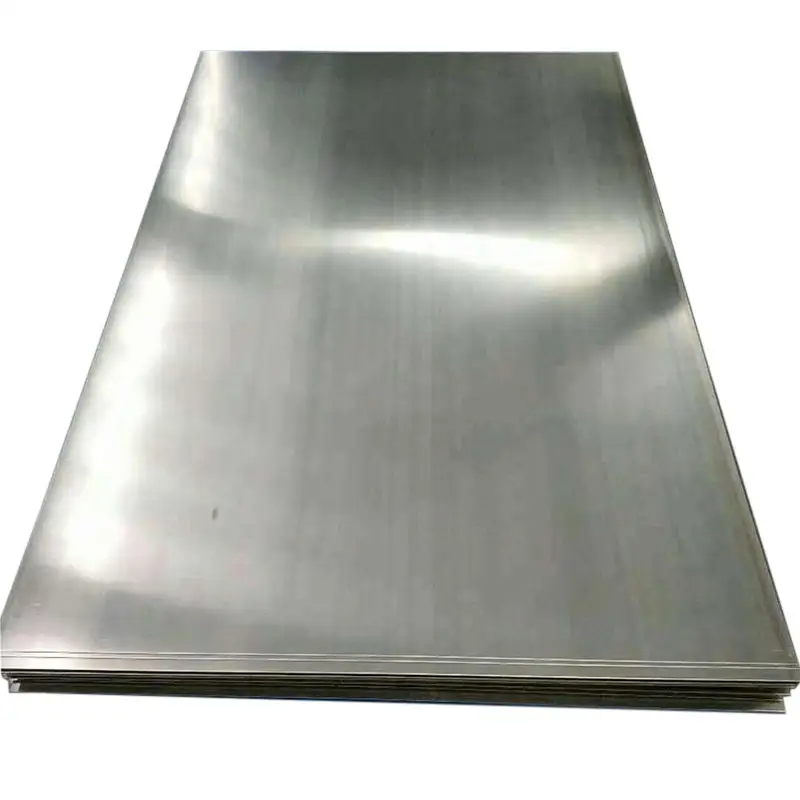
A mill test report reads like a promise made at the time of production. It lists chemical composition, tensile strength, heat numbers, maybe even the name of the operator who ran the furnace. But that document left the mill days, weeks, or months before the steel ever hit the warehouse floor. Coils get moved, bundles get split, tags fall off. The paper doesn't see any of that.
Between the mill and the warehouse, material often passes through multiple hands—traders, processors, freight forwarders. Each transfer is a chance for a mix-up. Two heats of 4140 can sit side by side on a rack, identical to the eye. One meets spec; the other doesn't. If the paperwork gets shuffled, the MTR becomes a well-formatted guess.
That's why smart buyers don't stop at the certificate. They verify what's physically present: check heat numbers stamped on the bars, compare dimensions, maybe run a PMI gun or hardness test on a sample. A mill test report can support a claim, but it can't replace eyes on the actual material sitting in the warehouse.
Minimum Order Quantities and Cutting Fees Change the Real Price More Than Unit Cost
Most buyers fixate on the per-unit price listed in a catalog, but that number rarely survives contact with an actual purchase order. A supplier might advertise a bracket at $4.50 each, yet require a minimum order of 500 pieces and tack on a $75 setup fee for cutting the raw material. Suddenly, ordering 200 units—which is all you actually need this quarter—forces you to either pay for 500 or find another vendor. The real cost per usable part balloons when you factor in the excess inventory you'll store, the cash tied up in unused stock, and the per-piece cutting charge that doesn't shrink just because you ordered fewer. Smart procurement teams calculate the landed cost at their actual order volume, not the fantasy volume the supplier's price sheet assumes.
Cutting fees deserve more attention than they typically receive. A metal supplier may charge $2.50 per cut regardless of whether that cut yields one part or twenty. If you need 300 custom-length aluminum channels and the supplier's standard bar length produces only 12 channels per bar, you're looking at 25 cuts. That's $62.50 in cutting fees alone—before considering that the minimum order quantity might force you to buy 50 bars instead of 25. When you divide those fees across the parts you actually need, the effective unit price climbs far beyond the advertised number. Some buyers respond by ordering longer lengths and cutting in-house, but that only works if your shop has the saw capacity and labor bandwidth. Otherwise, you're trading a supplier's cutting fee for your own hidden production cost.
The gap between list price and true acquisition cost widens further when minimum order quantities force you into bulk discounts that don't align with your demand pattern. A supplier might offer a steep per-unit discount at 1,000 pieces, tempting you to stock up. But if your annual usage is only 800, you've just bought a 25% surplus. That surplus occupies warehouse space, risks obsolescence, and reduces your flexibility to switch suppliers next year. Meanwhile, the cutting fee for that large order may be amortized over many parts, making it look lower on paper—but the carrying cost of the extra inventory erases the savings. Experienced buyers know that the real price is set by the intersection of minimum quantities, cutting fees, and your own consumption rate, not by the unit cost printed on a quote.
Lead Times on Hastelloy Plate and Pipe Can Shift Without Notice
Hastelloy alloys are notorious for their long and unpredictable manufacturing cycles. The raw materials themselves, particularly nickel and molybdenum, are subject to market volatility and occasional shortages, which can abruptly extend the time needed to produce plate and pipe. Even a well-established mill schedule can be thrown off by a delayed shipment of certified scrap or a batch that fails strict chemical analysis, forcing a restart from scratch.
Once production is underway, there are still plenty of variables that can push delivery dates without any prior warning. A key piece of equipment might require unplanned maintenance, or a run of pipe might need additional non-destructive testing after a dimensional tolerance issue is discovered. These quality checks are non-negotiable for aerospace or chemical processing applications, but they often happen behind the scenes, with no real-time updates passed to the customer until the original ship date has already slipped.
Because lead times can shift silently, anyone ordering Hastelloy plate or pipe should build a healthy buffer into their project timeline and avoid relying on a single shipment arriving exactly when promised. It is also wise to ask the supplier for a breakdown of their current backlog and any upcoming planned outages before placing an order. Some distributors will even hold safety stock of common sizes, which can be the difference between a minor delay and a full project standstill.
An In-House Metallurgist Can Catch a Corrosion Mistake Before You Order
Many corrosion failures start on a purchase order, not in the field. An in-house metallurgist reviews material specs against actual service conditions—temperature swings, chloride levels, trace contaminants—before a single part is ordered. That early check often reveals a mismatch that would otherwise stay hidden until pitting or cracking shows up months later.
Take a recent order for stainless steel 304 fasteners intended for a seaside processing line. The supplier quoted exactly what was on the drawing, but a quick review flagged the coastal salt exposure. Swapping to 316 with molybdenum added a few dollars per fastener and eliminated a predictable failure mode that would have cost weeks of downtime.
Without that internal review, corrosion mistakes get locked into contracts and delivery schedules. Fixing them after fabrication or installation means rework, rushed replacements, and sometimes a compromised system running until the next shutdown. A metallurgist on staff turns a reactive repair cycle into a design-stage safeguard.
Heat Number Traceability Separates a Legitimate Distributor From a Middleman
Heat number traceability is not a paperwork formality; it is the clearest signal of how seriously a supplier takes material integrity. A legitimate distributor keeps the heat number tied to every invoice, test report, and physical tag on the pipe or plate, so a buyer can trace that exact batch back to the mill, the ladle analysis, and the original mechanical test results. This chain of custody matters when a pressure vessel or structural component fails years later, and an engineer needs to know whether the material met the specification at the point of manufacture.
A middleman, by contrast, often treats heat numbers as an inconvenience. They may have a pile of surplus from multiple jobs, mixed in the yard, with faint markings and no corresponding mill certs. Ask for traceability and you are more likely to get a blank stare or a photocopied document that does not match the stencil on the steel. Without the ability to connect a heat number to a specific melt and its actual test data, you are not buying verified material; you are buying a story. That gap in documentation is precisely what separates a supplier who stands behind the metal from one who is merely passing it along.
FAQ
Most buyers start with C-276 because it handles both oxidizing and reducing acids well. C-22 is a close alternative with better resistance to localized attack in some chloride-heavy environments. B-3 stands out for pure hydrochloric acid service, while X offers high-temperature strength up to 2000°F. The real key is matching the grade to your specific chemical mix and temperature range, not just picking the most popular option.
Ask for mill test reports tied to the exact heat numbers on the material. A legitimate distributor will provide these without hesitation, showing chemical composition and mechanical properties from the original mill. Also check whether they can trace every piece back to its heat lot. Some distributors offer independent third-party testing if you need extra assurance. If they hedge on documentation, walk away.
Stocking distributors can often ship common sizes in a few days to two weeks. Non-standard dimensions or mill-direct orders typically run six to sixteen weeks, depending on the product form and current mill backlog. Plate and sheet may be faster than seamless pipe, which often has longer production cycles. Always confirm whether the item is physically in stock or just 'available' from a mill.
Find out if they cut in-house or outsource. In-house saw cutting, waterjet, or plasma cutting usually means tighter control over tolerances and faster turnaround. Ask about minimum order quantities for custom cut pieces and whether they can handle your required thickness range. A distributor that only sells full sheets or bars may leave you with waste you don't need.
Hastelloy is nickel-based, and nickel prices can move sharply due to mining output, geopolitical events, and speculative trading. Distributors often use a base price plus a raw material surcharge that changes monthly. Some offer fixed-price quotes valid for a limited window, which helps budget certainty. If your project is price-sensitive, ask for both fixed and index-based options.
Yes, because how they store, handle, and track material affects what you receive. Look for ISO 9001 certification and ask how they segregate heats and alloys in the warehouse. A distributor with a structured quality system is less likely to mix up grades or ship material with surface contamination. It is not just a piece of paper; it reflects their daily operating discipline.
Be wary of distributors that cannot provide documentation upfront, quote unrealistically low prices, or have no physical inventory of their own. Consistent communication matters too. If they cannot answer technical questions about alloy performance or application limits, they are likely just a middleman with limited expertise. A trustworthy distributor will discuss your process conditions before recommending a grade.
Conclusion
Hastelloy purchasing rarely comes down to a single alloy number, and industrial buyers who treat it that way often discover the hard way that C-276, C-22, and B-3 are not interchangeable in every acid stream. A grade that holds up in hydrochloric service may fail quickly in sulfuric or nitric blends at elevated temperatures, so the first conversation should be about concentration, temperature, and impurities rather than a generic 'Hastelloy' callout. Even when the right grade is specified, a mill test report attached to the quote does not guarantee what is physically sitting on the warehouse floor. Mixed heats, restickered remnants, or careless handling can put C-22 where C-276 belongs, and the only way to reduce that risk is to ask how the distributor tracks each piece from receiving through cutting and shipping. Pricing also changes once minimum order quantities and cut charges enter the picture. A low per-pound number can hide a steep cutting fee or force you to buy far more than a repair job actually needs, so buyers should compare total landed cost for the exact piece size and quantity they will use.
Lead times on Hastelloy plate and pipe deserve the same skepticism as any promise made over the phone. Mill schedules shift, freight gets bumped, and a quoted three-week delivery can quietly become six without notice, especially on less common wall thicknesses. A distributor with an in-house metallurgist can often catch a corrosion mistake before the order is placed, saving the buyer from an expensive rework or a failed heat exchanger. That kind of support matters more than a slick catalog because it flags incompatible service conditions early. Finally, heat number traceability is the clearest line between a legitimate distributor and a middleman. A real stocking supplier can show the heat number on the physical piece, tie it back to the original mill certification, and keep that chain intact through cutting and partial shipments. A middleman may simply resell from another warehouse and lose that link, leaving the buyer with no way to prove what was actually installed.
Contact Us
Contact Person: Zoe Liang
Email: [email protected]
Tel/WhatsApp: 86 189 2128 6299
Website: https://www.baowuchina.com