

Durable Bohemian Printed Carpet: Transform Your Space with Long-Lasting Style
2026-10-06
A boho print usually fades or frays before the season ends—but what if your rug could outlast every trend? That’s the promise behind Senseco’s durable Bohemian printed carpet, where vibrant patterns meet heavy-duty fibers. In this post, we’ll walk through how it holds up to real life, so you can decide if it’s the missing layer your space has been waiting for.
The Secret Behind the Fade-Resistant Prints and Sturdy Weave
What keeps the prints looking sharp after months of sun, wind, and rain isn't any single trick—it's how the dyes are forced deep into the fibers before the fabric even hits the loom. Instead of a surface coating that rubs off or cracks, the pigments bond at a molecular level, becoming part of the thread itself. That's why you won't see the telltale peeling edges or washed-out patches that cheaper materials develop within weeks.
The weave plays an equally stubborn role. Rather than a loose, open grid that stretches and sags, each inch packs in more yarns, and the crosswise threads are pulled tight during weaving. This density doesn't just make the fabric feel substantial—it gives the dyes fewer gaps to escape through and distributes tension evenly, so the material holds its shape under heavy use. You can actually feel the difference when you run your hand across it: there's a slight resistance, a crispness that doesn't soften into limpness after a few washes.
Together, these two choices—deep-dyed threads and a tightly packed weave—mean the colors stay vivid not because of any protective spray, but because they have nowhere to go. The fabric resists fraying at the edges, shrugs off snags, and keeps its original tone even when hung in direct sunlight day after day. It's the kind of durability you only notice when someone hands you a product that hasn't been built to fail.
Styling This Carpet in Every Room Without Overdoing the Boho Look
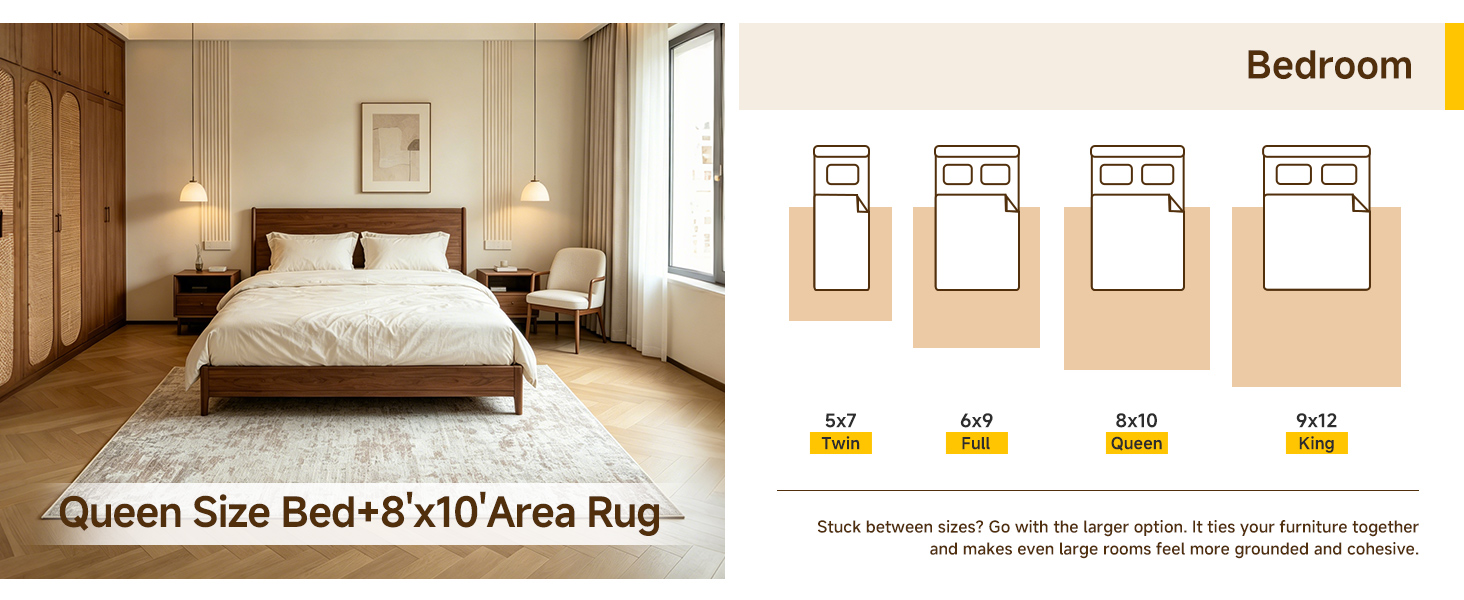
A boho-style carpet doesn’t have to dictate the entire room. Treat it like a piece of art: let it sit against a calm backdrop of solid linen, unfinished wood, and matte black or brass accents. If the carpet has multiple colors, pull out only one secondary tone for a single object nearby—say a clay-toned ceramic bowl or a deep green cushion—and leave the rest of the palette neutral.
Moving from room to room, the key is to change the supporting cast while keeping the carpet’s role consistent. In the living room, ground it with a low-profile sofa in oatmeal or ivory and avoid patterns on the curtains. In the bedroom, slide it under the bed so it peeks out at the foot and sides rather than covering the whole floor. In a hallway or dining nook, let the carpet be the only patterned element; use solid rugs or bare wood around it if layering is needed.
Resist the urge to add kilim pillows, macramé, and rattan pendant lights in every corner. One woven texture or one carved wood accent is enough to nod to boho without turning the space into a theme room. The carpet should feel discovered, not installed—so leaving a visible margin of floor around it in each room will help it breathe and keep the overall look relaxed.
A Quick Cleaning Routine That Keeps High-Traffic Areas Looking New
Most people assume high-traffic areas need deep scrubbing every time, but that’s exactly why they end up looking worn. Instead, I keep a small caddy with a microfiber cloth, a mild all-purpose cleaner, and a dry dusting mitt right by the entryway. Every evening, I spend two minutes wiping down the spots that collect the most fingerprints and scuffs—door handles, light switches, the lower half of the hallway wall, and the edge of the stairs where shoes tend to kick. The key is doing it before the grime gets a chance to settle, so the surface never reaches the point of needing elbow grease.
The second part of the routine is about resetting the floor. High-traffic zones like the front hallway, the kitchen path between the fridge and sink, and the route to the bathroom pick up dust, crumbs, and outdoor dirt faster than anywhere else. I don’t vacuum daily—that would be overkill—but I do run a flat-head sweeper or a cordless stick vacuum over just those paths for about three minutes. It’s surprising how much fresher the whole house feels when the main walkways are clear, even if a corner of the living room hasn’t been touched in a week.
Finally, I rotate one small deep-clean task each week instead of trying to do everything at once. One week it’s scrubbing the front door threshold and baseboards in the entry. The next week it’s spot-cleaning the stair treads and handrail. By the time a month passes, every high-traffic area has had a proper refresh without ever feeling like a chore day. The house stays presentable, and I avoid that sudden panic when guests are on their way over.
How a Single Rug Can Anchor Your Whole Space (Even in Rentals)
A rug does more than cover a floor—it sets the visual weight of a room without touching the walls. In a rental where paint and hardware are off-limits, a well-chosen rug pulls mismatched furniture into one conversation. I’ve watched a dull living room turn intentional just by swapping a too-small mat for one that lets the sofa’s front legs rest on it. The edges don’t need to reach every corner; they just need to define a clear zone for sitting, dining, or sleeping.
The trick is treating the rug as the room’s anchor, not an afterthought. Pick a size that overlaps the main furniture grouping by at least a foot on each side, and the space instantly reads as planned rather than assembled. Even a bold pattern can work in a neutral rental because the floor absorbs the energy, leaving the walls and ceiling quiet. If you’re unsure, go larger—a rug that’s slightly too big feels generous, while one that’s too small makes everything float awkwardly.
For renters, the bonus is that rugs travel with you. A plain wool flatweave can shift from bedroom to dining nook in the next apartment, while a faded vintage piece adds character no landlord can erase. Layer a smaller textured rug over a larger sisal for depth without drilling a single nail. The goal isn’t to hide the rental, but to give your things a place to land—and that grounded feeling lasts long after the lease is up.
Pairing This Carpet with Vintage Finds, Plants, and Warm Lighting
Layering a textured wool rug under a mid-century teak sideboard instantly changes the room's temperature. The trick is to let the carpet's faded pattern act as an anchor rather than a statement—pair it with a cracked leather club chair, a stack of weathered art books, and a brass floor lamp that throws a soft pool of light instead of a harsh beam. The warmth comes from the contrast between the rug's muted tones and the glow of bulbs rated below 2700K.
Plants do much of the heavy lifting here. A rubber tree in a chipped terracotta pot or a trailing pothos on a walnut stool breaks up the rug's geometry and makes the space feel less curated. Avoid placing greenery directly in the center—offset it to one side so the carpet's border still reads clearly. At night, a single low-wattage lamp near the floor will pull the rug's colors forward and turn the whole arrangement into something that looks collected over time, not staged for a photo.
What Actually Matters When Picking a Durable Printed Carpet
A printed carpet can look stunning in the showroom and turn into a faded, matted disappointment within two years—unless you know which details actually carry the weight. The first thing to consider isn't the pattern itself but the fiber. Solution-dyed nylon or polyester holds its color through the entire strand, so high-traffic paths won't rub the print off the surface. Density beats pile height every time: a short, tightly packed loop or twist keeps the design crisp far longer than a plush, tall pile that flattens under daily use.
The backing and print method are where most cheap carpets fall apart. A reinforced, woven backing stops ripples and edge curl before they start, while heat-set yarns let the carpet bounce back after furniture sits on it. Don't be fooled by a "stain-resistant" tag alone—check the fiber weight per square yard instead. Higher face weight usually means more material doing the work, which translates to a printed pattern that won't scrape off in the hallway or near the couch.
Maintenance habits should shape the choice just as much as looks. Medium-tone, visually busy patterns hide dust and footprints far better than solid light or very dark backgrounds, so you won't need to scrub as often. Aggressive cleaning is what breaks down the printed layer over time, so a carpet that stays presentable between vacuuming sessions will outlast one that demands constant attention. Pick a design with some built-in variation, match it to the room's real traffic, and durability stops being a guessing game.
FAQ
The fibers are tightly woven and treated to resist crushing, so it holds up well in entryways and living rooms without showing wear quickly.
Let the rug be the focal point and keep surrounding furniture in solid, muted tones. A few woven baskets or a leather pouf can echo the texture without competing.
Yes, the surface is stain-resistant and easy to blot clean. For day-to-day accidents, a damp cloth and mild soap are usually enough.
The colors are designed to stay vibrant, but rotating the rug every few months helps even out any gradual sun exposure.
It has a soft yet substantial pile that feels comfortable underfoot, so it works well for lounging, reading, or playtime with kids.
You can find it in a range of sizes, from a compact 2x3 foot accent piece to larger 8x10 foot options for living rooms or dining areas.
It's a good match for homes with pets because the low-profile weave resists snagging and pet hair wipes off easily.
Vacuum regularly without a beater bar, shake it out occasionally, and spot clean as needed. For deeper cleans, a gentle hand wash or professional rug cleaning works best.
Conclusion
A printed carpet only earns its keep if it can handle daily foot traffic without losing the very pattern that drew you in. This one leans on a tight, low-pile weave and fade-resistant dyes, so the colors stay grounded instead of washing out after a few months. In a rental, it does the heavy lifting of defining zones—under a coffee table, beside the bed, or in an awkward corner—without touching the walls. You don’t need to drape tassels on every surface or scatter floor poufs to get the bohemian feel. One or two anchored pieces, like a wooden sideboard and a woven basket, give the carpet enough context. The print does the talking; the rest of the room just needs to listen.
For upkeep, a quick vacuum with the beater bar off and an occasional shake outside keep high-traffic areas from looking flat. Spills should be blotted rather than scrubbed, and a dry foam cleaner works fine for the rare deeper stain. When styling, lean into warmth: a vintage floor lamp, a trailing pothos on a low shelf, and one worn leather chair will balance the rug’s pattern without turning the space into a theme park. If you’re shopping around, check for dense knotting or tight loops, a printed design that shows proper registration—no blurry edges or mismatched repeats—and a backing that doesn’t shed crumbles. A rug that passes those simple tests will hold its character through moves, rearrangements, and everyday life.
Contact Us
Contact Person: Ivy Yin
Email: [email protected]
Tel/WhatsApp: +86 18519681805
Website: https://www.sensecomarketing.com/