

Chinese Precision Rolling Mills for Superior Metal Shaping Accuracy
2026-11-16
The pursuit of flawless metal shaping has driven engineers to obsess over fractions of a millimeter. In China, precision rolling mills have evolved from heavy machinery into instruments of exacting control—where every pass through the rollers counts. Among the builders pushing this boundary, GRM stands out for its focus on accuracy that reshapes what manufacturers expect. This blog takes a closer look at how Chinese precision rolling mills, led by innovators like GRM, are redefining superior metal shaping accuracy.
Micron-Level Mastery: The Core Engineering Behind Chinese Rolling Precision
Chinese rolling precision is not achieved by chance—it is engineered through a relentless focus on micron-level tolerances that most manufacturers simply cannot replicate. The process begins with raw material selection, where metallurgical consistency is verified at the grain level before a single pass through the rolling mill. Every roller, guide, and bearing surface is machined to a flatness and roundness measured in fractions of a human hair, then hand-lapped by technicians who rely on tactile feedback as much as digital readouts. This combination of old-world skill and new-world metrology is what separates true precision rolling from merely adequate forming.
At the heart of the system is a closed-loop control architecture that samples thickness, profile, and surface roughness every few milliseconds. Instead of reacting to errors after they occur, the mill anticipates drift by modeling thermal expansion, roll wear, and material springback in real time. The result is a rolling line that holds dimensional variation to within ±2 microns across a full coil—not just at the ends, but through the entire length. Chinese engineers have refined this approach over decades, integrating piezoelectric actuators and hydrostatic bearings in ways that feel almost invisible to the operator, yet deliver repeatability that rivals any European or Japanese benchmark.
What truly defines this mastery is the refusal to treat precision as a single checkpoint. In Chinese rolling facilities, tolerance is a continuous conversation between the mill, the tooling, and the final application. Dies are optically scanned after each campaign, roll profiles are re-ground before they drift beyond 0.5 micron of ideal, and every batch of strip is tagged with a full dimensional fingerprint. This obsessive documentation allows engineers to trace a 3-micron deviation back to a specific roll stand, a coolant temperature fluctuation, or even a shift in ambient humidity. It is this layered, almost forensic approach that transforms Chinese rolling from a commodity process into a benchmark of micron-level control.
Beyond Basic Thickness: Controlling Profile, Flatness, and Surface Integrity
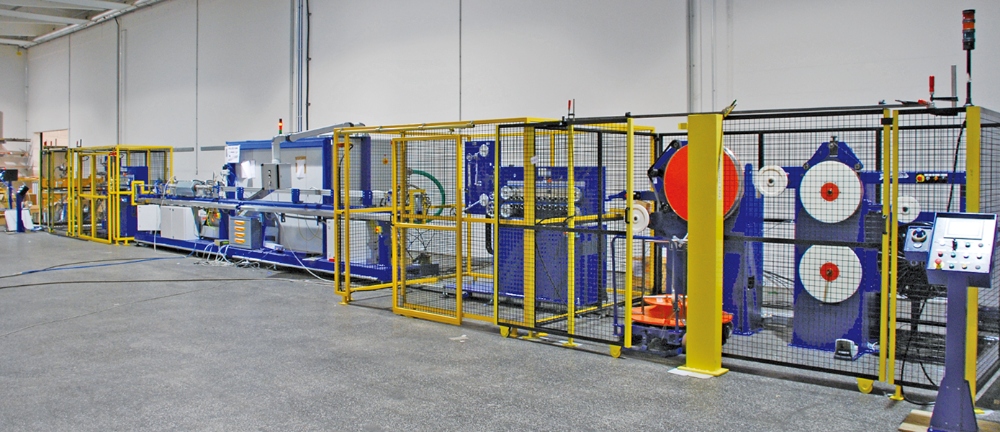
Achieving precise thickness is only the starting point for high-performance rolled products. The cross-sectional profile—often described by crown and wedge—directly influences how the material behaves in downstream forming, coating, and assembly. A strip that measures correctly at the centerline but carries excessive edge drop or a skewed profile will cause uneven loading, poor fit-up, and premature wear in customer processes. Modern mills therefore treat profile as a first-order control variable, using continuously variable crown actuators, work roll bending, and thermal mapping to hold the desired contour within a few microns across the full width.
Flatness goes beyond visible wave or buckle. It reflects the internal stress balance created during rolling and cooling. When a strip leaves the mill with uneven residual stresses, it may appear flat while coiled but spring into edge waves, center buckles, or quarter buckles after slitting or tension release. Controlling flatness demands real-time feedback from shape rolls, along with differential cooling and zone-controlled tension. The most effective lines integrate this data with predictive models that anticipate how thermal contraction and phase transformation will redistribute stress, allowing corrections before the defect becomes locked into the strip.
Surface integrity is the least discussed but most consequential factor for many applications. Roughness, peak count, and the presence of micro-cracks, rolled-in scale, or transfer marks determine paint adhesion, fatigue life, and the ability to achieve uniform coatings. A surface that passes a simple visual check can still fail under forming strains or exposure to corrosive environments. Rigorous control of roll surface texture, lubrication film stability, and descaling parameters preserves the near-surface microstructure and keeps roughness within a tight band—often measured in microinches—so that the final product performs as intended in critical end uses.
Alloy Intelligence: Matching Material Behavior to Roll Pass Design
Roll pass design has traditionally leaned on empirical rules and operator experience, but those shortcuts fall apart when shifting between steel grades. A microalloyed bar with a steep flow-stress curve behaves nothing like a plain carbon round under the same reduction schedule. Alloy intelligence means feeding actual deformation data—yield strength at temperature, strain-rate sensitivity, recrystallization kinetics—into the pass sequence before the first groove is cut.
The practical payoff shows up in spread prediction and groove filling. When material behavior is treated as a variable rather than a constant, pass designers can adjust relief angles, roll gaps, and interstand tensions to keep the section stable. Alloys that widen excessively or resist lateral flow need different entry radii and side-wall clearances, and those differences are rarely obvious from chemistry alone.
Modern shops pair reduced-order models with pilot rolling trials, updating the pass schedule as new thermomechanical data arrives. This feedback loop prevents underfilled passes, surface lapping, and excessive roll wear—problems that often trace back to forcing a generic pass design onto a demanding alloy.
Real-Time Feedback Loops: The Quiet Force Behind Consistent Accuracy
Real-time feedback loops work quietly in the background, constantly comparing what was expected with what actually happened. When a system gets instant information about its own performance, it can make small, almost invisible corrections before errors grow large enough to matter. This ongoing adjustment is what keeps results steady over time, even as conditions shift or new data patterns emerge.
Without this kind of immediate signal, accuracy would depend on occasional manual reviews or periodic recalibrations — both of which leave room for drift. A well-designed feedback loop doesn't need attention; it simply feeds the outcome back into the process, allowing the system to learn from every single interaction. That steady accumulation of micro-adjustments is often the difference between a tool that works reliably and one that slowly falls out of alignment.
The real power comes from how unobtrusive the mechanism is. Users rarely notice when a system is fine-tuning itself in response to live data, but they do notice when results stay consistently trustworthy. That quiet consistency builds confidence over time, turning real-time feedback into an unsung driver of long-term accuracy.
From EV Battery Foils to Aerospace Skins: Where Tight Tolerances Pay Off
When you're rolling aluminum foil down to 6 microns for a lithium-ion cell, a deviation of half a micron changes how evenly the active material coats, which in turn affects charge cycles and heat buildup. The tolerances here aren't about aesthetics; they're about preventing dendrite growth and keeping a pack from swelling after a few hundred cycles.
On an aircraft wing, skin panels stretch several meters but still need to match the underlying ribs within fractions of a millimeter. Any step or gap disturbs airflow, adds drag, and forces extra riveting or shimming during assembly. The payoff isn't just a smoother ride—it's the difference between hitting fuel burn targets or watching a design get heavier with every fix.
Both fields push suppliers toward closed-loop gauge control, laser measurement, and tighter incoming inspection. The ones who master it don't advertise "precision" as a buzzword; they deliver coils and panels that fit the first time, every time.
Automation's Next Act: Self-Correcting Mills and the Future of Precision
The shift from rigid, pre-programmed machining to systems that monitor their own output marks a quiet revolution on factory floors. Self-correcting mills now pair real-time metrology with adaptive toolpaths, adjusting for tool wear or thermal drift mid-cycle without pausing production. This isn't just faster; it's a fundamentally different relationship between machine and material, where tolerances tighten not from better blueprints but from constant, localized feedback.
What makes this next act compelling is how errors become inputs. A spindle that vibrates slightly off-spec triggers a micro-correction in the next pass, while a surface finish scan recalibrates the cutting depth for the following component. The result is a precision that accumulates rather than degrades over a batch run. Operators no longer chase deviations after the fact; the mill anticipates them.
Looking ahead, the real promise lies in distributed learning. When one self-correcting mill discovers a compensation strategy for a particular alloy or tool geometry, that insight can propagate across a fleet. Precision stops being a local achievement and becomes a networked, evolving standard. The factory that learns from itself is the one that will define the next decade of manufacturing.
FAQ
Chinese manufacturers have invested heavily in CNC machining, laser alignment, and servo-driven roll gap controls. Many mills now hold thickness tolerances within ±0.005 mm across full coil lengths, which used to be the exclusive domain of a few European brands. The combination of modular design, quick roll change systems, and real-time thickness feedback helps deliver that consistency without a premium price tag.
You'll find them in automotive body panel production, battery electrode calendaring for EVs, stainless steel foil for electronics, and high-end architectural cladding. The common thread is a need for uniform thickness and flatness over long runs. Chinese mills have become especially popular in copper and aluminum strip processing because they handle thin gauges without edge cracking.
It starts with the mill housing. Many use finite element analysis to reduce deflection under load, then pair that with hydraulic AGC (automatic gauge control) and work roll bending. Temperature compensation systems are also standard now, adjusting for thermal expansion so the morning's first coil and the afternoon's last coil measure the same. It's less about one breakthrough and more about layering these controls properly.
Carbon steel, stainless steel, aluminum, copper, titanium, and even some nickel alloys. For softer metals like aluminum and copper, mills are often configured with lower separating forces and polished rolls to avoid surface marks. Harder alloys need higher rigidity frames and more aggressive cooling, which Chinese builders now offer as factory options rather than custom retrofits.
The gap has narrowed a lot in the last decade. Top-tier Chinese builders use imported bearings, grind rolls on German or Swiss machines, and follow ISO 9001 plus often ISO 14001. You still need to vet the supplier carefully because there's a wide range of quality. But for standard 4-high and 6-high cold mills, many Chinese models now match the accuracy of mid-range European equipment at roughly 60-70% of the cost.
Ask for actual thickness deviation logs from installed mills, not just spec sheets. Look for a supplier that does in-house roll grinding and has a track record in your specific material. Visit a reference site running similar gauge and width for at least a year. Also check whether they provide local service support or rely on remote diagnosis, because downtime costs more than the initial discount.
When strip thickness and flatness are consistent, downstream operations like stamping, slitting, or coating run faster with fewer stoppages. One automotive stamping plant reported a 12% drop in die wear after switching to a precision Chinese rolling mill because the incoming coil no longer had hard and soft spots. Less variation also means you can use thinner starting gauge and still meet final specs, saving raw material.
Regular roll grinding and bearing inspection are non-negotiable. Hydraulic fluids need scheduled analysis to catch contamination before it affects AGC response. Check backup roll chocks for wear every 500-1000 running hours, and recalibrate thickness gauges monthly. Many Chinese mills now ship with vibration monitoring sensors that alert operators to bearing issues long before they affect strip quality.
Conclusion
Modern Chinese precision rolling mills have moved well beyond simple thickness reduction. The core engineering now operates at the micron level, with hydraulic gap control and roll bending systems that maintain tolerances once thought impossible for continuous strip production. But achieving true flatness and profile consistency requires more than a narrow gauge window. Mill designers integrate work roll crown adjustment, multi-zone cooling, and edge drop compensation to keep the entire width of the strip within a few microns of target. At the same time, surface integrity is protected through roll surface texturing and lubrication strategies tuned to each alloy family. Roll pass design is no longer a generic sequence; it is built around the specific strain hardening, recrystallization, and friction behavior of materials ranging from high-strength steel to soft aluminum and copper foils. This alloy intelligence means every pass contributes to shape control rather than fighting it.
Real-time feedback loops quietly hold the process together. Laser Doppler velocimeters, X-ray thickness gauges, and flatness measurement rolls feed data into model predictive controllers that adjust roll gap, tension, and spray patterns every few milliseconds. This closed-loop response eliminates slow drift and compensates for incoming coil variation before it becomes product defect. The payoff shows in demanding applications: lithium battery foils rolled to ±1 μm thickness with mirror finish for stable electrode coating, and aerospace skin panels where subtle waviness would compromise aerodynamic performance. Looking ahead, self-correcting mills are emerging. These systems combine historical run data with real-time signals to predict roll wear and thermal crown changes, then automatically reschedule passes or adjust bending forces. The result is a shift from reactive quality control to true autonomous precision shaping, with fewer operator interventions and consistently tighter tolerances across long production campaigns.
Contact Us
Contact Person: Rayna
Email: [email protected]
Tel/WhatsApp: 86 -173 1474 6343
Website: https://www.grmrollingmill.com/