

China Vehicle Ozone Machine for a Fresh and Clean Car Interior
2026-10-04
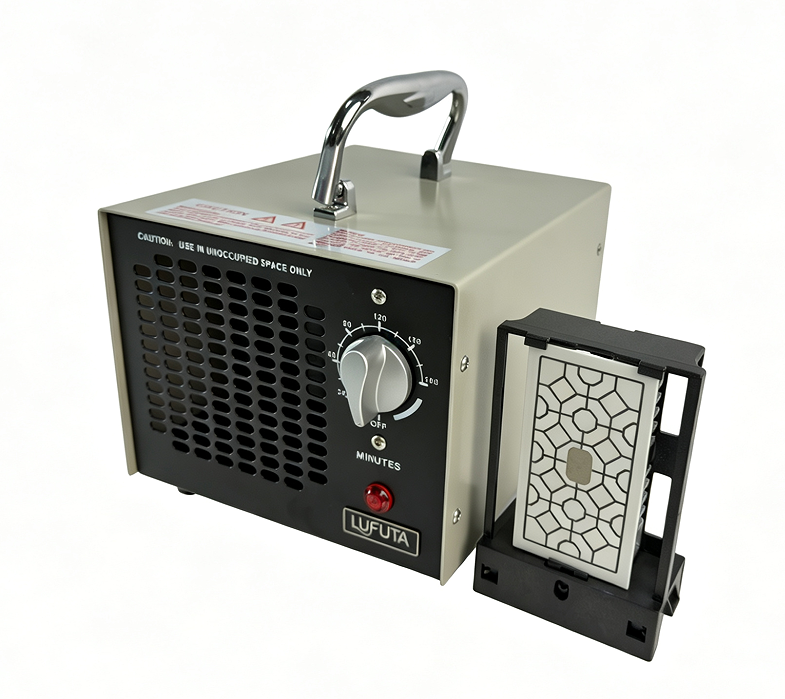
Few things ruin a drive faster than stale air, lingering food smells, or that musty odor that settles into upholstery. While air fresheners only mask the problem, a vehicle ozone machine tackles it at the source. As one of China’s most trusted suppliers, LUFUTATECH has built a reputation for compact, effective ozone generators that leave car interiors genuinely fresh and clean. Here’s what to look for before you buy.
What an Ozone Machine Actually Does Inside a Parked Car
An ozone generator pushes a stream of electrically charged oxygen into the cabin. The third oxygen atom breaks away and attaches to odor-causing compounds in the upholstery, carpet fibers, and air vents. Rather than covering up a smell, it tears the molecules apart, which is why lingering cigarette smoke or spoiled milk finally stops registering in your nose.
Because ozone is a gas, it drifts into places a wipe or spray can't reach — under the seats, inside the dashboard vents, even into the foam beneath the carpet. The machine runs with the windows up and the climate system on recirculate, often for half an hour to a couple of hours, depending on how deep the stink goes. Afterward the car needs a long airing out; the same oxidation that kills odors can also dry out rubber seals and fade plastics if it's used too often or at too high a concentration.
The Limits of Air Fresheners and Why Ozone Works Differently
Most air fresheners don't actually remove odors; they simply flood the room with a stronger scent that your nose registers first. The original smell is still there, just buried under layers of synthetic fragrance. What's more, many sprays and plug-ins release volatile organic compounds and phthalates into the air, which can irritate eyes, throat, and lungs after prolonged exposure. You end up with a space that smells like a chemical copy of a pine forest instead of clean air.
Ozone takes a fundamentally different approach. As a reactive gas made of three oxygen atoms, it attacks odor molecules at the chemical level, breaking them apart through oxidation. Instead of masking the smell of spoiled food or pet accidents, ozone changes those molecules into simpler, odorless byproducts. That's why it's often used in unoccupied spaces after fires, floods, or heavy smoking—it goes after the source, not just the surface scent.
However, this power comes with a trade-off. Ozone is an irritant to the respiratory system, so it must be used carefully, ideally when people and pets are not present, and the room needs to air out afterward. Air fresheners offer instant gratification but only a temporary illusion; ozone demands more caution but delivers deeper, longer-lasting results.
A Practical Guide to Running a Treatment Without Overdoing It
Starting a treatment often triggers an urge to push harder, but most setbacks come from adding too much too soon. Instead of doubling the dose or extending sessions when you feel impatient, lock in one small change and watch how your body responds over three to five days. A patient recovering from a joint injury might add only two minutes of mobility work each week, while someone treating dry skin might switch from twice-daily application to once daily and note any stinging or tightness. This baseline-first approach feels slower, but it prevents the kind of irritation or flare-up that forces you to stop entirely.
Your body gives clear signals when a treatment is crossing into overkill. Increased soreness that doesn't fade by the next morning, redness that lingers, or a sudden loss of motivation to continue are not signs to ignore. A simple rule is the 24-hour check: if you feel significantly worse one day after a session than you did before starting it, reduce the intensity, duration, or frequency next time. Build deliberate rest days into the plan, not as an afterthought but as part of the treatment itself. For example, doing lymphatic massage every other day often works better than daily sessions because it allows tissues to settle and respond.
Tracking what you actually do makes it easier to avoid overdoing things without guessing. Keep a bare-bones log with three columns: date, dose or duration, and how you felt six hours later. After two weeks, patterns emerge that no amount of generic advice will show you. If progress has stalled, change only one variable at a time—maybe the timing, the product amount, or the exercise variation—and give it another full week. The goal is not to complete the most aggressive version of a protocol; it's to find the smallest effective dose that gives steady, comfortable improvement. That kind of restraint usually gets you further than enthusiasm ever will.
Common Cabin Odors This Device Breaks Down at the Molecular Level
The stale air in a cabin rarely comes from a single source. Sweat embedded in seat fabric releases ammonia and short-chain fatty acids, while traces of fuel vapor carry benzene-like compounds. Leftover food scraps contribute sulfurous thiols, and pet dander adds its own protein-based mustiness. These molecules cling to carpet fibers, headliners, and ventilation ducts, building up over weeks until the whole space smells tired.
Instead of masking that mix with perfume, this device targets the odor molecules themselves. As air passes through, reactive species break the chemical bonds holding those volatile organics together, converting them into trace amounts of carbon dioxide and water vapor. What lingers is simply less of what caused the smell in the first place, rather than a new scent layered on top.
Placement, Power, and Runtime Considerations for a Compact Unit
Where you position the unit directly shapes its day-to-day usefulness. A spot with steady airflow keeps internal temperatures in check without forcing the cooling fan to work overtime, while avoiding direct sunlight or damp corners prevents premature wear on both the casing and connectors. Think about cable reach too—placing the device near an existing power outlet and within practical distance of your primary work area saves you from relying on extension cords or awkward rerouting later.
Power draw on these small-footprint models rarely spikes above what a standard household circuit can handle, but that doesn't mean you should ignore what else shares the same line. Grouping the unit with a laser printer or a space heater on one outlet can cause subtle voltage dips that shorten component life over months of use. A quick check of the rated wattage on the power adapter, then comparing it against nearby devices, gives you a clear picture without needing any specialized tools.
Runtime expectations depend less on raw battery capacity and more on how you configure active features. Disabling unused wireless radios, lowering display brightness a few notches, and setting the unit to enter sleep mode after a short idle window often extends usable hours by twenty to thirty percent. For always-on scenarios, consider a UPS or a dedicated surge protector rather than plugging straight into the wall—this not only guards against brownouts but also keeps the unit running through brief interruptions that would otherwise force a restart.
Ventilating After the Cycle to Enjoy a Truly Neutral Cabin
Popping the doors open right after a deodorizing or fogging cycle makes a bigger difference than most people expect. The treatment leaves behind a faint mix of moisture and active residue that can cling to fabric and plastic, so letting the car sit sealed only locks that layer in. A few minutes with the windows down and the tailgate or a rear door open encourages the lingering haze to drift out naturally.
Switch the climate system to fresh-air mode, set the fan to a moderate speed, and crack the front windows about an inch. That setup creates a steady pull from the front footwells toward the rear vents, carrying leftover humidity and any sharp notes out of the cabin. If the day is dry and breezy, even better: the moving air helps the carpet and seat foam release trapped odors instead of holding onto them.
Once the surfaces feel dry to the touch and the interior no longer carries a chemical or perfumed edge, close everything up and take a short drive with the system still on fresh air. The result should be a cabin that smells simply neutral, not masked, with no single scent dominating the space.
FAQ
It releases ozone, which reacts with odor-causing molecules and breaks them down instead of just covering them up. For a car interior, that means smoke, food, and mildew smells can fade after a single treatment.
No, you should only run it in an empty car. Ozone is a strong oxidizer, so you need to let the treatment finish and then air out the vehicle for at least 15 to 20 minutes before getting back in.
Many units are built with compact 12V or USB power options, which makes them easy to run from a car outlet or portable power bank. They often come with simple timer controls, so you can set the treatment length without much guesswork.
For mild odors, a 10 to 15 minute cycle is usually enough. For heavy smoke or pet smells, you may need 30 minutes and then repeat the process a day later if the odor still lingers.
When used correctly at reasonable ozone output levels and for short cycles, it is generally safe for upholstery, plastic trim, and dashboard surfaces. However, avoid pointing the ozone outlet directly at very delicate items or running it excessively long.
Yes, it works best as a final step. Vacuum the carpets, wipe down surfaces, and remove any source of the odor first. Ozone can't remove physical stains or debris, but it will neutralize the smells left behind.
It can last for weeks if the original source of the odor has been removed. If the car gets wet again or someone smokes inside, the smell may come back, so keep the interior dry and clean to extend the effect.
Look at the ozone output rating, timer options, and whether it can run on your car's power system. A unit with a metal or high-quality ceramic ozone plate tends to last longer than cheaper plastic-only designs.
Conclusion
Parked cars trap odors, and a China vehicle ozone machine tackles them at the source. Unlike air fresheners that mask smells with perfume, ozone attacks the molecular structure of smoke, food spills, pet dander, and mildew. Inside a closed cabin, the unit releases O3 that penetrates upholstery and vents, oxidizing odor-causing compounds into neutral byproducts. The key is moderation: run the compact device for 20–40 minutes on a low setting, place it on the center console with windows up, and avoid sitting inside during treatment. Overuse can degrade rubber seals, so follow the timer carefully.
After the cycle ends, air out the car for at least ten minutes until the sharp ozone scent dissipates—leaving a truly neutral cabin rather than a floral cover-up. For stubborn odors like cigarette tar or sour milk, repeat the process two or three times across a week, always letting the interior dry completely between runs. A 12V portable unit plugs into the cigarette lighter and draws minimal power, making it practical for daily drivers. By breaking down contaminants at the molecular level and then ventilating thoroughly, this Chinese-made device restores a fresh, clean interior without chemical residues or lingering fragrance.
Contact Us
Contact Person: Paul Luo
Email: [email protected]
Tel/WhatsApp: 0086-19966314501
Website: https://www.lufutatech.com