

China Sandpaper Buying Tips for Flawless Surface Finishing
2026-11-16
Every craftsman knows that a flawless finish starts long before the final stroke of varnish or polish—it begins with the right sandpaper. But in China’s vast abrasive market, where grit numbers, backing materials, and regional suppliers vary wildly, even seasoned buyers can end up with uneven scratches or premature clogging. Whether you’re prepping automotive panels, fine furniture, or metal surfaces, the difference between a mirror-like sheen and a frustrating rework often comes down to overlooked details in sourcing. In this guide, we’ll cut through the noise with practical, field-tested buying tips—and introduce you to SHENZHEN SUN ABRASIVES, a brand that has quietly become a go-to for professionals who refuse to compromise on surface quality.
Grit Numbers Decoded So You Stop Buying the Wrong Sheets
The grit number on a sanding sheet isn’t a measure of quality or durability—it’s simply how many abrasive particles fit through a square inch of mesh. A 60-grit sheet has big, aggressive particles that chew through material fast but leave deep scratches. Flip to 220 and you’re working with much finer particles that polish rather than gouge. Most mistakes happen when people assume higher always means better; it doesn’t.
For raw wood or stripping old paint, start around 80 or 100 grit to level the surface, then move up to 150 or 180 before finishing. If you jump straight to 400 on a rough board, you’ll spend hours and barely change the texture. The rule is simple: don’t skip more than one grit step at a time. Skipping from 80 to 220 means you’ll see swirl marks the moment you apply stain.
Also watch the backing. Paper sheets tear easily on sharp corners, while cloth-backed sheets last longer on metal or curved surfaces. And don’t confuse sanding sheets with sanding sponges—same grit number, very different pressure distribution. Check the label for “C-weight” or “D-weight” paper if you’re doing heavy work; it’ll save you from shredding a sheet in five minutes.
The Backing Layer Most Shoppers Ignore Until the Paper Rips
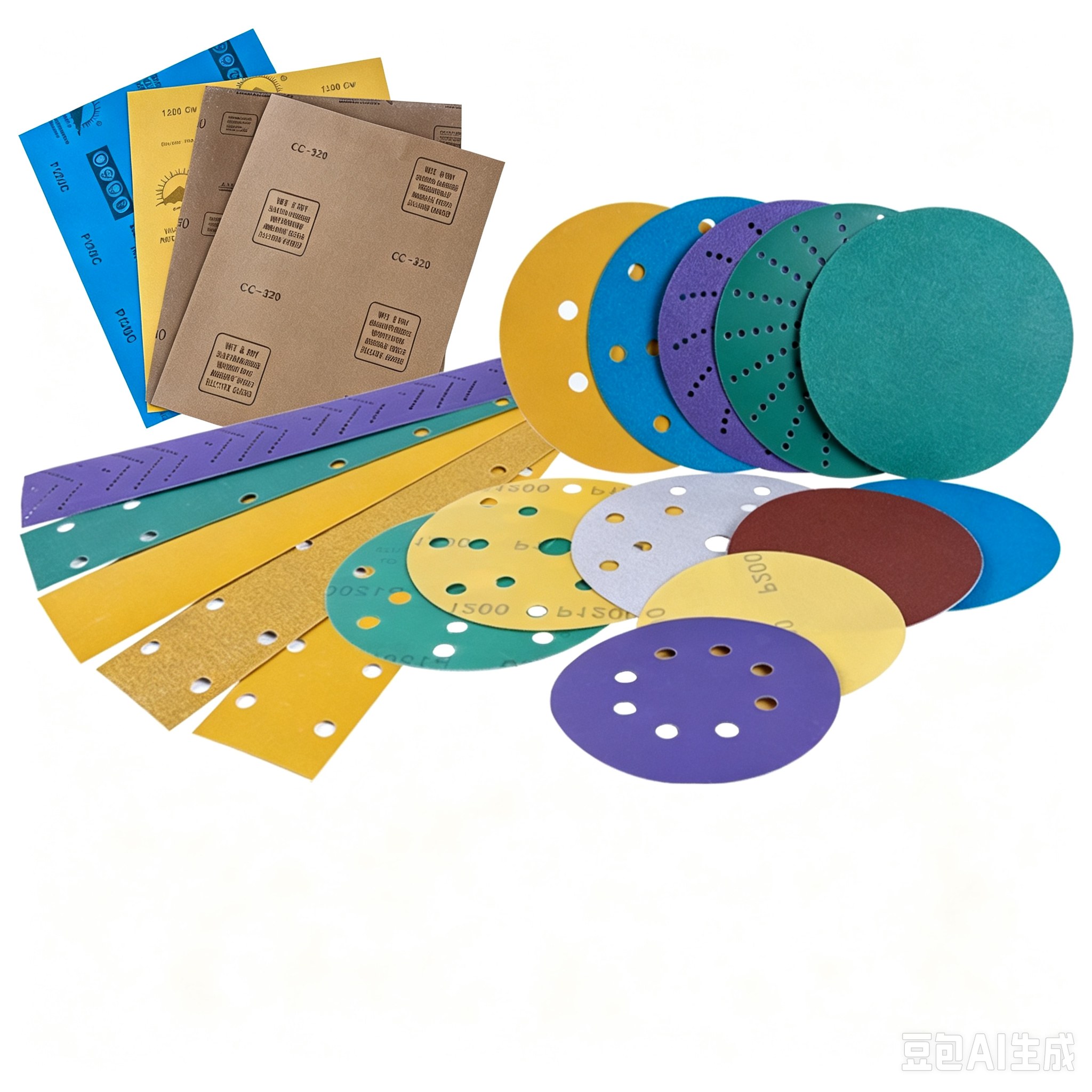
That thin sheet behind the printed side gets almost no attention until you’re mid-peel and it tears into jagged strips. It’s not just a protective scrap; it controls how cleanly the adhesive releases and how much damage the face paper takes during handling. A quality backing peels away in one steady, satisfying motion. A cheap one fights back, rips in pieces, and makes you want to toss the whole roll.
The difference usually comes down to the release coating and the paper’s thickness. A smooth silicone or wax finish lets the adhesive let go without grabbing, while a paper that’s too thin or unevenly bonded will shred under your fingers. You might also notice tiny fibers left behind on the sticky side, which then transfer to your wall or project and ruin the finish.
Before committing to a full roll, test a corner. Peel back about two inches at a slow, steady angle. If the backing splits, wrinkles, or refuses to come off in one piece, move on. This one small habit can save you from ruined cuts and wasted money on projects that should have been simple.
Open-Coat vs. Closed-Coat: The Split No One Warns You About
The packaging rarely tells you this, but the gap between abrasive grains changes everything. Closed-coat paper packs particles edge to edge, so every pass bites hard and fast. That sounds great until you sand something like pine or old varnish and the paper turns into a gummy mess. Open-coat spreads the grains out, leaving room for dust and resin to escape instead of welding themselves into the surface.
For metal or dense hardwood, closed-coat is often the right call because you want maximum cutting action and the waste is fine enough to clear. But if the material is soft, sticky, or heat-sensitive, open-coat prevents the classic clogging death spiral where you push harder, generate more heat, and ruin both the abrasive and the workpiece. The difference shows up fastest on a random-orbit sander, where a closed-coat disc can go from aggressive to useless in seconds on a painted surface.
There is no universal winner, just a trade-off between raw speed and clog resistance. Many people buy closed-coat by default because it looks more aggressive on the shelf, then blame the tool or technique when the paper loads up. Swapping to open-coat for those troublesome materials feels like cheating because it keeps cutting long after the other type has quit.
Clogged After Five Minutes? Blame the Bond, Not the Grit
The usual suspect when a nozzle clogs mid-print is the abrasive grit in composite filaments—but that assumption rarely survives the first five minutes. By then, the real culprit has already done its damage: the polymer matrix itself. Resins formulated for high flow at melt temperature can shear thin so aggressively that they leave behind a sticky, thermally degraded layer on the barrel wall. It’s not the particles blocking the orifice; it’s the bond between polymer and metal that gradually builds a constriction.
That bond forms because many filled materials use maleated or silane-grafted carriers to improve particle dispersion, and those chemical hooks also latch onto the steel or brass surfaces. Once a thin film adheres, it acts as a nucleation site for more degradation products, carbonized flecks, and charred additives. In under five minutes, the effective diameter shrinks enough to spike backpressure, while the grit remains suspended and harmless. Cleaning with a wire brush or cold pull only strips the loose debris—it does not break the molecular adhesion at the wall.
Next time a print stalls early, ignore the grit size and inspect the barrel coating instead. A polished, low-energy surface or a dedicated purge compound formulated to disrupt that polymer-metal bond will do more than any finer mesh filter. The grit was never the enemy; the bond was.
Fake Alumina Is Everywhere—Here's How to Catch It Before Checkout
Markets are flooded with alumina that isn't what it claims to be—some sellers cut it with cheap fillers, others pass off recycled grit as virgin material. Before you click buy, ignore the glossy photos and look at the numbers that matter. Genuine high-purity alumina (99.7% or above) has a specific gravity around 3.95 g/cm³ and a Mohs hardness of 9. If a supplier's price seems too good to be true, it usually is—quartz or glass powder substitutes cost a fraction but will wreck your process downstream.
Try a quick tactile check when the sample arrives: rub a pinch between your fingers. Real alumina feels slightly gritty and resists crushing, while fake blends often feel smooth or chalky and crumble under nail pressure. Also ask for a batch-specific purity certificate or XRF report. A vendor who stalls or hands you a generic brochure instead of lab data is telling you everything you need to know. Spending two extra minutes before checkout beats scrapping an entire production run later.
Mirror-Smooth Results on a Budget: What Chinese Suppliers Won't Tell You
Most buyers assume a flawless, mirror-smooth finish means paying premium prices for top-tier materials or expensive post-processing. But that's only half the story. The real secret—one that many Chinese suppliers quietly keep to themselves—is that achieving that glass-like surface on a budget often comes down to a few overlooked tweaks in mold design, polishing technique, and even packaging choices. They won't volunteer this because it eats into their upsell margins, but once you know where to look, the savings are significant.
For example, instead of specifying a high-cost S136 tool steel with a mirror polish rating of A1, you can often achieve nearly identical visual results with a mid-range 718H steel combined with a two-stage manual polishing process that most suppliers can do in-house. The trick is to request a 'sample polish panel' before committing to full production—something few buyers think to ask for. Suppliers who are confident in their process will agree, and those who push back are often trying to steer you toward pricier options.
Another under-the-radar lever is your part geometry. Subtle changes like adding a 0.5° draft angle or repositioning the gate location can cut polishing time by 30% or more, which directly lowers your unit cost without any visible difference in the final surface. And if you're willing to accept a slightly lower gloss level—say, A2 instead of A1—you can often negotiate a 15-20% price reduction while still getting a finish that looks mirror-smooth to the naked eye. These are the kinds of practical, budget-friendly moves that rarely show up in official supplier quotes.
FAQ
Look at the grit consistency—cheap batches often have uneven abrasive particles that leave visible scratches even after you work through the grades.
Ask the supplier whether it's a waterproof latex or resin-bonded paper. A quick test is to soak a small strip in water for ten minutes; if the backing softens or the grit rubs off, it won't survive actual use.
Factories usually give you more control over grit standards and backing specs, but trading companies can be useful for smaller mixed orders. For serious finishing work, direct factory contact with a clear spec sheet is the safer route.
Yes, clusters around Hubei and Jiangsu tend to have more experienced abrasive manufacturers, but don't rely on region alone—request a sample batch from any supplier before committing.
Take the same substrate you normally finish and run a side-by-side comparison with your current sandpaper. Count the passes needed to remove the previous scratch pattern and check for clogging after each pass.
Look for an open-coat construction and a stearate coating. Ask the supplier whether the abrasive is open or closed coat—many Chinese manufacturers can add anti-clogging agents if you specify it.
Confirm whether it's aluminum oxide, silicon carbide, or a blend. For bare wood, aluminum oxide is usually fine; for harder finishes or metal, you may want silicon carbide. Also verify the grain is properly heat-treated and not recycled.
Not automatically. Specify a tolerance for backing weight and overall thickness in your purchase order. Without that, you may see visual and performance differences between shipments.
Conclusion
Flawless surface work starts long before you touch a sander, and if you're ordering from Chinese suppliers, the first trap is grit confusion. Cheap listings often use inconsistent grading, so don't assume a "400" means the same from every factory. Stick to a clear progression—80, 120, 180, 240, 320, 400, 600—and never skip more than one step if you want scratches to vanish completely. Equally important is the backing layer, which most buyers ignore until the paper tears mid-job. A stiff paper backing is fine for flat wood, but for curves or wet sanding you need a flexible latex or film backing. Chinese suppliers often sell paper-backed sheets at a tempting price; they'll fail exactly when you're pressing into a corner. Ask for the backing weight in grams per square meter and request a sample to bend it yourself.
The coating style matters more than the grit number once you start sanding resinous woods or painted surfaces. Open-coat sheets have wider spacing between abrasive grains, so they shed dust instead of clogging. Closed-coat cuts faster but loads up after five minutes—a problem most people wrongly blame on the grit. The real culprit is often the resin bond. Cheap bond systems soften with heat and release abrasive too early or hold it too long, ruining both cut rate and finish. Watch for fake alumina as well. Chinese factories sometimes blend in low-grade brown fused alumina or even garnet while labeling it white or premium alumina. Rub a small area against glass; if the abrasive dulls quickly or leaves uneven grooves, it's likely not the real thing. For mirror-smooth results on a budget, skip the expensive silicon carbide and ask a supplier for semi-open coat premium alumina on a latex backing. It won't be the cheapest, but it'll outlast three packs of the low-cost sheets and give you an even, swirl-free surface without guessing.
Contact Us
Contact Person: Amanda Wang
Email: [email protected]
Tel/WhatsApp: +86-13602569854
Website: https://www.sunabrasives.com.cn