

China High Titanium White Masterbatch Key Benefits and Applications
2026-08-24
White masterbatch is one of those materials that rarely gets attention until it fails. Streaky film, blotchy injection parts, or fiber that loses its brightness after a few washes—these are the telltale signs of low titanium loading or poor dispersion. China has long been the world’s production hub for masterbatch, but not all suppliers push the limits the same way. High titanium white masterbatch changes the game by delivering maximum opacity, clean tonality, and processing stability even at high let-down ratios. In this post, we’ll break down the key benefits and the most demanding applications, from thin films to complex packaging, and show how Xinwancai is helping converters get brighter results with fewer headaches.
Why China's High Titanium White Masterbatch Excels in Cost-Performance
The cost edge of high titanium white masterbatch from China starts with raw material integration. Major producers in East and South China hold long-term contracts with local titanium dioxide plants, bypassing trader markups and keeping rutile TiO2 procurement well below international spot prices. At the same time, continuous twin-screw extrusion lines keep energy use and scrap rates low, and those savings show up directly in the per-kilogram price.
High loading is not just about adding more filler; dispersion quality decides whether the extra titanium dioxide actually works. Top domestic masterbatches maintain strong hiding power and low filter pressure even above 70% TiO2 content, which lets downstream users dose less material to reach the same whiteness or opacity. In injection molding and blown film trials, this can cut addition rates by 10–15% while reducing screen changes, pushing the true coloring cost per unit down noticeably.
Another often overlooked factor is the hidden savings from customization. Chinese manufacturers routinely offer small trial batches and rapid formula adjustments, so customers do not pay for performance they do not need. Examples include developing a special carrier for recycled resin or fine-tuning the TiO2 grade for a specific film thickness, a flexibility that has proven popular in Southeast Asia, the Middle East, and Latin America. Over long-term supply relationships, stable batch consistency and quick technical support further spread the total cost of use.
Achieving Deep Opacity at Lower Addition Rates
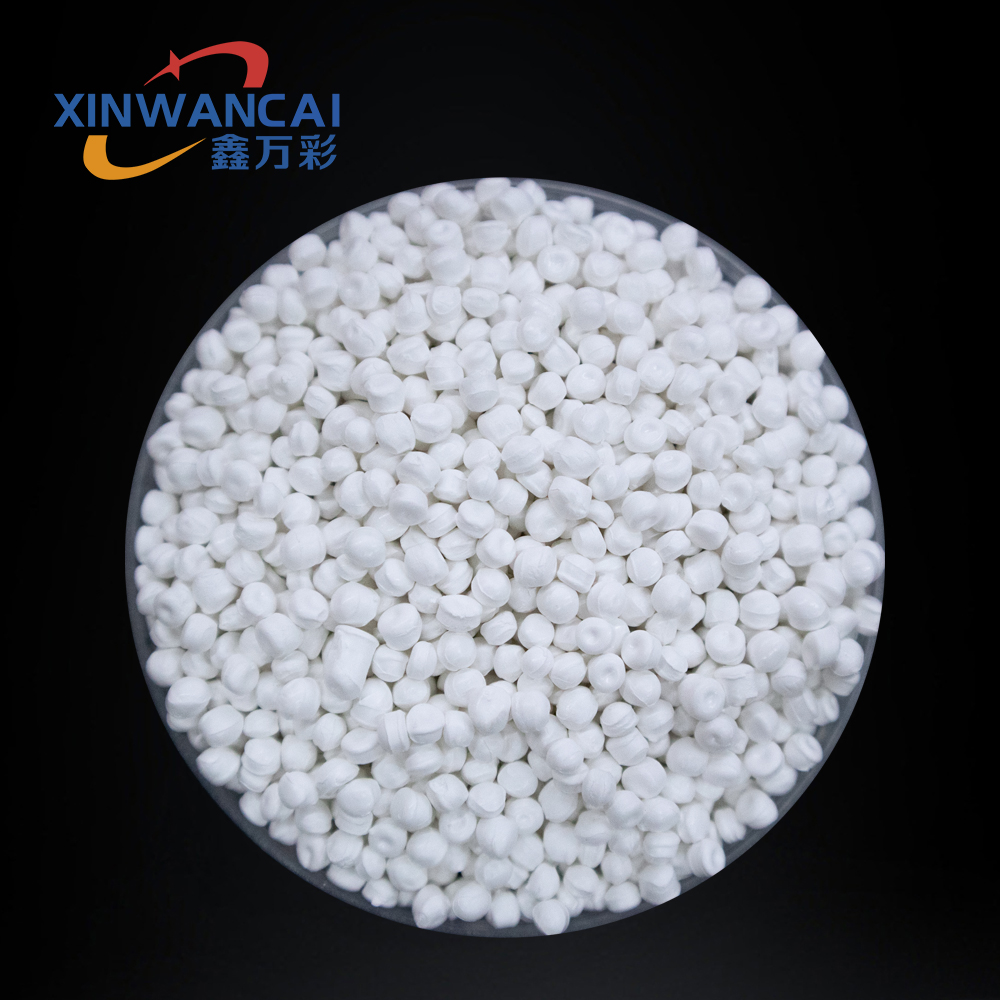
Pigment efficiency is rarely about adding more; it is about making every particle count. By narrowing the particle size distribution and shifting the median closer to the optimal scattering wavelength for visible light, manufacturers can push opacity upward without increasing loading. This approach reduces crowding effects and minimises the agglomeration that typically robs a formulation of its hiding power.
Surface treatments play an equally decisive role. A well-chosen coating on the pigment can improve wetting and dispersion, allowing individual particles to separate fully in the binder. When particles remain discrete, they present more interfaces for light scattering, which means the same addition rate delivers noticeably better hide. Some newer treatments also reduce the tendency of particles to flocculate over time, keeping long-term opacity stable.
Formulators can further leverage low addition rates by pairing high-performance pigments with functional extenders. Hollow polymer spheres or calcined clays with carefully engineered voids create additional scattering sites without introducing extra weight or cost. The result is a formulation that reaches target opacity with significantly less primary pigment, improving both economics and film properties such as flexibility and adhesion.
Film Blowing and Sheet Extrusion: Where Whiteness Needs to Hold Up
In film blowing, the polymer melt stretches upward into a thin bubble before collapsing into flat rolls. Any hint of yellowing, gel specks, or uneven pigment dispersion becomes magnified across hundreds of square meters. Whiteness here isn't just a color choice—it's a quality signal. Resin suppliers and compounders chase high-opacity grades where titanium dioxide loading stays consistent shot after shot, because a drift of half a percent can shift the entire roll from crisp white to a tired cream.
Sheet extrusion tells a similar story with different geometry. The melt exits a flat die and cools on polished rolls, where surface defects like die lines or voids stand out against white backgrounds. Thermoformers and fabricators watch for uneven gloss or faint grey streaks that indicate poor dispersion or thermal degradation. Whiteness must hold up not only right off the line but through downstream heating, trimming, and years of UV exposure in food packaging, appliance liners, or graphic arts boards.
The real test comes when regrind enters the equation. Edge trim and scrap get reintroduced at 20, 30, sometimes 40 percent, and each pass through the extruder adds a touch more heat history. A robust white masterbatch keeps its brightness and hiding power despite that thermal abuse, while a lesser formulation drifts yellow and forces downgauging or rejection. That's why converters keep a close eye on b* values and opacity readings from incoming resin lots—whiteness has to earn its place in the process, not just on the datasheet.
Injection and Blow Molding Applications That Demand Consistency
Plastic components for medical devices, automotive fuel systems, and food packaging rarely tolerate dimensional drift. A syringe barrel that warps by half a millimeter can jam an auto-injector, while an uneven parison wall in a fuel tank risks stress cracking under pressure. These are not places where you tweak the process later—the mold, the melt temperature, and the cooling rate have to align on the first cycle.
Injection molding thrives on repeatability: screw recovery time, holding pressure, and cavity filling each leave a fingerprint on the part. Blow molding adds another layer—parison sag, inflation speed, and venting must stay inside a narrow window or wall thickness wanders. Operators who log shot-to-shot variations and adjust before parts go out of spec find that consistency is less about a perfect machine and more about refusing to ignore small shifts.
The payoff shows up downstream. Assembly robots expect the same pick point every time. Leak testers reject fewer bottles. And when a customer audits your process, the data tells a story of control, not excuses. That kind of reliability doesn't come from a single inspection—it's built into every heat cycle, every clamp movement, and every decision to stop the line rather than ship a borderline part.
The Effect of TiO2 Dispersion on Surface Quality and Productivity
Poorly dispersed TiO2 rarely announces itself as a total failure; instead it leaves subtle fingerprints across the finished surface. Micro-agglomerates scatter light unevenly, which lowers gloss and creates faint haze that becomes obvious when panels are viewed at low angles. Because titanium dioxide is such a strong opacifier, even small clusters force formulators to add more pigment or extend grinding time to reach acceptable hiding. The result is a film that looks close to right but never quite matches the clean, uniform appearance of a well-dispersed batch.
Dispersion quality also drives productivity in ways that are easy to underestimate. Incomplete wetting or insufficient shear leaves oversized particles that raise viscosity and demand extra letdown solvent, slowing down mixing and filtration. Millbase cycles lengthen, filter bags clog sooner, and clean-up between batches becomes more frequent. A dispersion that reaches the desired fineness quickly keeps the production line moving and reduces the need for rework, which is often the hidden cost behind pigment formulations that look inexpensive on paper.
The relationship is not linear. Pushing dispersion too hard can damage the TiO2 crystal surface and actually hurt durability, while stopping too early leaves the surface prone to haze and low DOI. The practical target is a narrow window where particle size distribution is tight enough for consistent appearance but not so over-processed that energy costs and cycle times eat into output. Operators who track grind gauge readings and tint strength together tend to find that point faster than those who rely on visual checks alone.
Carrier Resin Selection for Polyolefins and Engineering Plastics
Choosing an appropriate carrier resin starts with melt viscosity compatibility. For polyolefins, a low molecular weight polyethylene or polypropylene wax often works well because it disperses readily at processing temperatures without degrading the host polymer. In contrast, engineering plastics like polyamide or polycarbonate demand carriers with higher thermal stability and polar functionality, otherwise the masterbatch can phase separate or cause surface defects.
The chemical affinity between carrier and base resin matters just as much as rheology. A carrier that is too dissimilar can migrate to the part surface over time, leading to blooming or plate-out. Blending two carrier types, such as an ethylene copolymer with an acrylate modifier, sometimes gives better pigment wetting and mechanical property retention than a single resin. This approach is especially useful when the same masterbatch must serve both a polyolefin and a more demanding engineering thermoplastic.
Practical trials should include a range of let-down ratios and processing conditions. What performs well in a thin-wall injection molded part may fail in a thick extrusion profile due to different shear histories. Recording melt pressure, color development, and impact strength across those trials helps narrow down a carrier that balances dispersion quality, cost, and long-term stability without relying on generic recommendations.
FAQ
It typically contains a higher loading of titanium dioxide, often 60–80%, which gives it exceptional opacity and brightness. Chinese manufacturers have also refined dispersion techniques so the pigment distributes evenly without agglomerates, reducing streak marks in final plastic parts.
Injection molding, blow molding, film blowing, and sheet extrusion all perform well with it. The high pigment concentration means you need lower addition rates, which helps maintain mechanical properties while still achieving strong whiteness.
Yes, many grades comply with FDA and EU food-contact regulations, but you should confirm the specific certificate from your supplier. The titanium dioxide used is usually rutile grade, which has low heavy metal content and high purity.
Titanium dioxide naturally absorbs and scatters UV radiation, protecting the polymer matrix from degradation. Combined with UV stabilizers in the masterbatch, it can significantly extend the service life of outdoor furniture, crates, and agricultural film.
For most polypropylene applications, adding 2–4% of the masterbatch by weight is enough. However, thin films or parts that require complete opacity may need up to 6%. Always run a trial, because base resin color and processing temperature affect the final shade.
Chinese producers benefit from integrated supply chains for titanium dioxide and large-scale compounding, which often results in lower per-kilogram costs. But cost savings should not come at the expense of batch consistency, so look for suppliers with strict quality control data.
Poor dispersion leads to white specks, color streaks, or surface roughness. Reputable Chinese manufacturers use twin-screw extrusion and multiple filtration stages to break down pigment agglomerates. Some also apply organic surface treatments to the TiO2 before compounding.
At normal addition rates (2–5%), the impact on tensile strength and elongation is minimal because the carrier resin is compatible with the base polymer. Using a high-concentrate masterbatch actually reduces the total amount of carrier resin introduced, which can preserve original properties better than low-concentration alternatives.
Conclusion
China’s high titanium white masterbatch has moved beyond being a simple cost-cutting option. Granted, not every supplier gets this right, but those with tight process control do. The real advantage appears in the compounding room, where a well-formulated grade can reach a target L* value at 20–30% lower loading than conventional alternatives. That reduction matters not only for raw material cost but for screw torque, melt pressure, and cycle time. In film blowing and sheet extrusion, where thin gauges expose any dispersion flaw, the opacity holds up without streaks or fisheyes. Extruders report fewer screen pack changes, and that cumulative uptime often outweighs the invoice price difference.
Injection and blow molding bring a different set of demands. Color consistency from shot to shot becomes non-negotiable when parts are assembled side by side. A masterbatch with tight particle size distribution and good TiO2 wetting avoids the usual swirl marks and knit-line dullness. Carrier resin choice is where many formulations fall short. For polyolefins, an LDPE or PP-based carrier works well, but when switching to ABS, PC, or nylon, a mismatched carrier can cause delamination or splay. Chinese suppliers increasingly offer multi-carrier options, letting processors match the masterbatch to the host resin without losing the cost-per-kilo edge. The result is whiteness that survives heat history and shear without sacrificing throughput.
Contact Us
Contact Person: JACK
Email: [email protected]
Tel/WhatsApp: 86 18650130917
Website: https://www.xinwancai.com/