

China Halogen-Free Flame Retardant Advancements Transform Fire Safety Standards
2026-08-20
Fire safety standards are shifting in ways most people never notice—until their buildings, electronics, and vehicles rely on materials that resist flames without toxic smoke. China’s recent halogen-free flame retardant advancements are driving that quiet revolution, moving the industry away from legacy halogenated chemistry. For anyone tracking these changes, one name keeps appearing: X.X.F.R. Their approach is helping rewrite what safe means in a fire, and the implications reach far beyond the lab.
Why China’s Halogen-Free Shift Is Rewriting Fire Safety Rules
中国在经历几起重大火灾后,监管层对建筑材料的燃烧性能态度发生根本变化。GB 31247-2014标准的实施被许多工程师视为分水岭,它不再仅仅关心电缆是否点燃,而是量化燃烧热释放、烟气生成和火焰蔓延。公共场所、轨道交通和超高层建筑被要求采用无卤低烟电缆,这直接压缩了传统PVC和含卤阻燃体系的生存空间。无卤化因此从一个可选的技术路线,变成了主流安全基准。
这种变化最直接的后果是,阻燃设计的核心从抑制火焰转向保护逃生环境。过去大量使用的溴系阻燃剂虽然能快速熄灭明火,但火灾中释放的酸性气体和致密黑烟往往是致死主因。中国的新规则通过烟密度、pH值和电导率等指标,迫使制造商寻找新的阻燃途径。电缆配方开始大量引入氢氧化铝、氢氧化镁等矿物填料,这些材料吸热分解并释放水蒸气,能够稀释可燃气体,但添加量往往超过50%,使机械性能成为新的难题。
更深层次上,中国的无卤化正在重塑消防测试的逻辑。新的燃烧测试要求将多根电缆成束垂直安装,观察火焰是否沿电缆向上蔓延,并记录热释放速率峰值。这种真实的火灾场景模拟,淘汰了许多只在单根测试中表现良好的产品。制造商不得不在聚合物基体、协效阻燃剂和加工助剂之间反复调整平衡。一些企业开始探索纳米黏土、膨胀型阻燃剂和陶瓷化硅橡胶等方案,试图在不牺牲电气性能和柔韧性的前提下满足标准。这一过程已经超出单纯的材料替换,而是带动了整个阻燃技术体系的更新,其影响正在通过跨国供应链向外扩散。
Breakthrough Polymer Blends: Meeting Stricter Smoke and Toxicity Limits
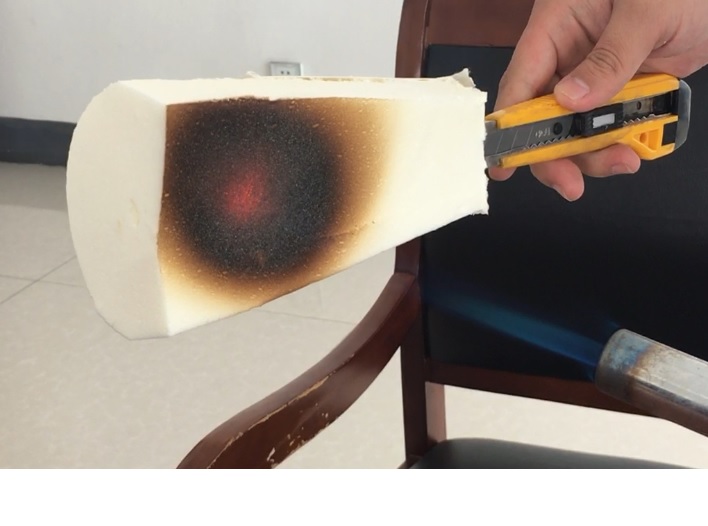
The evolution of safety regulations in transportation and construction has pushed material developers to rethink polymer formulations from the ground up. Traditional flame-retardant additives often trade smoke density for ignition resistance, leaving engineers caught between compliance and performance. Breakthrough polymer blends now use synergistic combinations of char-forming resins and low-smoke fillers to meet stricter smoke and toxicity limits without sacrificing mechanical strength. These blends are engineered so that, under heat, they create a stable insulating layer that suppresses both flame spread and the release of corrosive or toxic gases.
Recent advances focus on non-halogenated systems that reduce acid gas production while maintaining a high limiting oxygen index. By incorporating nano-clays, metal hydroxides, and phosphorus-based synergists at optimized ratios, formulators can fine-tune the decomposition pathway. This allows the material to pass full-scale tests like EN 45545-2 for rail or FAR 25.853 for aircraft, where smoke optical density and gas toxicity are as critical as heat release. The result is a polymer that not only slows ignition but also gives passengers more time to evacuate in a real fire scenario.
Commercial adoption is accelerating because these blends can be processed on standard extrusion and injection molding equipment, avoiding costly new tooling. Suppliers now offer tailored masterbatches for polyolefins, polyamides, and thermoplastic elastomers, enabling designers to specify materials that meet the latest smoke and toxicity thresholds without redesigning parts. As regulators tighten limits on carbon monoxide, hydrogen cyanide, and smoke obscuration, these polymer innovations provide a practical path forward for manufacturers of cable jackets, interior panels, and seating components.
From Electronics to EVs: The Expanding Reach of Halogen-Free Retardants
Not long ago, halogen-free flame retardants were mostly a niche solution for printed circuit boards and consumer device casings. Engineers reached for them when a specific OEM spec demanded low smoke or when a product needed to survive a stringent environmental audit. The materials were functional, but their use cases felt narrow, confined to the internals of laptops, televisions, and home appliances.
That picture has changed dramatically with the rise of electric vehicles. Battery enclosures, high-voltage connectors, charging infrastructure, and under-hood components now expose plastics and composites to thermal stress, electrical arcing, and mechanical impact all at once. Traditional halogenated additives can release corrosive gases under these conditions, which is a serious liability in a sealed battery pack. As a result, engineers across the automotive supply chain are reevaluating material choices, and halogen-free retardants are moving from a compliance checkbox to a default design requirement.
What makes this shift particularly interesting is how it feeds back into the electronics sector. Lessons learned in EV battery module design, such as the need for thin-wall flame retardancy without sacrificing stiffness or thermal aging performance, are now being applied to next-generation consumer electronics. The boundaries between automotive and handheld device materials are blurring, pushing formulators to create halogen-free solutions that work across a far broader temperature and voltage range than ever before.
How Regulatory Pressure Is Accelerating Green Flame Retardant Innovation
The tightening of chemical safety rules worldwide has quietly reshaped the flame retardant sector. Where halogenated compounds once dominated, regulators now demand proof of lower toxicity, bioaccumulation risk, and environmental persistence. That shift doesn't just restrict old chemistries—it forces material scientists to rethink how fire resistance is achieved at the molecular level. Green alternatives like phosphorus-based organics, mineral hydroxides, and intumescent systems are no longer niche experiments; they've become the main path for compliance. The urgency isn't optional, because missing a regulatory deadline can lock products out of entire regional markets overnight.
What's often overlooked is how regulation changes the speed of innovation. In the past, a new flame retardant could take a decade to move from lab to commercial use, slowed by cautious adoption and cheap legacy options. Now, phased bans on specific substances create hard market pull. Companies can't afford to wait for perfect data—they must iterate quickly on safer formulations and validate them under real fire test conditions. This pressure has pushed cross-industry collaboration: resin producers, compounders, and OEMs now share early-stage toxicity screening data rather than guarding it. The result is a feedback loop where each regulatory update shortens the next development cycle.
Still, green flame retardant innovation faces a stubborn trade-off. Many non-halogenated options require higher loading levels, which can degrade mechanical properties or drive up cost. Regulatory pressure doesn't erase that physics; it forces creative workarounds. Some teams use surface modification to improve dispersion, others develop reactive additives that bond to the polymer backbone so they can't leach out. A few startups are exploring bio-based charring agents derived from lignin or chitosan, turning waste streams into fire protection. None of these paths would have received serious funding a decade ago. The regulatory environment, for all its paperwork and compliance burdens, has become the single largest catalyst for breaking the old flame retardant paradigm.
Performance Trade-Offs? New Additives Close the Gap With Halogenated Rivals
Halogenated additives have long set the benchmark for flame retardancy, offering high efficiency at relatively low loadings along with predictable processing behavior. Early halogen-free alternatives forced compounders to accept meaningful sacrifices: higher filler percentages that degraded impact strength, narrower processing windows, and poorer thermal aging. The new generation of additives changes that calculus. By combining phosphorus-nitrogen synergists with surface-modified mineral fillers, formulators can now achieve UL 94 V-0 ratings in engineering thermoplastics while retaining mechanical properties within a few percent of the halogenated baseline.
One area where the gap has narrowed dramatically is electrical performance. Traditional metal hydrate systems often raised the comparative tracking index (CTI) but hurt dielectric strength and moisture resistance. Recent organophosphinate and phosphazene chemistries are designed to migrate less and interact more favorably with the polymer matrix, so they preserve CTI and reduce water uptake without compromising flame retardancy. In polyamides and polyesters, these additives also improve thermal stability during extrusion, reducing the risk of pre-crosslinking or viscosity shifts that plagued earlier phosphorus-based products.
The practical result is that manufacturers no longer face a hard choice between regulatory compliance and end-use performance. While halogenated systems still hold an edge in ultra-thin-wall applications or extreme cost-sensitive markets, the newest additives close the gap sufficiently for connectors, enclosures, and structural components. In many cases, switching to a halogen-free package now involves only minor adjustments to mold temperature or screw design, not a complete redesign of the part or process.
What Global Buyers Need to Know About China’s Updated Fire Standards
China's revised fire safety standards, including GB 8624-2024 and the updated GB 20286-2024, now impose tighter controls on flame spread, smoke density, and heat release for imported construction materials, furniture, and certain electrical components. Many global buyers are still operating with test reports based on the previous versions, which can lead to customs holds or outright rejection at the port. The new requirements also introduce quantitative limits for toxic gas emissions during combustion, which were not part of the older frameworks.
On the enforcement side, Chinese customs and market regulators have started random sampling of imported goods to verify the flame retardant labeling and underlying test data. Declarations of equivalence with international certifications are being scrutinized more closely and are often not accepted without a fresh CNAS-accredited lab report. Buyers should ask suppliers for full test suites that reflect real fire scenarios, not just a single oxygen index value that may have been sufficient in the past.
The updated standards also emphasize ongoing compliance rather than a one-time pass. Factory audits now check flame retardant additive records and batch-to-batch consistency, which can expose gaps in supply chains that rely on informal chemical sourcing. Some products that previously met requirements by adding halogenated flame retardants may now face restrictions due to environmental clauses, forcing reformulation and cost changes. Buyers should re-evaluate material choices with suppliers early to avoid production delays or non-compliant shipments.
FAQ
The shift comes from tightening environmental rules and a growing export market that demands safer, cleaner materials. Chinese manufacturers are also responding to domestic concerns over toxic smoke and corrosion in fires.
They push standards beyond merely slowing ignition to limiting smoke toxicity and acid gas release. Testing protocols are being updated to measure heat release and smoke density more rigorously, making compliance harder but safer.
Electronics, construction, and transportation are the most affected. Wire and cable insulation, printed circuit boards, and building insulation are all moving toward halogen-free formulations to meet updated codes and buyer requirements.
They avoid releasing corrosive and highly toxic gases during combustion, which improves evacuation conditions and reduces equipment damage. The trade-off is often higher cost or slightly lower thermal stability, but recent advances are closing that gap.
Yes, particularly in intumescent systems based on phosphorus-nitrogen chemistry and in nano-clay synergists. These approaches achieve UL 94 V-0 ratings without relying on halogens, and several patents have emerged from Chinese research institutes.
Many now treat Chinese suppliers as credible partners for high-specification compounds, especially in consumer electronics and automotive parts. Some European and North American firms are sourcing pre-certified halogen-free materials directly from Chinese producers.
Expect tighter mandatory standards for public buildings and public transport, plus faster adoption in electric vehicle battery enclosures. Research will likely focus on bio-based flame retardants and recycling compatibility.
Conclusion
China’s move away from halogenated flame retardants is fundamentally altering fire safety protocols across multiple industries. Stricter smoke density and toxicity thresholds have pushed manufacturers to develop polymer blends that suppress combustion without releasing the corrosive or highly toxic gases typical of legacy brominated and chlorinated additives. These are not minor tweaks; they are rewriting how products are tested, certified, and sold. Breakthroughs in phosphorus‑nitrogen synergies and intumescent systems now allow compliance with limits once considered unrealistic for non‑halogen chemistries. The shift extends well beyond consumer electronics—EV battery enclosures, high‑voltage connectors, building insulation, and public transport interiors increasingly require these greener retardants, making the change a structural feature of modern supply chains.
Regulatory pressure from updated GB standards and environmental mandates has sped up innovation. Early concerns about performance trade‑offs—such as lower thermal stability, higher loading levels, or moisture sensitivity—are being closed with novel additives like surface‑modified metal hydroxides and char‑forming nano‑fillers. In many cases these systems now match or beat halogenated rivals in UL94 V‑0 ratings, limiting oxygen index, and glow wire ignition tests. For global buyers, understanding China’s updated fire standards is no longer optional: compliance now hinges on low smoke opacity, low acid gas emission, and strict heavy‑metal limits, not merely on flame spread. Suppliers who lag on halogen‑free requirements risk losing access to one of the world’s largest manufacturing bases. The transition, while demanding, is delivering safer materials that align with both domestic policy and international sustainability goals.
Contact Us
Contact Person: Guohua Wang
Email: [email protected]
Tel/WhatsApp: 8613003442895
Website: https://www.xxflameretard.com