

Calcium Chloride 94% Pellets: Why Top Companies Trust This High-Purity Deicing Solution
2026-11-16
Winter storms don’t wait—and neither can your operations. For companies managing critical infrastructure, choosing the right deicer isn’t just about melting ice; it’s about reliability, safety, and long-term asset protection. That’s why more industry leaders are turning to Calcium Chloride 94% Pellets, a high-purity solution that outperforms standard blends in extreme cold. Backed by the manufacturing expertise of Shouguang Golden Chemical, this advanced formulation is quietly becoming the go-to secret for smoother logistics, safer walkways, and fewer weather-related delays.
The Chemistry That Makes 94% Calcium Chloride Pellets Work Harder in Extreme Cold
Calcium chloride pellets don't just melt ice—they attack it at the molecular level. When a 94% pure pellet meets frozen water, it splits into calcium and chloride ions almost instantly. This rapid dissociation releases a generous amount of heat, which is why you'll often see steam rising from a freshly treated sidewalk. That exothermic reaction gives the product a head start, letting it bore through thick ice before ambient temperatures even begin to help. Ordinary rock salt relies on a slower, chillier dissolution that barely budges below 20°F, but a high‑concentration calcium chloride blend keeps generating liquid brine long after other deicers have given up, driving its effective range down to minus 25°F and beyond.
What sets a 94% formulation apart is the way those extra‑active ions behave once they're in solution. Each pellet creates a dense, syrupy brine that clings to icy surfaces instead of draining away. That clinging film continually undermines the bond between the ice and the pavement, breaking it into a slush that can be cleared with far less mechanical effort. The high purity also means fewer inert fines and less residue to clog spreaders or leave a dusty gray film on flooring. Because the chemistry stays aggressive in deep cold, one light application often triggers a chain reaction: as the first brine sinks through the ice cap, it exposes fresh frozen layers to new pellets, effectively letting the melt zone propagate downward without constant re‑application.
The endurance of a 94% calcium chloride pellet in sub‑zero conditions comes down to hygroscopic muscle. Calcium chloride naturally pulls moisture from the air and from the ice itself, which allows it to liquefy and keep working even in powder‑dry cold snaps. That attraction is so strong that the pellets will draw water vapor out of the atmosphere when relative humidity is low, forming a workable brine without any visible moisture on the surface. As the brine penetrates micro‑cracks in the ice, it refreezes at a much lower temperature than plain water, so it doesn't form the brittle re‑freeze crust that makes morning walkways treacherous. This cyclical brine‑and‑penetrate mechanism means a small amount of product can sustain melt action through an overnight freeze cycle, making it a favorite for crews who need their treatment to hold the line until sunrise.
How Rhomar’s Pellet Form Improves Spreading and Reduces Waste
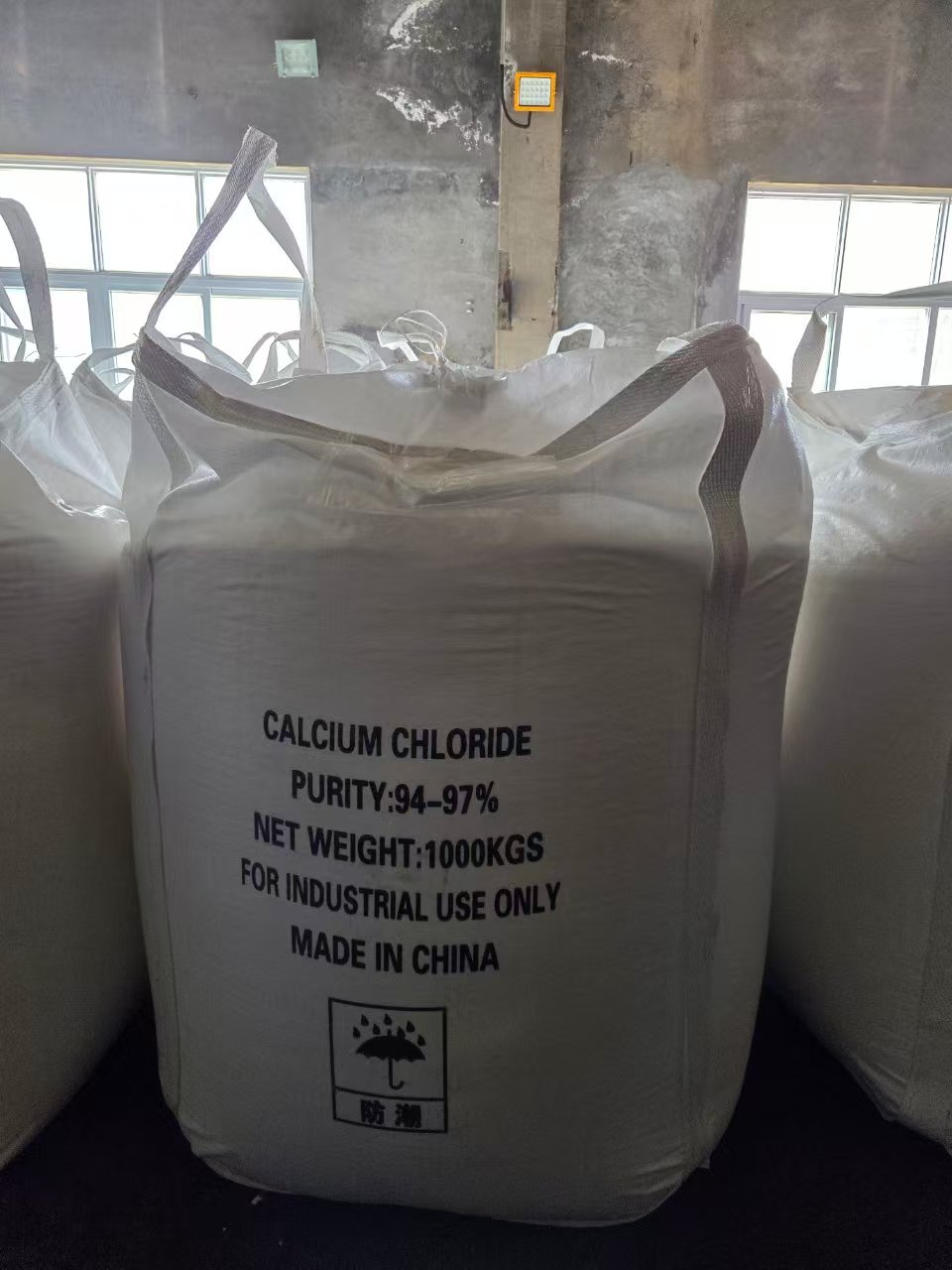
Rhomar’s pellet formulation changes the way material lands and stays where it’s needed. Instead of a fine powder that drifts away in the slightest breeze or a granule that bounces off target, the pellets drop with noticeable precision. The compact, uniform shape ensures that each piece carries a concentrated load, so you’re not battling wind loss or settling dust that never reaches the surface. This physical property alone means less product is lost before it can even work, giving you cleaner applications from the first pass.
The consistency of the pellet size also plays a harder role than most realize. Irregular particles tend to separate during spreading, forcing a trade-off between over-application in some strips and bare patches in others. With Rhomar, the pellets flow through broadcast equipment without bridging or clumping, and they fly the same distance when flung. That level of repeatability lets you dial in a rate and trust it across the whole area, cutting down the habit of “just a bit more to be safe” that silently inflates usage and cost.
Because the pellets break down only when they meet the right conditions, there is less upfront loss to moisture in the air or rough ground that eats up finer material. The active ingredients release gradually and right inside the target zone, rather than washing sideways or sitting in a pile that never disperses. This delayed activation extends the working window and keeps a second pass off the table, which is where real waste often hides—not in the spreader setting, but in reapplications that a less stable form forces you to make.
Breaking Down the Purity: Why 94% Matters More Than You Think
Numbers have a way of lulling us into a false sense of precision. A score of 94% sounds almost perfect—a solid A, a near-flawless achievement. But when we talk about purity in chemistry, materials science, or even data sets, that missing 6% isn't a trivial rounding error. It's the difference between a catalyst that works and one that poisons a reaction, between a metal that holds under stress and one that fractures without warning. The closer you get to 100%, the heavier that small remainder weighs, and the more expensive or technically demanding it becomes to chase it down. That's why 94% becomes a psychological threshold: it's excellent enough to trust, yet just shy enough to keep engineers, doctors, and quality-control specialists perpetually uneasy.
The real story lies in what that 6% actually contains. In pharmaceuticals, those few percentage points of impurity might include a compound with a wildly different biological effect—something that turns a wonder drug into a medical liability. In semiconductor-grade silicon, even parts-per-billion contamination can break a chip, so a purity level of 94% would be laughable; yet in other industries that very number signals a triumph of process control. Context redefines the scale. A chocolate bar with 94% cocoa isn't merely “pure,” it carries an intensity that reshapes your palate, leaving no room for the sugary distractions found in lower percentages. Here, purity isn't just a metric—it's an experience, a deliberate absence that redefines what remains.
Obsessing over that final stretch of perfection can also be a trap. Sometimes 94% is precisely where you want to stop because the cost, energy, or time required to reach 99% yields diminishing returns that no practical application justifies. A 94% pure alloy might weld with exactly the right flow characteristics, while its 99.9% counterpart becomes brittle and unusable. That’s the hidden wisdom in the number—it forces a conversation about what “good enough” really means and whether perfection is just a comforting illusion that blinds us to functional elegance. In the end, understanding why 94% matters isn't about settling; it's about recognizing that the most meaningful advances often happen in the space between excellent and absolute.
The Speed Factor: Faster Ice Melt and Its Ripple Effect on Safety
Ice is vanishing at a pace few models predicted a decade ago. In Greenland, summer melt seasons now trigger billion-ton losses in a single day, while mountain glaciers from the Alps to the Andes are retreating so fast that long-established climbing routes are becoming unrecognizable. This isn't a gradual, linear change—feedback loops like darker meltwater absorbing more sunlight are accelerating the process. For anyone living near ice-dependent terrain, the rapid shift means hazard zones expand faster than maps can be redrawn, and what was solid ground last season may now be a fragile crust over hidden crevasses.
The immediate safety consequences go beyond the obvious crumbling ice cliffs. As permafrost thaws, slopes that held firm for centuries are starting to creep and fail, triggering landslides that can dam rivers and create sudden flood risks downstream. Glacial lakes swollen by accelerated melt are perched behind unstable moraines, and when these natural dams burst, the resulting outburst floods tear through valleys with little warning, sweeping away bridges, roads, and entire communities. The speed of melt directly shortens the window for early warnings, turning what used to be predictable seasonal hazards into year-round threats that demand constant vigilance.
Even recreation and local livelihoods are caught off guard. Ski resorts built on shrinking ice fields face longer off-seasons and unpredictable crevasse formation, while Arctic travel routes that indigenous hunters relied on for generations now cross stretches of dangerously thin ice. The ripple effect extends to infrastructure: roads buckle, pipelines warp, and coastal defenses designed for slower sea-level rise are being overtopped earlier than planned. When ice melt outruns our ability to adapt, safety isn't just about avoiding falling ice—it's about rethinking where and how we build, travel, and live in a landscape that is literally dissolving underfoot.
Infrastructure-Friendly Deicing: Protecting Concrete, Steel, and Vegetation
Winter maintenance often relies on aggressive salts that silently eat away at concrete surfaces and corrode the steel reinforcements within. Over time, freeze-thaw cycles amplified by chloride intrusion cause spalling, cracking, and costly structural decay. Shifting to infrastructure-friendly deicing means selecting products that disrupt this cycle—formulations using calcium magnesium acetate or potassium formate, for instance, work without penetrating deep into porous surfaces, preserving the integrity of walkways, bridges, and parking structures long after the ice has melted.
The hidden toll on steel—whether in rebar, guardrails, or utility supports—can be severe when traditional deicers are used repeatedly. A gentler approach combines corrosion inhibitors with ice-melting agents, forming a protective film that shields metal from oxidation. Some modern blends even condition the surface to reduce future ice adhesion, meaning less product is needed over time. This not only cuts down on material costs but also limits the environmental chloride load that accelerates rust, helping infrastructure maintain its strength through season after season of harsh weather.
Where roadsides and pathways meet living landscapes, conventional deicers often leave behind a trail of burnt grass and stunted shrubs. Infrastructure-friendly alternatives prioritize the health of adjacent vegetation by using ingredients that break down into beneficial nutrients—like calcium or magnesium—rather than toxic salts. Products labeled as low-chloride or biodegradable can prevent root damage and foliar burn, keeping soil chemistry stable. In sensitive areas near waterways or planted medians, these solutions offer effective ice control without trading green space vitality for bare pavement safety.
Real-World Reliability: Case Examples from Municipalities and Industrial Hubs
When a coastal city in Northern Europe decided to overhaul its aging water treatment plant, reliability wasn't just a checklist item—it was a quiet promise to 200,000 residents who never think about their taps unless something goes wrong. The upgrade centered on variable frequency drives and smart pumping arrays that could ride through seasonal storm surges without a hiccup. What stood out wasn't the hardware itself, but the way the system was architected: redundant power rails, soft-start sequences that spared the grid, and embedded sensors that gave operators a real-time view of wear on impeller seals. Over the first two years, unplanned downtime dropped to less than four hours annually, a number that simply didn't exist in the previous decade of logbooks.
A different kind of test unfolded at an automotive assembly complex in the Midwest, where compressed air feeds a sprawling network of robotic welders and precision fastening tools. Even a half-second pressure dip can cascade into hundreds of halted units and a scramble to clear fault codes. The facility manager, a third-generation engineer with a habit of sketching flow diagrams on cafeteria napkins, spearheaded a move toward decentralized cycling with hot-swappable dryer modules. Instead of one cavernous central dryer, smaller units were tucked close to the point of use, each monitored by vibration and dewpoint analytics. Maintenance shifted from calendar-based tear-downs to a predictive rhythm, and the plant quietly logged a 19-month streak without a single compressed-air related stoppage. The more intriguing metric, though, was the unexpected drop in energy consumption—almost 14%, simply because the system wasn't fighting itself.
On a much smaller scale, a remote pumping station serving a mining hub in Western Australia proved that reliability can be less about scale and more about fit. The station, running on a mix of solar and diesel backup, had to start heavy slurry pumps under full load in temperatures that swung from frost to 105°F in a single week. Standard soft starters had failed twice, leaving the crew to jerry-rig solutions in the middle of the night. The breakthrough came from a deliberately simple design: a wound-rotor motor paired with a liquid rheostat that could dial in the exact starting torque, adjusted by a local technician with a hand wheel. No complex touchscreen, no remote firmware updates—just a rugged device that matched the harsh, self-reliant ethos of the site. It has now outlasted three generations of supervisory controllers and is affectionately referred to by the team as 'the old kettle,' a piece of gear they trust more than any modern alarm system.
FAQ
Higher purity means fewer impurities that can leave residue or damage surfaces. With 94% calcium chloride, you get faster melting action and less product is needed to cover the same area, which also cuts down on post-storm cleanup work for facility teams.
Rock salt stops working well below 20°F, but calcium chloride remains effective down to about -25°F. For operations that can't afford weather-related downtime, that lower temperature performance is non-negotiable. Plus, it releases heat as it dissolves, kickstarting the melting process almost instantly.
Pellets are dense and uniform, so they cut through wind and land where intended—no drifting onto landscaped areas. Spreaders can be calibrated more precisely, reducing waste. They also have less dust, which keeps equipment cleaner and minimizes material loss during handling.
The same hygroscopic properties that melt ice also bind fine particles in gravel lots, quarry roads, and construction sites. A light application of these pellets can pull moisture from the air and keep dust down for weeks, reducing water truck usage and improving air quality for nearby communities.
Absolutely. Reduced application rates, less damage to concrete from multiple freeze-thaw cycles, and fewer truck rolls add up fast. One facilities manager I know cut his overall winter maintenance budget by nearly 20% after switching, mostly because the stuff works so fast crews finish routes earlier.
All chlorides can be corrosive, but purity helps here indirectly. Because less material is used overall, there's less chloride exposure. Many users also treat the pellets with a corrosion inhibitor during manufacturing, which further protects vehicles, rebar, and metal joints when applied correctly.
Conclusion
Top companies consistently turn to 94% calcium chloride pellets because they outperform conventional deicers when conditions turn brutal. The secret lies in the chemistry: this high-purity formulation generates exothermic heat upon contact with ice, driving melting down to -25°F where rock salt simply fails. Rhomar’s pellet shape amplifies that advantage by delivering a dense, spherical prill that bores through ice pack instead of bouncing or scattering, which dramatically cuts waste and lets crews cover more ground with fewer passes. That controlled spreadability, combined with a purity level virtually free of contaminants, means fewer insoluble residues left behind, so drains stay clearer and floors demand less cleanup—a quiet efficiency facilities managers value deeply.
Speed matters just as much as chemistry. 94% calcium chloride pellets react on contact, slashing the time ice poses a threat to pedestrians and vehicles, and that rapid action has a cascade of safety benefits: fewer slip-and-fall claims, reduced liability, and shorter disruption windows at busy loading docks or airport tarmacs. Yet what truly earns long-term trust is the infrastructure-friendly profile. These pellets cause less scaling and corrosion damage to concrete and steel than sodium-based salts, and when applied at recommended rates, they’re gentler on nearby vegetation—minimizing the springtime landscape repair costs that plague budget-conscious municipalities. Industrial hubs and cities repeatedly choose this solution not for marketing promises, but because it delivers measurable reliability: bulk storage stays free-flowing, application remains predictable in high winds, and the melt performance holds across back-to-back freeze cycles. That kind of field-proven dependability, witnessed in real-world municipal fleets and manufacturing site logistics, turns a chemical specification into a trusted operational standard.
Contact Us
Contact Person: Tom Cui
Email: [email protected]
Tel/WhatsApp: +8618663670626
Website: https://www.jinjigoldenchem.com