

Best Stainless Steel Casting Solutions for Every Manufacturing Need
2026-10-17
Manufacturing rarely rewards guesswork—especially when stainless steel components must hold up under pressure, corrosion, or tight tolerances. That’s why finding a casting partner who understands your exact production environment matters more than a generic catalog. Zhaoyuqi approaches each project with precision, offering stainless steel casting solutions tailored to real-world manufacturing demands, not just theoretical specs. In this guide, we’ll walk through what actually makes a casting solution the best fit for your line—from material selection to finish quality—so you can stop searching and start producing with confidence.
Stainless Alloys That Survive Corrosive Conditions
Corrosion resistance in stainless isn’t a single trait—it hinges on alloying elements that form and repair the passive chromium oxide layer. Molybdenum, typically at 2–3% in 316 grades, dramatically improves resistance to pitting in chloride-heavy environments, while higher nickel helps stabilize austenite against stress corrosion cracking. These subtle chemistry shifts mean the difference between a component that lasts decades and one that fails within months around saltwater or chemical processing lines.
In practice, choosing an alloy for aggressive service often comes down to the specific attack mode. Crevice corrosion under gaskets and biofouling in stagnant seawater punish alloys that pass standard salt spray tests but lack the combined molybdenum and nitrogen found in superaustenitic or duplex grades. Alloys such as 2205 and 2507 lean on a mixed ferrite-austenite microstructure to blunt crack propagation while keeping fabrication costs below high-nickel alternatives.
Temperature and acid concentration also shift the ranking. Hot sulfuric or hydrochloric acid services may push users toward high-alloy materials like 904L, Alloy 20, or the nickel-base C-series, where chromium, molybdenum, and tungsten work together to resist reducing acids. Field results matter more than laboratory coupons; welds, heat tint, and surface finish often determine whether an otherwise “corrosion resistant” stainless alloy survives real conditions.
Precision Casting Routes for Intricate Part Designs
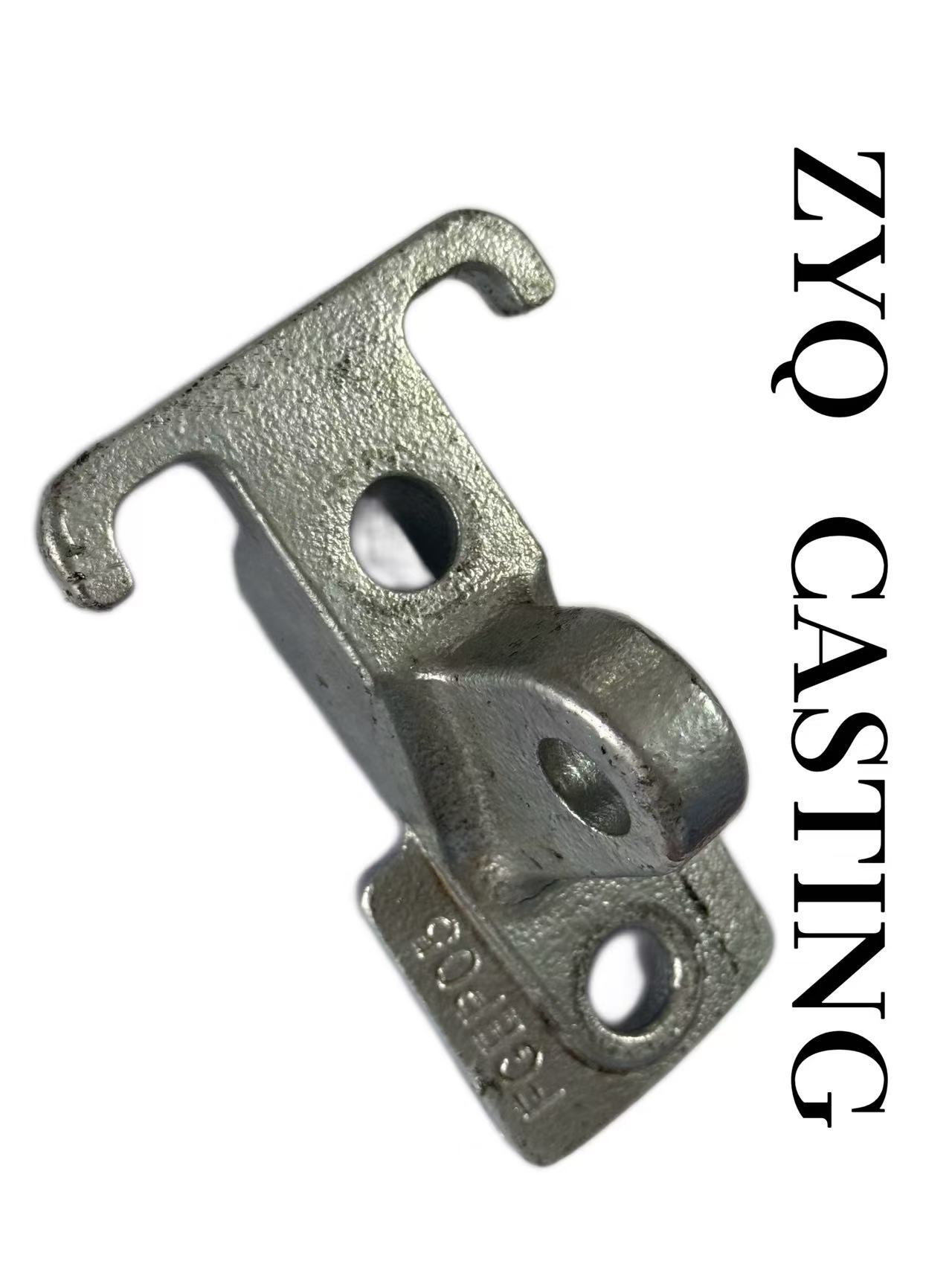
Investment casting remains the workhorse when a single, intricate metal part needs to replace a multi-piece fabrication. The route begins with a wax replica of the final geometry, built to exact tolerances, then coated in layers of ceramic slurry. Once the shell hardens, the wax is melted out and molten alloy takes its place, preserving surface detail down to hairline fins and internal channels. For parts with trapped undercuts or hollow cores, soluble or collapsible core materials are inserted before the shell is built, and later removed without damaging the casting.
More demanding designs now benefit from hybrid precision routes. Additive manufacturing can print the wax-like pattern or even the ceramic mold directly, skipping the traditional tooling step and allowing lattice structures, conformal cooling passages, and variable wall thicknesses that would be impossible to machine. By combining these routes with low-turbulence filling and controlled solidification, foundries push intricate part designs closer to net shape, cutting away secondary operations and weight.
Surface Treatments That Cut Down on Machining
Adding material only where it is needed can remove entire roughing stages from a production plan. Laser cladding, thermal spray, and similar deposition methods build up wear-resistant surfaces directly on a near-net-shape core. Instead of starting with a bulky forging or bar stock and cutting away most of it, the part arrives at the machining center already close to final geometry. The surface treatment then becomes the first step, not a post-processing afterthought, and the machinist spends time on light finishing passes rather than heavy stock removal.
Mechanical treatments such as roller burnishing and shot peening offer another route to shorter machining sequences. Burnishing presses down surface peaks instead of cutting them off, producing a mirror-like finish without generating chips. This can eliminate secondary grinding or honing operations on bearing seats, seal surfaces, and shaft diameters. Shot peening introduces beneficial compressive stress that improves fatigue life, allowing a turned part to go directly into service without additional polishing. Because no material is removed, tolerances stay predictable and scrap rates drop.
Diffusion treatments like nitriding and ferritic nitrocarburizing create hard, wear-resistant cases at relatively low temperatures with minimal distortion. Parts can be machined to final dimensions before treatment, then used without post-treatment grinding. Selective masking keeps threads, keyways, and other features soft enough for later adjustment or assembly. By moving the surface treatment ahead of the last machining operation, or replacing it altogether, shops reduce the number of setups, tools, and inspection steps tied to finish work.
Catching Casting Flaws Before They Reach Assembly
Most casting defects don't announce themselves until a part is already machined, welded, or bolted into a larger assembly. By then, the cost of discovery has multiplied several times over. That's why the real battle is fought earlier—right after the casting solidifies and before it ever leaves the foundry floor. Modern inspection now leans on a mix of high-resolution X-ray, computed tomography, and automated visual systems that can flag porosity, shrinkage cavities, cold shuts, and micro-cracks while the part is still in its raw state.
In practice, this means every critical casting gets scanned immediately after shakeout or fettling. Algorithms trained on historical defect data scan the images in seconds, highlighting suspect regions for a human inspector to review. The inspector doesn't just accept or reject the part; they log the type, location, and likely root cause. This feedback loop feeds directly back into the melting and molding parameters, so the same flaw is less likely to appear in the next batch.
The result is a much cleaner handoff to assembly. Parts that arrive at the line have already cleared a rigorous gate, so downstream operations aren't interrupted by unexpected scrap or rework. Over time, foundries that adopt this early-detection mindset see fewer customer complaints, less material waste, and a more predictable production rhythm—because the flaws that used to surface weeks later are now caught in hours.
Cost Control Without Compromising Structural Integrity
Balancing budgets in construction often pushes teams toward cheaper materials, but that shortcut rarely survives contact with reality. The real trick is rethinking how loads are distributed—using voided slabs or post-tensioned beams, for instance—to cut concrete volume without weakening the frame. By shifting from over-designed redundancy to precise, analysis-backed member sizing, you preserve safety factors while trimming both dead weight and cost.
Another route is material substitution where strength isn't sacrificed: high-strength steel in columns can reduce section dimensions, lowering both material and transportation expenses. Prefabrication also plays a role; off-site assembly reduces on-site labor and waste, and when joints are engineered correctly, the overall structural performance matches or exceeds cast-in-place methods. The key is treating every dollar saved as a design parameter, not an afterthought.
Finally, lifecycle costing reveals that durable, low-maintenance choices—like fiber-reinforced concrete or corrosion-resistant coatings—may cost more upfront but avoid expensive repairs later. A structure that holds its integrity over decades is ultimately cheaper than one needing constant patching. So cost control becomes less about cutting corners and more about intelligent trade-offs that keep the skeleton sound.
Formulating Custom Alloys for Specialized Production
Formulating a custom alloy starts with a clear grasp of the final component’s operating environment—stress patterns, thermal cycling, and exposure to corrosive media all shape the elemental balance. Adjusting the ratios of nickel, chromium, molybdenum, and other additions lets you fine-tune properties like high-temperature strength, oxidation resistance, and pitting tolerance. Small laboratory melts are typically used first, followed by rapid screening tests to see whether the actual microstructure matches the predicted behavior.
Close collaboration with the production side is just as important as the chemistry itself. An alloy that looks ideal on paper can fail in practice if it requires impractical pouring temperatures or does not respond well to the available forging or rolling equipment. Iterative trials are common: each batch feeds back into the recipe, adjusting composition to balance mechanical targets with manufacturability. Experienced metallurgists know that a workable custom alloy is not just about hitting a specification, but about doing so consistently at a viable cost and throughput.
For highly specialized runs, even trace elements matter. A small addition of titanium or niobium can refine grain size and improve toughness without sacrificing ductility, while tight control over oxygen and sulfur levels helps avoid brittle phases in weld zones. These fine adjustments often come from accumulated shop-floor knowledge rather than textbook formulas, which is what separates a truly tailored alloy from an off-the-shelf alternative.
FAQ
Casting allows near-net shapes with internal cavities and undercuts that would require extensive machining or assembly. For example a valve body with intricate flow passages can be cast in one piece, reducing leak points and material waste compared to cutting from solid bar stock.
304 and 316 are workhorses for general corrosion resistance, with 316 adding molybdenum for chloride environments like marine or chemical processing. Duplex grades such as 2205 offer higher strength and stress-corrosion cracking resistance, while precipitation-hardening grades like 17-4 PH allow heat treatment to reach higher hardness for wear parts.
Proper gating and riser design is essential, along with controlled pouring temperatures and shell permeability. Many foundries also use radiography or dye penetrant inspection on critical areas. For pressure-tight components, vacuum-assisted casting or hot isostatic pressing can eliminate internal voids.
Yes, but care is needed. Welding can cause sensitization in some grades unless low-carbon variants like 304L or 316L are used, or the part is solution annealed after welding. Machining is straightforward, but tooling should be sharp and coolant should be used to avoid work hardening, especially with austenitic grades.
Castings can be mechanically polished to a mirror finish with Ra values below 0.4 µm, suitable for sanitary fittings. Electropolishing further removes surface iron and improves passivation, reducing bacterial adhesion. For non-contact surfaces, a standard pickled and passivated finish is usually adequate.
For a new pattern and first samples, expect 6 to 10 weeks depending on complexity and tooling. Rapid prototyping with 3D printed patterns can cut this to 3 to 4 weeks for low-volume parts. Production runs after approval usually take 2 to 4 weeks per batch.
Stainless steel raw material and melting costs are higher, often 2 to 3 times carbon steel. The premium pays off when the part needs corrosion resistance, low maintenance, or hygiene standards that carbon steel cannot meet without coatings. For food, pharmaceutical, or marine exposure, stainless avoids the lifecycle cost of repainting or replacing corroded parts.
Conclusion
Stainless steel casting has evolved beyond simple material selection, and the most effective approaches now combine alloy chemistry, mold design, and finishing into a single integrated strategy. Alloys engineered for corrosive environments—such as duplex and super austenitic grades—resist pitting and crevice attack far better than generic 304 or 316, extending service life in chemical processing and marine applications. At the same time, precision casting methods like investment casting and shell molding allow manufacturers to produce intricate internal passages and thin-walled geometries that machining alone cannot achieve. These near-net-shape parts reduce the need for secondary operations, while advanced surface treatments—including passivation, electropolishing, and controlled shot peening—further smooth roughness peaks, improve fatigue resistance, and cut down on expensive CNC time. The result is a casting that arrives closer to final specifications, saving both lead time and material waste.
No casting solution is complete without rigorous inspection and cost management. Modern foundries are deploying in-process thermal imaging, X-ray tomography, and automated dye penetrant testing to catch shrinkage porosity, inclusions, or micro-cracks long before components reach assembly lines. This early detection avoids costly recalls and rework. On the budget side, controlling alloy input costs, optimizing gating and riser designs, and using simulation software to predict solidification can lower overall scrap rates without weakening structural performance. For highly specialized production runs, foundries increasingly formulate custom stainless alloys—adjusting nickel, molybdenum, and nitrogen levels to meet exacting tensile, corrosion, or high-temperature requirements. This tailored approach ensures that each manufacturing need, whether for food-grade equipment, aerospace brackets, or pump housings, receives a casting solution that balances performance, durability, and per-unit cost. Ultimately, the best stainless steel casting solutions are not off-the-shelf; they are engineered around the specific demands of the part.
Contact Us
Contact Person: Nico Yin
Email: [email protected]
Tel/WhatsApp: 8618561567088
Website: https://www.ductileironparts.com/