

Best Frame Circuit Breaker Options for Reliable Power Distribution
2026-08-21
When it comes to reliable power distribution, choosing the right frame circuit breaker isn't just about specs—it's about trust in every trip-free operation. You've likely seen plenty of options that promise endurance, but few deliver the precision and thermal stability needed under real load swings. In this post, we cut through the noise and explore the best frame circuit breaker choices that keep your installation safe without overcomplicating maintenance. Along the way, we'll highlight how Chang Song approaches this challenge with designs that prioritize both performance and long-term serviceability. Stay with us as we break down what truly matters before you make your next procurement decision.
Why a Higher Frame Rating Alone Won't Keep Power Flowing
A generator's frame rating is often treated like a badge of capability, but it really only describes the physical size and baseline thermal limit of the unit. That number tells you how much current the frame can carry under ideal test conditions, not how well the whole system will perform when fuel quality dips, ambient temperatures climb, or loads shift suddenly. A bigger frame doesn't compensate for clogged filters, worn brushes, or a voltage regulator that's drifting out of spec. Those are the factors that actually determine whether power keeps flowing when you need it.
What tends to get overlooked is that continuous, reliable output depends on a chain of maintenance and operational decisions that no frame rating can replace. Regular load bank testing, coolant analysis, and breaker exercising matter far more than the number stamped on the housing. A high frame rating might give you extra headroom on paper, but if the engine hasn't been run under full load in months or the fuel has degraded, that headroom is just unused potential. Power interruptions rarely stem from the frame being too small—they come from neglected support systems that quietly erode the unit's real-world capacity.
Reading Between the Lines of Frame Breaker Trip Curves
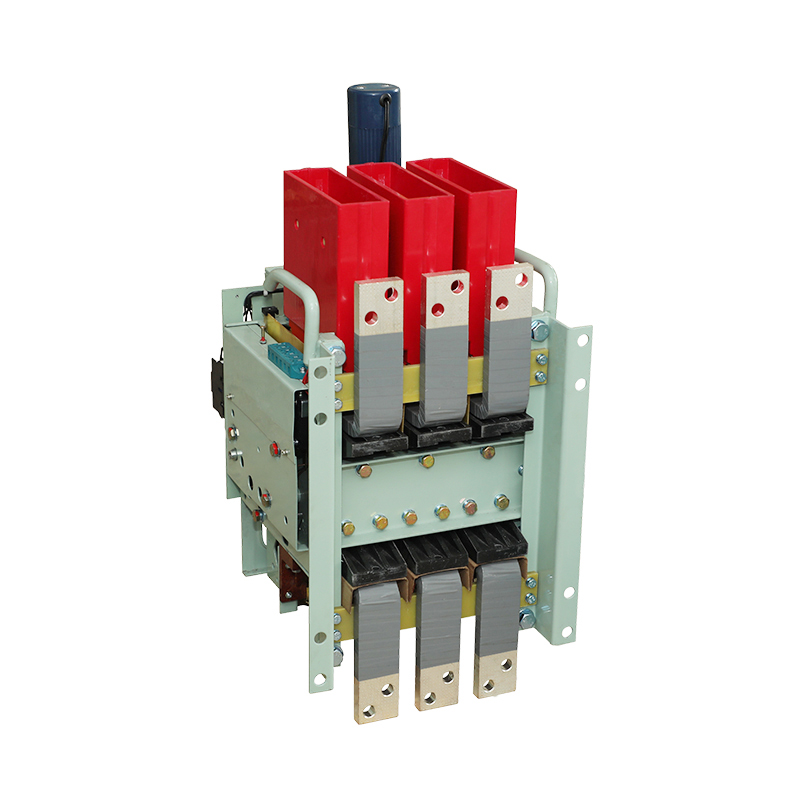
Frame breaker trip curves rarely tell the full story at first glance. The plotted lines show nominal response times for overload and short-circuit conditions, but the real insight hides in the tolerance bands, the slight shifts between adjacent curves, and the way manufacturers define pickup thresholds. A curve might imply a clean boundary at 1.05 times the rated current, yet thermal memory and ambient temperature can move that line noticeably in the field.
A closer reading reveals how the long-time, short-time, and instantaneous regions interact. The transition from the inverse-time slope to the definite-time step is not just a visual break; it represents the point where protection logic hands off from thermal modeling to direct current sensing. If the curve flattens too early or too late, coordination with downstream devices can suffer in ways that a simple time-current comparison misses.
Understanding the space between the curves matters just as much as the lines themselves. For instance, a family of curves from the same frame size may look nearly identical, but the gap between them often reflects differences in sensor ratings, trip unit software, or even mechanical tolerances. Reading those subtle offsets helps engineers anticipate nuisance tripping under harmonics or inrush, and choose settings that hold under real fault conditions rather than only on paper.
How to Match a Frame Breaker to Your Actual Load Profile
A frame breaker is only as good as the load data behind it, so begin with a real operating profile instead of a vague guess. Grab a clamp meter or pull the logged current history for each circuit. Note the steady draw when everything is running, the brief inrush when motors and compressors start, and how often those peaks repeat. That pattern matters more than the largest single number on a nameplate.
Once you have the profile, compare it against the breaker's time-current curve. If your steady load sits near 80% of the frame rating, that's often fine, but repeated spikes close to the frame limit can cause nuisance trips or premature wear. In that case you may need to step up a frame size or use a trip unit with a curve that lets short surges pass while still protecting against sustained overload. Also factor in the panel environment—heat, crowded enclosures, and altitude all reduce how much current a given frame can carry continuously. Derate the nameplate number to match your real installation, then select the smallest frame that handles the adjusted continuous load with room for the worst-case inrush.
Frame Breakers That Earn Their Keep in Harsh Conditions
框架断路器不是娇气的设备。在化工厂、矿山或海上平台,它们面对的是腐蚀性气体、持续振动和极端温度波动。那些能坚持下来的型号,无一不在设计阶段就放弃了“够用就好”的思路。例如,关键连接点采用镀银处理,外壳使用增强型热固性材料,内部动触头与静触头之间留有足够的爬电距离——这些细节保证了在粉尘弥漫或湿度饱和的环境中,断路器不会因为表面结露或污秽堆积而误动作。
真正让框架断路器在恶劣条件下赢得口碑的,是它们的热管理与机械寿命设计。长时间满载运行时,触点温升必须被严格控制,否则绝缘材料会加速老化。优秀的制造商会在散热路径上做文章:加大接线端子的散热面积,优化内部气流通道,甚至为高海拔场景重新校准脱扣曲线。同时,操作机构经过数十万次机械寿命测试,即便在低频振动环境下,储能弹簧和连杆也不会出现疲劳断裂。有些型号还支持手动/电动双重操作,确保断电后依然能可靠分合。
实际使用中,这些设备往往被安装在没有空调的配电室或户外箱变里,夏天内部温度可能超过60℃,冬天则可能降到零下30℃。框架断路器必须在这种温差下保持脱扣特性稳定。为了实现这一点,双金属片或电子脱扣器会进行温度补偿,避免误跳或拒动。此外,高防护等级(如IP54或更高)的二次端子排和密封式辅助开关,让沙尘和盐雾无法侵入控制回路。一家海上风电项目的运维记录显示,选用经过盐雾测试的框架断路器后,因环境腐蚀导致的非计划停机减少了七成。
What Electrical Teams Look for in a Replacement Frame Breaker
Field electrical teams rarely start with a spec sheet when a frame breaker fails. They start with the mounting pattern and the bus connection type, because getting those wrong means the replacement won't seat properly or will arc under load. The physical footprint is often the first filter—bolt-in versus plug-in, frame size, and whether the existing panel cutout tolerances leave any room for minor dimensional drift. After that, attention shifts to the trip curve. A breaker that looks identical but carries a different magnetic trip setting can refuse to hold during motor inrush or fail to clear a bolted fault fast enough.
Another non-negotiable is short-circuit interrupting rating. Replacing a 10 kA breaker with a 22 kA unit isn't just overkill; it may force upstream coordination changes. Teams also look for visible indication—many field techs distrust sealed units and want a clear trip flag or auxiliary contact that aligns with the existing control scheme. And when the original frame series is discontinued, cross-reference data from the manufacturer matters less than actual torque values and lug orientation. A good replacement is one that can be installed with the existing bus bar hardware without drilling or re-tapping, and still leave enough clearance for a torque wrench on every terminal.
The Real Cost of Overlooking Selective Coordination
A 20-amp branch circuit faults in a lab, and the 800-amp main breaker opens instead of the local device. What should have been a minor reset becomes a building-wide shutdown. That’s the obvious price of poor selective coordination, but the real damage often shows up weeks later in missed production targets, spoiled inventory, or canceled procedures that can't be rescheduled easily.
Then there’s the hidden wear on equipment. When upstream breakers routinely fault-clear for downstream events, their contacts erode faster and their trip curves drift. Maintenance logs start to show unexplained trips and intermittent failures that no single repair visit can solve. Teams end up replacing breakers and relays on a hunch, never tracing the pattern back to the skipped coordination study.
Retrofitting selective coordination after occupancy costs more than doing it at design. You may need to install current-limiting fuses, adjust trip units, or swap in breakers with different time-current curves — all while keeping critical loads online. Owners who ignore this risk often face longer outage durations during faults, higher insurance premiums, and tougher code compliance reviews later.
FAQ
A dependable frame breaker matches its interrupting rating to the actual available fault current at the installation point, not just the amp rating. You also want a trip unit that allows adjustment of long-time, short-time, and instantaneous settings so the breaker coordinates with downstream devices instead of tripping blindly. Mechanical endurance matters too; a breaker that feels stiff or has not been cycled in years may not close on a fault when called upon.
Frame size is about physical build and maximum continuous current capability, not just the trip setting. Check the breaker’s frame rating versus the trip rating you actually need. For example, a 250A frame may accept a 200A trip unit, giving you room to grow without swapping the whole breaker. Also confirm the physical dimensions, bus connection pattern, and mounting depth fit your enclosure. Leaving some frame headroom is usually cheaper than a later switchgear retrofit.
For distribution feeders that serve critical loads, yes. Electronic trip units provide precise long-time, short-time, instantaneous, and ground-fault adjustments, which makes selective coordination far easier. Thermal-magnetic breakers are simpler and cheaper, but their fixed or limited adjustments can lead to nuisance tripping on motor inrush or transformer energization. If you need to monitor current, energy, or fault events, electronic trip units give you that data without external CTs and meters.
Look for current-limiting frame breakers or molded case breakers with high interrupting ratings like 100 kAIC or 200 kAIC in a compact footprint. Insulated-case circuit breakers can also offer high withstand and interrupting ratings without the bulk of older air circuit breakers. The key is matching the breaker’s interrupting capacity to the available fault current at its line side. Do not assume a standard 10 kAIC breaker is enough just because the amp rating fits; high fault current can destroy an underrated breaker during a short circuit.
Exercise the breaker manually a few times a year if it is not operated often; this redistributes lubricant and prevents mechanism binding. Perform contact resistance tests across the poles during scheduled outages, and use infrared thermography to spot hot spots at connections while the breaker is loaded. Trip unit testing with secondary injection verifies that the breaker will actually open at the set values. A breaker that has not been tested in ten years is a gamble, not a protection device.
It is possible but rarely ideal. Different manufacturers may have different bus connection kits, mounting hardware, and trip curves, which complicates selective coordination and spare parts stock. If you must mix, verify that the replacement breaker is UL listed for the specific panel or switchgear, not just the same frame size. Many facilities standardize on one or two brands to simplify maintenance, training, and emergency replacements.
Motor starting inrush and generator short-circuit characteristics are often underestimated. A breaker set too tight on instantaneous will trip during normal motor starting. Generators have lower and decaying fault current, so the breaker must clear the fault before the generator protective relay trips, or you can lose the whole bus. Also check for adjustable instantaneous pickup and consider a breaker with a wide range of settings rather than a fixed thermal-magnetic unit.
Conclusion
Selecting the right frame circuit breaker goes far beyond simply picking the highest amp rating on the shelf. A larger frame may look like extra headroom, but if the trip characteristics don't align with how your equipment actually draws current, you'll end up with nuisance trips or, worse, a breaker that fails to clear a fault in time. Reading trip curves carefully matters because the difference between thermal-magnetic and electronic sensing can decide whether a motor start is tolerated or interrupted. Matching the breaker to the real load profile means accounting for inrush, cyclic loads, and harmonics rather than relying on a nameplate number.
In harsh environments, enclosures, contact materials, and temperature derating separate breakers that last from those that corrode or drift out of calibration. Electrical teams replacing a frame breaker look for form-factor compatibility, straightforward lug access, and settings that don't require proprietary software to adjust. The overlooked factor is selective coordination: if a downstream fault trips the main breaker instead of the closest device, an entire facility can lose power unnecessarily. The best options keep that isolation tight while still standing up to heat, dust, or moisture, so reliability isn't just a spec sheet claim but something you can measure during an actual event.
Contact Us
Contact Person: Tonglun Chen
Email: [email protected]
Tel/WhatsApp: 8618906642555
Website: https://www.cncsele.com