

Automated Guided Vehicle Recommendations for Warehouse Efficiency
2026-10-07
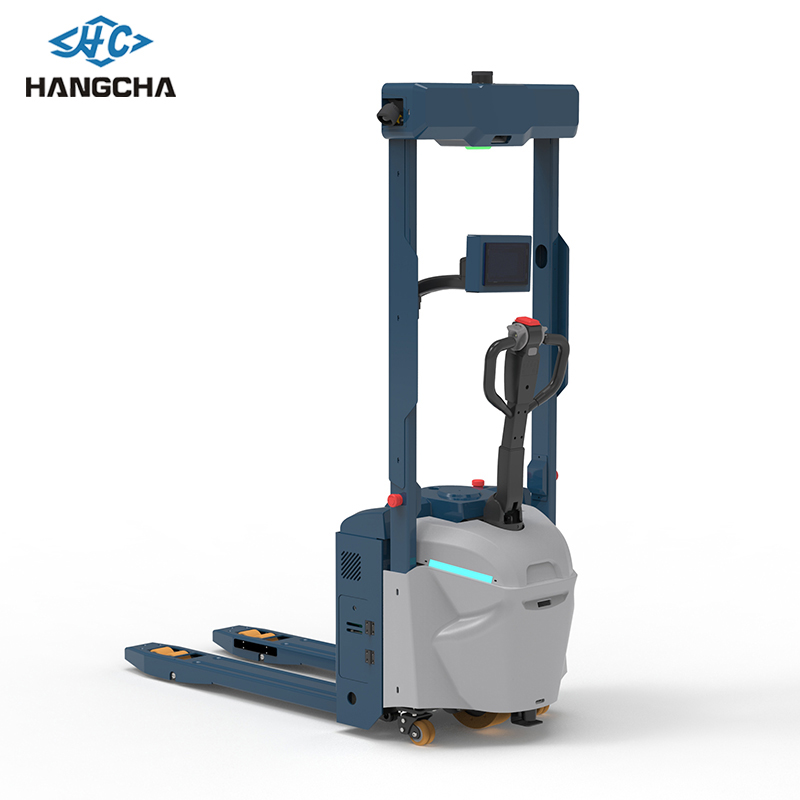
Warehouse efficiency rarely improves by simply adding more forklifts or telling pickers to move faster. The real lever is removing the stop-start handoffs that quietly eat hours every shift. Automated guided vehicles can help, but only if the recommendation fits your rack layout, load weights, and picking flow—not just a spec sheet. Below, we’ll walk through the AGV choices that actually move the needle for warehouse throughput, with practical examples from the HANGCHA lineup to anchor the advice.
How to read your warehouse layout before picking an AGV
Start by walking the floor without a clipboard. Notice where pallets stack unevenly, where forklifts hesitate at blind corners, and where pickers take shortcuts through narrow gaps. These patterns tell you more about actual traffic flow than any CAD drawing.
Next, compare the static racking plan against how goods actually move during a shift. A zone labeled 'low activity' on paper might see constant replenishment from a distant staging area, forcing AGVs to cross main aisles repeatedly. Mark those pinch points with tape, not assumptions.
Finally, test your chosen AGV's turning radius and sensor range in the tightest dock door and the busiest intersection. What looks clear on a top-down map often hides low-hanging dock plates, uneven expansion joints, or reflective surfaces that confuse lidar. Reading the layout means reading the floor's scars, not just its dimensions.
Why battery runtime matters more than top speed
Most drivers rarely push their vehicle anywhere near its top speed, yet the moment the battery gauge dips below twenty percent, a very real sense of urgency sets in. Commuting through stop-and-go traffic, merging onto highways, or simply running errands never demands the kind of velocity that marketing brochures love to highlight. What actually shapes your day is whether you can make it to the office, the grocery store, and back home without hunting for a charger. A car that goes 150 miles per hour but dies after 120 miles of real-world driving leaves you stranded at the worst possible moment. In contrast, a modest top speed of 90 miles per hour paired with a 300-mile range quietly removes a daily layer of stress that no acceleration figure can fix.
Long road trips expose the same truth from a different angle. Even if a highway has no speed limits high enough to legally use a car's full potential, every charging stop adds thirty to forty-five minutes to your journey. A vehicle with a slightly lower top speed but significantly longer battery range can skip entire charging stations, letting you drive four hours straight instead of two and a half. That difference turns a twelve-hour drive into nine, while the theoretical top speed remains irrelevant because you were never going to sustain 120 miles per hour on a public road anyway. Battery runtime dictates the rhythm of your travel; top speed is just a number on a spec sheet that you will almost certainly never verify in person.
Manufacturers know this, which is why the real innovation race is happening in energy density, charging speed, and efficiency, not in pushing maximum velocity higher. A car can be marketed with a headline-grabbing top speed, but once you own it, the number that matters lives on the dashboard range estimator. Every mile of extra range translates into fewer moments of planning routes around charging infrastructure, fewer times you have to tell a friend you'll be late because you need to plug in, and fewer cold winter mornings wondering if the battery will hold up. Top speed is a spec you show off once; battery runtime is the spec you live with every single day.
The real bottleneck is intersection traffic, not vehicle count
Most people assume that if you simply reduce the number of cars on the road, congestion will disappear. But the math of urban movement tells a different story. Vehicles spend the majority of their travel time waiting at red lights or inching through crossings, not cruising between them. That means the true limit on a street's throughput isn't how many cars it holds—it's how many can get through a single green phase without conflict.
Intersections force every movement to share the same few seconds of permission. Left turns, pedestrians, and cross traffic all compete for the same green window. Even with relatively light vehicle volumes, a poorly timed signal or a short left-turn bay can trigger queues that stretch for blocks. Add just a handful of extra cars per cycle, and the whole corridor can tip into gridlock.
This is why adding lanes rarely fixes anything. More lanes just feed more cars into the same constrained intersection approaches. The remedy lies in smarter signal coordination, protected turn phases, and geometric fixes that let each green second serve more actual movement. Until cities treat intersections—not road segments—as the real capacity unit, traffic will keep stalling no matter how many vehicles we remove.
What warehouse managers forget about floor surface and inclines
Warehouse managers spend plenty of time tracking inventory accuracy, labor productivity, and order cycle times, but the physical floor under their feet rarely gets the same attention. A floor that looks smooth from the office window can hide subtle slopes, worn expansion joints, or patches with different coefficients of friction. These variations quietly shape how forklifts corner, how pallet jacks glide, and how much strain reaches the spines of order pickers. Ignoring them doesn't make the problem go away; it just pushes the cost into maintenance budgets, accident reports, and slower put-away times.
Inclines are another silent variable. A ramp that seems gentle at a 3% grade can force a loaded pallet truck to work noticeably harder, draining batteries faster and encouraging operators to take unsafe shortcuts like riding the forks downhill. Even smaller changes in elevation, such as a crowned floor near a dock door or a slight depression around a drain, can make loads shift unpredictably. Temperature and humidity add another layer: polished concrete that offers decent grip in dry conditions can turn slick when condensation forms near cold storage entries or when a light film of dust mixes with humidity.
The most practical approach isn't a complete floor replacement—it's mapping the trouble spots and adjusting operations around them. Mark high-wear zones, record grade changes at every ramp and transition, and talk to the people who drive the equipment daily. They already know which aisle feels like it tilts left and which dock plate rattles under a full load. Use that knowledge to set speed limits, rearrange racking away from the worst slopes, or schedule floor grinding in small sections during off-hours. A warehouse floor isn't just a surface; it's a working partner, and it tells you what it needs if you're willing to listen.
Integrating AGVs with legacy WMS without slowing down receiving
Legacy WMS platforms rarely speak the same language as modern AGV fleets, and forcing a direct handshake often means pausing inbound docks or re-keying pallet data just to keep the robots moving. The real bottleneck isn't the hardware—it's the brittle, batch-oriented interfaces that older systems rely on. Rather than rip out what works, a smoother path is to insert a thin orchestration layer that translates WMS put-away instructions into AGV missions on the fly, while still letting the WMS believe it's talking to a human-driven forklift. That way, receiving teams keep scanning and staging exactly as before, but the physical movement happens without a single manual dispatch call.
One underused trick is to mirror only the receiving transaction stream, not the entire inventory model. By subscribing to WMS receipt events through a lightweight message queue or even flat-file drops, you can trigger AGV tasks for pallet drop-off without waiting for the WMS to finalize its own batch updates. The AGV system gets just enough data—dock door, SKU, destination zone—to act immediately, while the legacy WMS remains the source of truth. This keeps receiving velocity high because the AGVs are essentially working from a live shadow of the dock activity, not from a synchronized database that would require locking tables or slowing down user screens.
Phased cutover also matters more than most integrators admit. Instead of flipping an entire shift to AGV-driven put-away, start with a single receiving lane or a specific product family, then let the WMS side run its usual reconciliation. Operators notice only that pallets disappear faster from the dock, because the AGVs handle the long hauls while humans still manage exceptions and quality checks. This approach avoids the classic trap where a full-bore automation push grinds receiving to a crawl for weeks—and gives the warehouse team time to trust that the old WMS and the new robots can actually coexist without fighting over every scan.
When to add a second AGV instead of squeezing the first
A single AGV can handle a surprising amount of work until travel distance becomes the bottleneck. Once the vehicle spends more time driving between pickup and drop-off points than actually loading or unloading, adding another unit starts to make sense. You’ll notice this when a single loop takes longer than the cycle time of the station it serves, forcing operators to either delay tasks or accept idle machinery.
Charging breaks and maintenance windows also push the decision. If the existing AGV must pause for a battery top-up during peak hours and there’s no buffer in the schedule, a second unit prevents a full stop. The same logic applies when tasks arrive in bursts — two slower AGVs often beat one faster model because they can split the queue and recover from a temporary jam without stalling the entire line.
FAQ
For narrow aisles, a mix of reach truck AGVs and underride cart AGVs typically balances lift height and maneuverability. Reach trucks handle pallet rack picking at height, while underride carts shuttle bins or stillages between zones without turning radius constraints.
Match the navigation to floor condition and change frequency. Magnetic tape is cheap but brittle under forklift traffic. Laser reflectors handle high ceilings and long runs, yet require clear sightlines. Vision-based systems adapt best to dynamic layouts, though they need consistent lighting and occasional map updates.
Expectations vary widely, but many operations see 20–35% gains in pallet moves per shift after stabilizing routes and dock schedules. The real win often comes from reducing non-value-added walking and wait time, not just raw vehicle speed.
At minimum, insist on dual-channel safety PLCs, 360-degree obstacle detection with depth-sensing cameras, and controlled stop zones that are field-adjustable. Audible alerts help, but physical stops and reduced-speed areas matter more than warning sounds.
Usually yes, if the WMS exposes order and location data through an API or middleware. The AGV fleet controller bridges task allocation and traffic management, so you keep the WMS as the source of truth while adding vehicle execution layers.
Teams often count peak-hour trips and buy too many vehicles, ignoring that battery charging and maintenance take vehicles offline. A better approach is to simulate shift-level demand with 15-minute granularity and plan for 15–20% spare capacity.
Start with a single replenishment loop or returns zone that has predictable volume, then expand to case picking after operators trust the system. Phasing by workflow instead of physical area lets you isolate issues without blocking main dock doors.
Conclusion
Picking the right automated guided vehicle starts long before you compare specs. Walk the floor and map the real paths your workers take, including narrow aisles, blind corners, and dock doors that swing open on a schedule. A layout that looks straightforward on a CAD file can hide turnaround spots where an AGV wastes minutes repositioning. Once you know the routes, battery runtime tends to beat top speed as the metric that actually matters. A slower vehicle that charges during lunch and keeps running through the second shift will outperform a fast one that dies mid-aisle and blocks a picker. Most slowdowns, though, come from intersections. Two or three AGVs crossing the same point will queue up, so adding more vehicles without rethinking traffic flow just gives you more waiting in line. Floor condition is another overlooked detail, because cracks, raised expansion joints, or a slight loading-dock incline can trigger emergency stops or wheel slip, especially with heavy loads. If your concrete isn't flat within tolerance, fix that before you blame the robot.
Integration with an existing warehouse management system often gets treated as an IT afterthought. The key is to phase the handoff so AGVs receive task data without forcing receiving teams to pause scanning while the server syncs. Run a parallel test on one inbound lane first, letting the WMS push orders to the AGV only after the pallet label is verified, which keeps dock doors moving. Finally, timing matters more than fleet size. Instead of pushing one AGV to cover every peak-hour trip, track utilization over two weeks. When a single vehicle consistently hits 85 percent runtime and operators start staging work around its schedule, that is the signal to bring in a second unit. A second AGV on a predictable loop often pays for itself faster than upgrading to a heavier-duty model because it removes the daily scramble and lets both machines run at a calmer, more reliable pace. These small practical calls usually move the needle more than any spec-sheet comparison.
Contact Us
Contact Person: Liuxue
Email: [email protected]
Tel/WhatsApp: +86-19084200370
Website: https://www.hf-ec.com/